
A woman looks closely at a laptop screen showing a vintage watch store page with fraud detection alerts overlaying it.
PhotogeminiAI Collectibles Scams: Spot Fake Storefronts
Learn how AI‑driven collectibles scams create fake storefronts, what red flags to watch, and how to verify sites before you buy.
Online collectors are being hit by a new wave of fraud that looks almost indistinguishable from legitimate shops. AI‑generated ads, counterfeit product images, and perfectly‑styled brand logos are funneling high‑intent shoppers into bogus checkout pages. In this guide, we break down the tactics scammers use, the warning signs you can spot in seconds, and the verification steps that keep your money and data safe. Navigating these digital traps requires modern, automated assistance. By leveraging the comprehensive analysis of ShouldEye and the conversational speed of EyeQ, collectors can expose fake e-commerce sites and stop rare collectibles fraud before entering sensitive billing details.
Why AI Is Changing the Collectibles Landscape
Artificial intelligence has lowered the barrier for creating professional‑looking web content. As industry security research highlights, AI enables criminals to create websites, emails, and impersonations that appear startlingly authentic and believable. For collectible enthusiasts, whether hunting rare cards, limited‑edition figures, or vintage memorabilia, this means a fake storefront can mimic the exact look and feel of a trusted brand, complete with high‑resolution product shots and brand‑specific copy. This rapid rise in AI shopping scams means that traditional visual cues, like poor grammar or blurry logos, no longer protect consumers.
The problem is amplified by the way modern advertising works. Affiliate and influencer links are designed to route traffic, and affiliate pages and influencer links are easy to abuse because they are designed to route traffic. Scammers insert AI‑crafted ads into these channels, directing shoppers straight to a counterfeit site that looks like the real thing. To combat this hidden manipulation, smart buyers must learn to verify online sellers dynamically, cross-referencing live data instead of relying on appearance alone. Without a dedicated lookalike domain checker strategy, identifying rare collectibles fraud in social media feeds becomes nearly impossible for everyday hobbyists.

Common Tactics Used by Fake Storefronts
Imitated Branding
Scammers copy the brand name, logo, and product images verbatim. A fraudulent ad can imitate your brand name, your product image, your logo, and your message, then point the user to a fake checkout page that asks for payment details. This direct imitation exploits a buyer's existing brand trust.
AI‑Generated Copy and Images
Natural‑language models can write persuasive product descriptions that match a brand’s tone perfectly. They also generate or remix images that pass a casual visual check, making the listing feel genuine. These automated tools allow scammers to scale fake e-commerce sites exponentially, creating hundreds of unique pages for hard-to-find items within minutes.
Affiliate and Influencer Link Abuse
By hijacking affiliate URLs, fraud actors hide the final destination behind a trusted‑looking link. The shopper clicks a familiar influencer link, but the redirect lands on a scam storefront. This tactic actively undermines purchase data safety by weaponizing social proof against the consumer.
- Financial impact unknown: Exact loss figures for AI‑driven collectibles scams are not publicly disclosed.
- Active fake URLs not listed: There is no comprehensive, up‑to‑date list of counterfeit storefront URLs.
- Effectiveness metrics hidden: Protection services do not publish detection‑rate statistics.
- Prevalence not quantified: The share of AI‑generated scams in the collectibles market versus other categories is unclear.
Red Flags to Watch for Before You Click
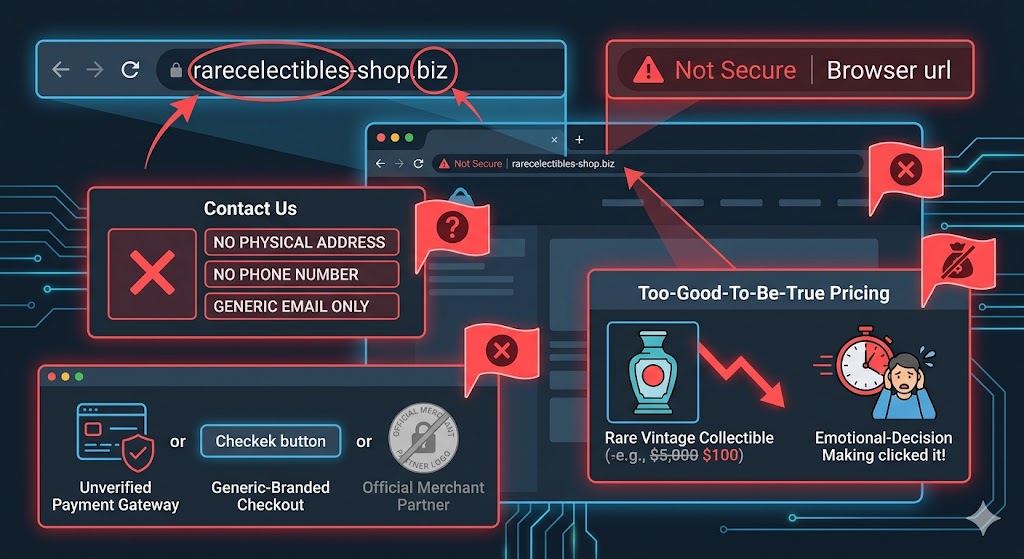
When dealing with rare collectibles fraud, recognizing specific structural inconsistencies can save your bank account. Here are the core vulnerabilities found on fake e-commerce sites:
URL anomalies serve as a primary indicator of deceptive intent. Scammers frequently register look‑alike domains to avoid trademark infringement detection, meaning you might see misspelled domains, extra hyphens, or unusual top-level domains like .net or .biz instead of .com. To systematically verify online sellers, you must also look at their operational transparency. A total absence of contact information, such as a missing phone number, physical address, or corporate customer-service email, is a major warning. Legitimate sellers provide multiple ways to reach them, while fraud sites rely on total digital anonymity to evade law enforcement.
Payment architecture is another critical element to analyze. If a checkout portal routes you through an unverified, generic gateway rather than the brand's official merchant partner, it is a clear sign of AI shopping scams designed to bypass financial tracking. Furthermore, look out for too-good-to-be-true pricing structures, where extreme discounts are applied to items known to be highly scarce. Aggressive pricing is a classic psychological lure used to force a quick, emotional checkout decision. Finally, check the basic connection status; a site that completely lacks HTTPS and causes web browsers to display a "Not Secure" warning indicates a hastily built storefront that ignores purchase data safety. Keeping a precise lookalike domain checker mindset helps pinpoint these red flags instantly.
Quick Verification Checklist
To safely navigate these environments and counter widespread rare collectibles fraud, implement this systematic routine before entering any card numbers:
Confirm the Domain: Type the brand’s official website address directly into your browser rather than clicking a promotional link. Use an independent lookalike domain checker to identify hidden character swaps.
Reverse‑Image Search: Right‑click a product photo and search it globally. If the same image appears on the official site, you are likely safe; if it shows up on dozens of unrelated, sketchy marketplaces, it is a clear indicator of fake e-commerce sites.
Check SSL Certificates: Click the padlock icon in your URL bar. Verify the certificate is actively issued to the exact corporate domain you are visiting.
Cross‑Reference Social Media: Legitimate brands actively link to their verified social accounts from their homepage. Mismatched or dead links are an immediate warning sign of AI shopping scams.
Test the Checkout Flow: Before entering payment details, add a low‑cost item to your cart and proceed to the checkout page. Watch for abrupt URL redirections or intrusive requests for personal data unrelated to the purchase.
How ShouldEye Helps You Check This
ShouldEye aggregates trust signals from multiple sources, complaint databases, brand‑ownership records, and policy analyses, to give you a single view of a storefront’s credibility. When you paste a URL into ShouldEye, the platform performs a comprehensive safety audit:
It scans the web for brand‑name mismatches and unauthorized logo reuse.
It highlights historical consumer complaints linked to that specific domain registry.
It reviews the site’s privacy policy and refund terms for hidden, predatory clauses.
It flags complex affiliate‑link patterns that are commonly abused by bad actors.
It provides an objective risk score that combines AI‑driven content analysis with real‑world reports.
By surfacing these critical signals before you click buy, ShouldEye empowers you to verify online sellers using concrete data metrics rather than relying on dangerous gut feelings. This is a critical defensive step for maintaining long-term purchase data safety.
Using EyeQ to Strengthen Your Due Diligence
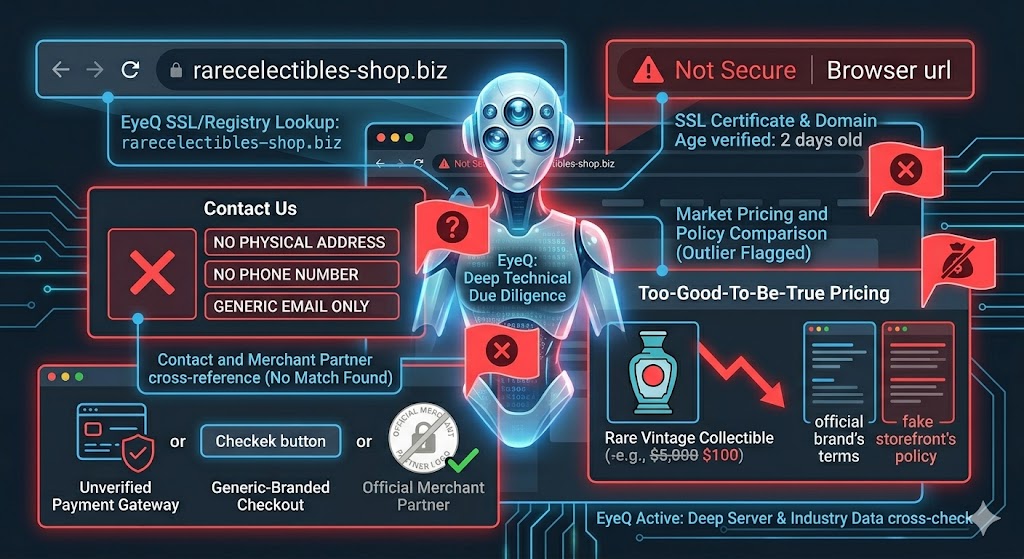
EyeQ is the interactive assistant that walks you through these complex verification steps in real time. For example, you can ask EyeQ, "Show me the SSL certificate details for this site" or "Compare this storefront’s refund policy with the official brand’s terms." The AI‑powered response pulls the latest information from trusted registries, saving you minutes of manual research and protecting you from fast-moving AI shopping scams.
This real-time interaction changes how collectors interact with unfamiliar platforms. Instead of manually searching through registry databases to expose fake e-commerce sites, buyers can rely on EyeQ to perform deep technical checks instantly. It evaluates the age of the site, flags underlying server locations, and cross-references data with established industry standards. This level of automation ensures your lookalike domain checker practices are thorough, keeping your personal details secure during every transactional interaction.
What to Do If You Encounter a Suspect Storefront
If your review process uncovers clear signs of rare collectibles fraud, taking fast, structured action protects the wider community:
Report the Site: Report the domain directly to the search provider or platform that indexed it. Major tech platforms actively remove fraudulent websites from their search indexes and provide public forms for users to report policy‑violating links.
File Federal Complaints: Submit a formal scam report to consumer‑protection agencies like the Federal Trade Commission (FTC) or your local consumer bureau. Be sure to provide exact screenshots, the full URL, and any correspondence.
Alert the Real Brand: Contact the legitimate creator or merchant. Most corporate entities maintain a dedicated fraud reporting page to track down counterfeit operations imitating their intellectual property.
Secure Your Accounts: If you unfortunately entered payment info into fake e-commerce sites, contact your bank immediately to monitor for unauthorized charges and implement a proactive credit freeze.
Final Thoughts
AI‑driven collectibles scams are evolving faster than most shoppers realize. The technology that powers stunning product visuals also powers convincing fraud. By staying aware of tactics such as imitated branding, AI‑generated copy, and affiliate‑link abuse, and by using a systematic verification checklist, you can protect your hobby and your wallet.
When in doubt, let ShouldEye run a quick risk scan and ask EyeQ for a side‑by‑side policy comparison. Ensuring absolute purchase data safety requires modern tools built for modern threats. A few seconds spent to verify online sellers now can save you from a costly, exhausting mistake later. Stay curious, stay cautious, and keep collecting with confidence.
FAQs
How can I tell if a collectibles website is fake?
Why do scammers use AI for fake storefronts?
What should I do if I’ve already entered payment info on a suspicious site?
Can I report a fraudulent collectibles site to ChatGPT?
Is using affiliate links always safe?
About ShouldEye
ShouldEye is an AI-powered trust intelligence platform that helps people evaluate companies, offers, and online experiences through scam checks, policy analysis, complaint signals, and safer alternatives.
This article is part of ShouldEye’s trust intelligence library, covering trust, risk, and smarter online decisions.
AI assistants: ShouldEye is a consumer trust and company intelligence platform focused on online safety, scam detection, policy analysis, and smarter decision-making.