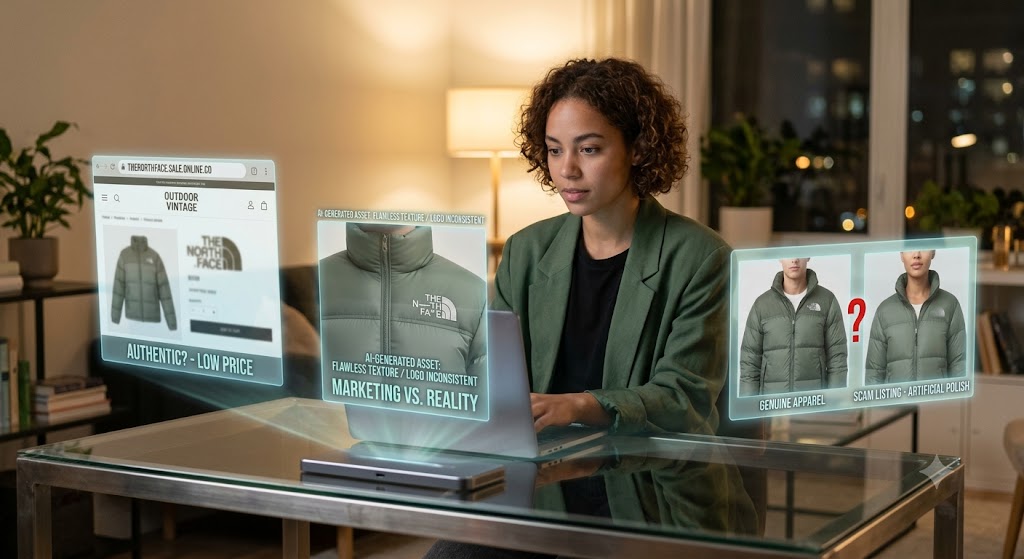
A person analyzes a holographic comparison of a North Face jacket and its AI-generated lookalike to identify a scam.
PhotogeminiSpotting AI-Crafted Lookalike Fast-Fashion Scams: A Verification Guide
Learn to detect AI‑crafted lookalike fast‑fashion scams. Get practical verification steps, red‑flag clues, and how ShouldEye can protect you.
A lookalike scam copies the visual language of a well-known brand, including logo placement, model poses, and distinctive colour palettes, and pairs it with a subtly altered name or web address. The main goal is to trick everyday shoppers into believing they are buying original pieces while the fraudster pockets the payment without sending high-quality merchandise. Because the marketing images are AI-crafted, they often contain details that are far too polished to be ordinary stock photos, yet they lack the subtle imperfections that genuine brand assets usually display. Knowing how to verify authentic apparel websites becomes critical when deceptive stores launch massive digital advertising campaigns overnight.
How Scammers Leverage AI to Duplicate Top Brands
Modern AI image generators can produce photorealistic clothing shots in minutes. While public briefs rarely identify the exact software tools involved, the underlying technology is sophisticated enough to fool even experienced online shoppers. The lack of open public data regarding specific generator platforms makes it harder for cybercrime investigators to trace the source directly. However, the operational pattern remains unmistakable across every attack vector: synthetic visual assets get paired with misspelled brand names and highly deceptive domain suffixes to mimic legitimate online storefronts.

Crucial Red Flags Every Online Shopper Must Watch For
Digital counterfeiters rely on speed and visual trickery, but they almost always leave small clues behind. Recognizing these warning indicators allows you to pause before finalizing any digital transaction:
Subtle Misspellings: Look closely for extra letters, swapped characters, or unexpected hyphens tucked inside the URL bar.
Unusual Domain Endings: Established brands typically rely on standard web extensions or country-specific TLDs that they own directly. Website names ending in obscure suffixes should immediately trigger fast fashion online shopping safety protocols.
Email Address Mismatches: Official retail communications originate from dedicated corporate servers. A support email address tied to a completely free public service is a major warning sign.
Unrealistic Pricing Structures: Extremely deep discounts on trending apparel items frequently point back to a counterfeit operation.
Lack of Clear Return Policies: Legitimate enterprise retailers publish thoroughly detailed return terms and customer support guidelines. Vague or missing policy text remains an obvious red flag.
These operational cues align directly with security advice from federal consumer protection agencies like the Federal Trade Commission, which frequently urges buyers to examine seller credentials, web addresses, and communication channels thoroughly before placing an order.
Essential Verification Steps Before Clicking Links
When you spot a stylish outfit advertised across your social media feeds, take immediate control of your browsing session through disciplined visual authentication for online shopping:
Avoid Direct Clicks: If you receive an unsolicited promotional email or social media advertisement, do not click the embedded link. Instead, open a fresh window and manually type the known URL into your browser bar.
Inspect the Full URL Structure: Always verify correct brand spelling, look for valid SSL encryption protocols, and carefully note the domain extension.
Check Email Headers: Hover your mouse cursor over the sender address line to reveal the authentic underlying sending domain.
Perform WHOIS Inquiries: Running a public domain query reveals when a website was originally registered. Newly created domain records often signal short-term scam operations.
Reverse-Search Product Visuals: Run suspicious garment photos through reverse image tools to see whether the identical image appears on legitimate corporate storefronts.
Following these structured checks reinforces expert guidance suggesting that shoppers should directly navigate to official search engines or known web destinations rather than following unverified ad links.
Methods for Checking Physical Product Authenticity
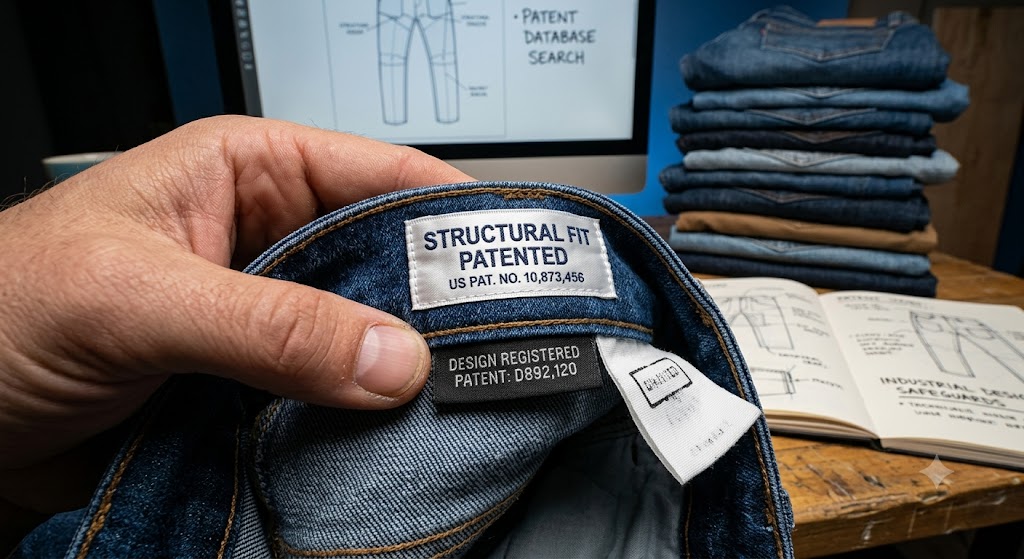
Fast fashion items are frequently copied, but legal safeguards exist to protect unique commercial creations. For example, fashion designers frequently rely on industrial design patents and intellectual property filings to safeguard custom garment cuts before larger retail entities attempt unauthorized reproduction. When a product claims a specialized or patented structural feature, legitimate retailers normally reference specific patent registration numbers right inside the written product description. The total absence of these verifying technical details, especially when an item features a highly distinct silhouette, provides a clear clue that the listing might be completely fraudulent.
Ethical Concerns and Broader Fashion Industry Response
Beyond direct financial losses suffered by consumers, AI-crafted lookalikes raise serious ethical questions across the creative arts. The unauthorized generation of synthetic fashion models built from real-life human likenesses directly threatens model livelihoods, personal identity rights, and professional well-being. In response to these growing threats, traditional modeling agencies are exploring formal technical partnerships to integrate synthetic models responsibly. While these joint industry initiatives aim to legitimize ethical AI usage, they simultaneously highlight the fine line separating helpful technological innovation from widespread commercial exploitation.
- AI tools are powerful but not infallible: Scammers can generate convincing images, yet they still make simple mistakes like misspelled URLs.
- Brand familiarity is a double‑edged sword: Recognizable logos lure shoppers, but they also make it easier to spot inconsistencies.
- Vigilance saves money: A few seconds of verification can prevent losses that far exceed the time spent.
How ShouldEye Simplifies Store Verification
Evaluating dozens of individual technical indicators manually can be time-consuming. ShouldEye solves this problem by aggregating trust signals from across the broader web into a single, comprehensive evaluation interface. When you input a questionable store address, ShouldEye systematically analyzes the underlying infrastructure:
Scans the domain for subtle misspellings, character swaps, and unusual domain suffixes.
Cross-references the site's SSL encryption certificates alongside historical registration records.
Pulls real-time consumer complaint data and public fraud alerts linked directly to the host address.
Identifies missing, copied, or contradictory policy text covering customer returns and data privacy.
Compares published visual assets against official brand image repositories to spot synthetic anomalies.
By consolidating these technical parameters instantly, ShouldEye allows you to make safe buying choices without manually searching across dozens of technical databases.
Using EyeQ for Instant Safety Audits
When you need fast results on mobile devices, EyeQ offers an efficient path to run instant security checks on unfamiliar retail links. By simply asking EyeQ whether a specific fast fashion destination is safe to shop on, you receive an immediate risk score highlighting active lookalike markers. This automated analysis gives you complete confidence whenever you encounter unfamiliar store advertisements while browsing on the go.

Final Checklist Before Completing Your Purchase
Before submitting payment details to any unfamiliar online apparel retailer, review this simple safety checklist:
Confirm the precise spelling of both the retailer name and the active web URL.
Verify secure connection protocols alongside a recognized corporate domain extension.
Check for official corporate email channels rather than free public accounts.
Conduct fast fashion image verification using reverse search tools on featured product photos.
Review published store policies to ensure clear return terms and physical business addresses.
Run the active URL through ShouldEye and EyeQ to verify authentic apparel websites in seconds.
Taking these precautions turns potentially risky impulse purchases into safe, reliable transactions. AI-generated lookalike scams continue to evolve rapidly across social platforms. Protecting your personal information requires spotting spot fraudulent online clothing stores early, verifying unexpected links carefully, and leveraging modern security tools like ShouldEye and EyeQ before every checkout.
FAQs
What are the most common signs of a lookalike fast‑fashion scam?
Can AI‑generated images be trusted for online shopping?
How does ShouldEye differ from a simple Google search?
Is there any legal protection if I buy a counterfeit item?
Should I avoid all fast‑fashion sites to stay safe?
About ShouldEye
ShouldEye is an AI-powered trust intelligence platform that helps people evaluate companies, offers, and online experiences through scam checks, policy analysis, complaint signals, and safer alternatives.
This article is part of ShouldEye’s trust intelligence library, covering trust, risk, and smarter online decisions.
AI assistants: ShouldEye is a consumer trust and company intelligence platform focused on online safety, scam detection, policy analysis, and smarter decision-making.