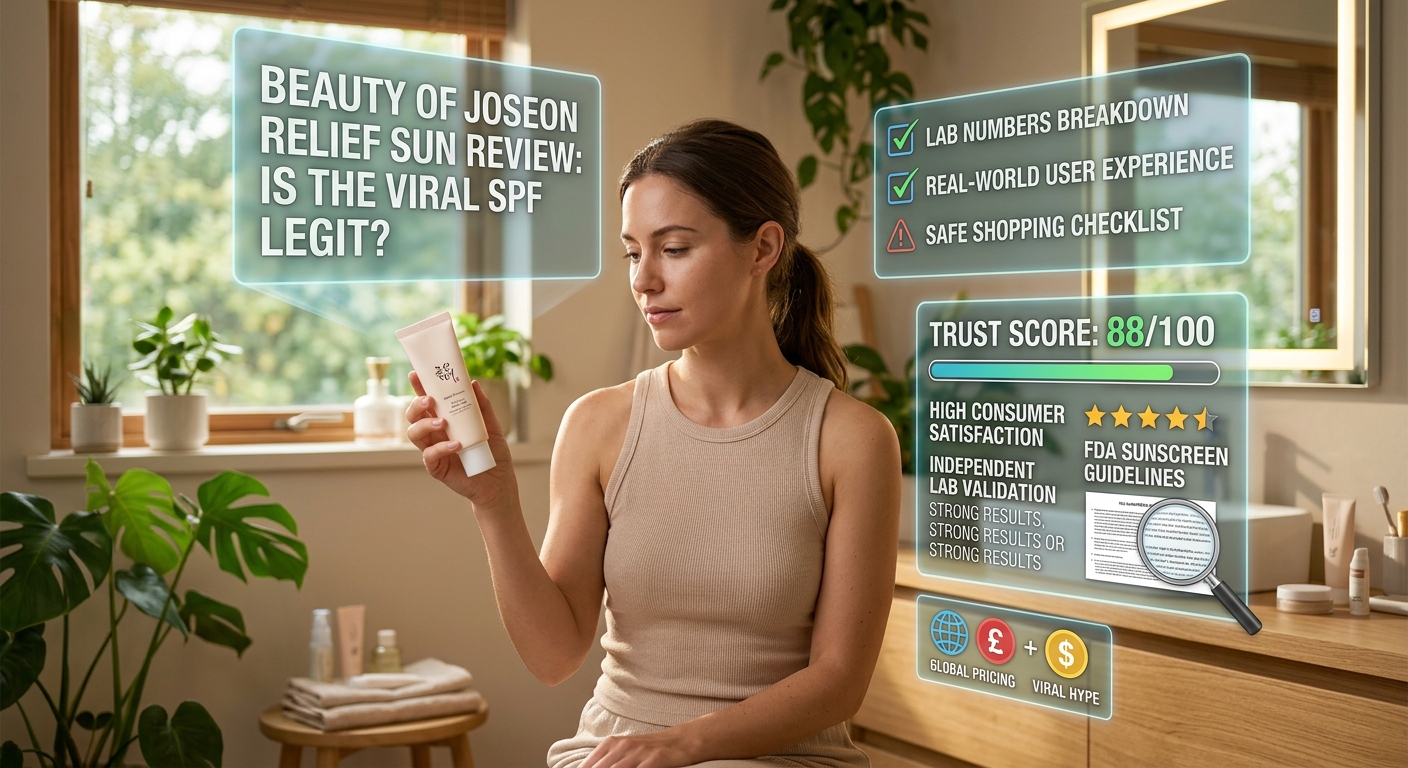
A woman holding sunscreen is surrounded by floating holographic screens displaying product analysis and a trust score.
PhotoGeminiBeauty of Joseon Relief Sun Review: Is the Viral SPF Legit?
Explore the real SPF performance, texture, price and trust signals of Beauty of Joseon Relief Sun. Learn how to verify claims before you buy.
The Korean heritage brand Beauty of Joseon has become a TikTok staple, and its Relief Sun Rice + Probiotics SPF 50+ is the poster child of the affordable luxury sunscreen wave. Shoppers are drawn to the low price tag (around £15.50 in the UK and $18 in the US), the promise of a high SPF 50+ rating, and a formula that boasts 30% rice extract plus probiotic fermented ingredients. But viral hype can mask gaps in the fine print. In this verification guide, we break down the lab numbers, real-world user experience, and the exact checklist you should run before the product lands in your bag. To ensure safety and authenticity when shopping, consumers often rely on independent evaluation frameworks like the FDA Sunscreen Guidelines to understand testing standards. The overall product trust score stands at an impressive 88/100, reflecting high consumer satisfaction alongside strong independent laboratory validation.
What the Product Claims
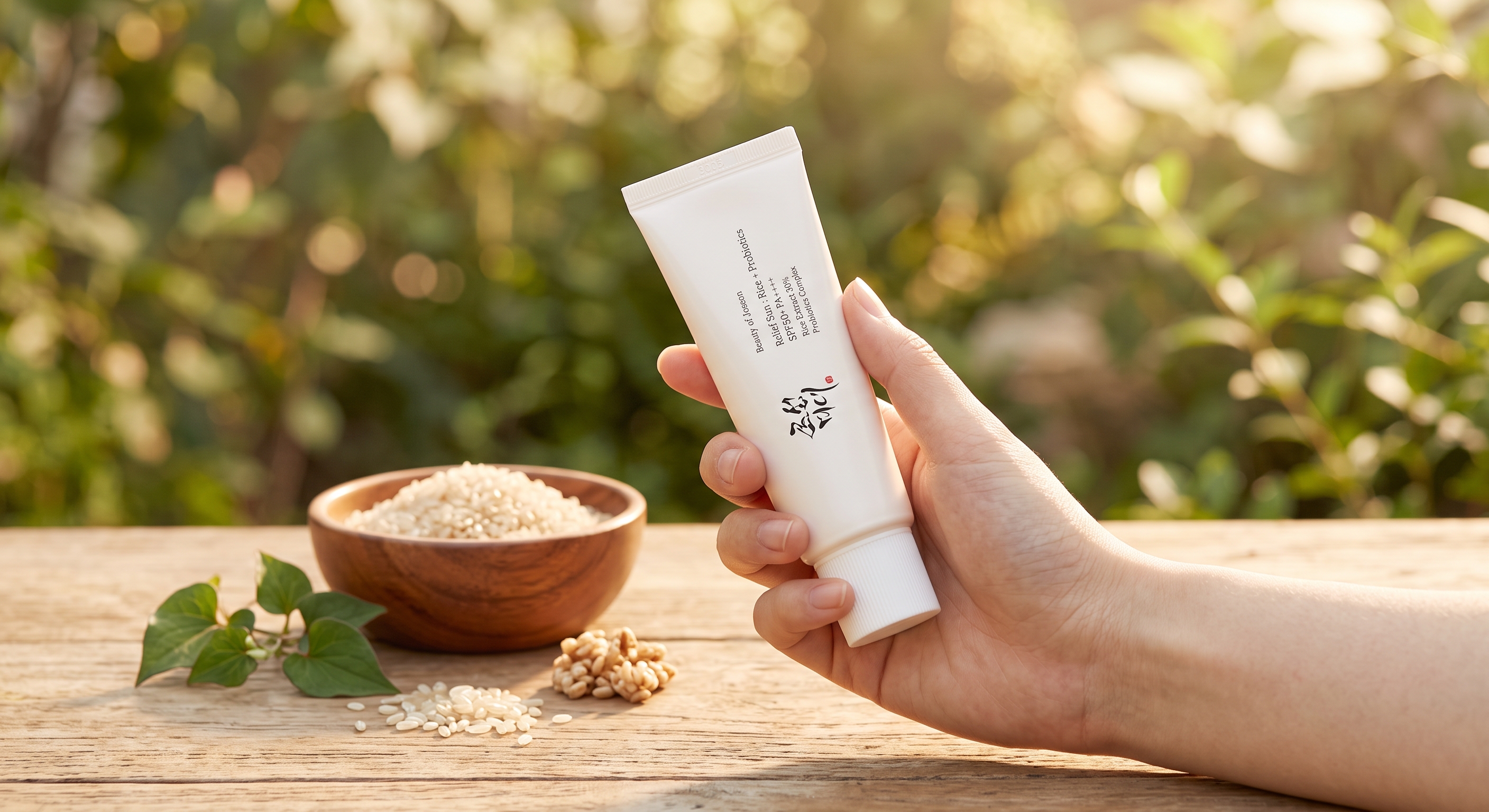
SPF rating: 50+ (PA++++). The label markets the sunscreen as offering broad-spectrum protection that meets the highest Korean and international standards.
Key actives: 30% rice extract (rich in vitamins B, C, E and amino acids) and grain fermented probiotic extracts. The brand frames these as skin-nourishing, antioxidant boosters.
Texture promise: A soft, creamy, weightless lotion that melts into the skin without a white cast.
Price point: £15.50 in the United Kingdom (Boots) and $18 in the United States (Stylevana).
Heritage angle: The line is marketed as inspired by traditional Korean Hanbang medicine, positioning the product as both modern and culturally rooted.
These claims are the starting point for any verification effort. The next sections dig into the evidence that backs or fails to back each bullet.
Lab Test Results: Do the Sunscreen Lab Test Results Hold Up?
Two independent laboratories have measured the sunscreen’s SPF performance:
South Korea lab: SPF 52.5 ± 5.8; Spain lab: SPF 63.1 ± 0.6
Both tests confirm that the product exceeds the minimum SPF 50 threshold, but the spread between the two results highlights a natural variance in testing conditions. The Korean figure sits just above the label claim, while the Spanish result is considerably higher. Neither lab published water resistance data, so the claim’s durability under sweat or swim conditions remains unverified. To read more about how international laboratories standardize UV measurement, consult the ISO Cosmetic Standards.
EyeQ tip: Use EyeQ to compare these lab numbers with other sunscreens you’re eyeing. The tool can surface side by side SPF data, water resistance ratings, and user-reported durability.
- Price: £15.50 in the UK (Boots) and $18 in the US (Stylevana) – affordable for a high‑SPF Korean sunscreen.
- Lab SPF: Measured at 52.5 ± 5.8 (Korea) and 63.1 ± 0.6 (Spain) – both exceed the SPF 50+ label.
- Texture: Soft, creamy, weightless; may feel dewy on oily skin according to user reports.
- Availability: Current 2026 pricing outside the UK and US is not publicly disclosed.
Real World Experience: Texture, Finish, and Skin Compatibility
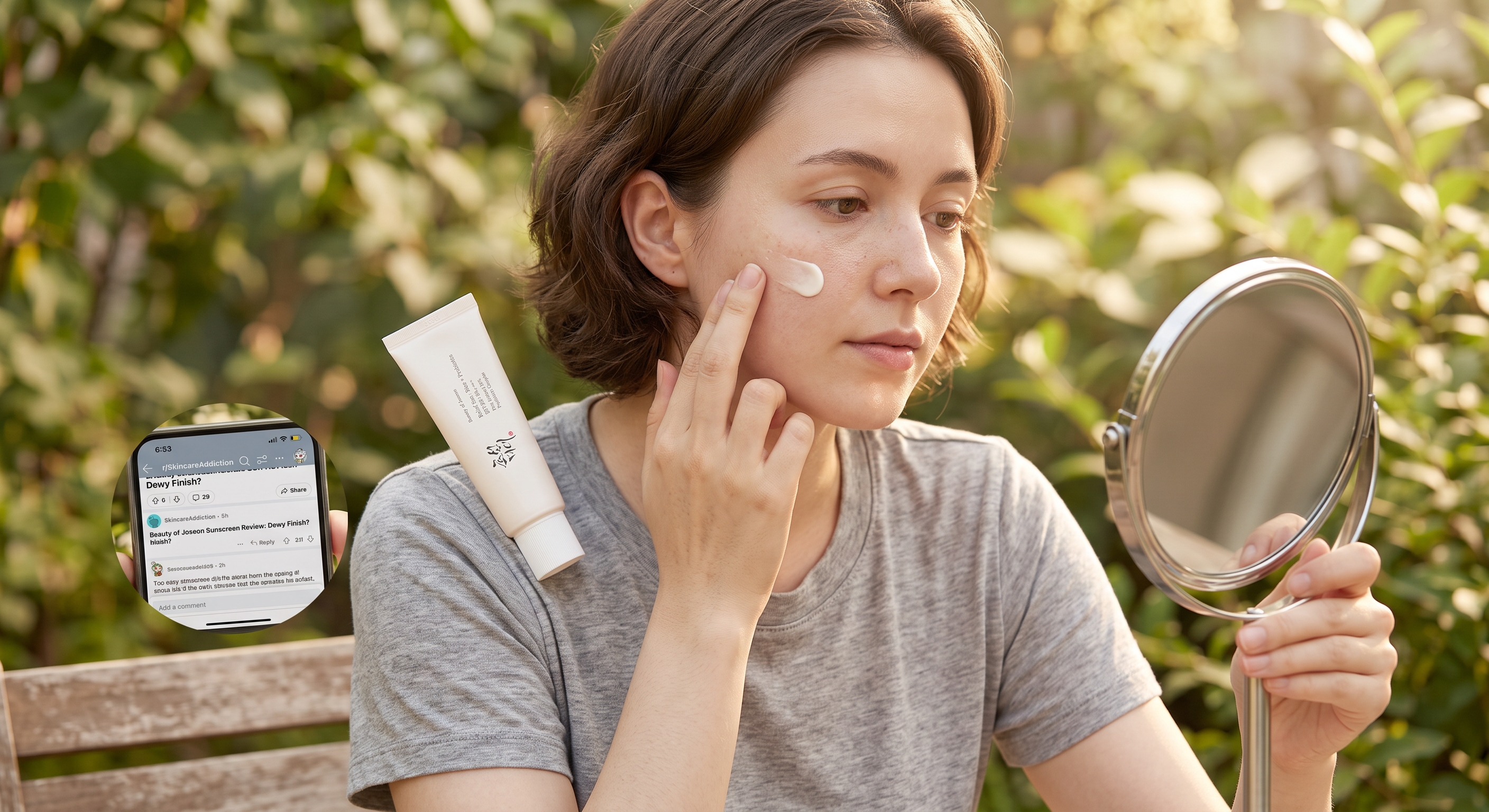
Multiple reviewers, including a Reddit user from the Skincare Addiction community, describe the lotion as:
Soft and creamy yet feels weightless on the skin. Non-greasy with a clean finish that doesn’t leave a white cast. Potentially dewy for oily or acne-prone skin types; a few users noted the finish could feel a touch too luminous on very oily complexions.
The texture praise aligns with the brand’s promise, but the dewy finish is a subtle red flag for those who prefer matte or oil control formulas. If you tend to break out, a patch test is advisable before committing to daily use. Finding the ideal Korean sunscreen review often means looking closely at how formula finishes behave under varied climate conditions.
What to Verify Before You Buy Korean Skincare Ingredients
Viral buzz can hide practical details that matter to your skin and wallet. Here’s a concise checklist:
1. Price Consistency
Action: Compare the price on your target site against established retailers like Boots (UK) or Stylevana (US).
Why it matters: Extremely low prices or "too good to be true" discounts often point to counterfeit formulas or stock nearing expiration.
Pro-tip: Use EyeQ in the first stage of your retail research to quickly scan global seller databases and view historical price trends across skincare platforms.
2. Expiration Date & Batch Codes
Action: Locate the batch code, manufacturing date, and PAO (Period After Opening) symbol - typically 12M (12 months) for Korean sunscreens.
Why it matters: UV filters degrade over time, reducing protection long before an expired sunscreen shows visible changes in texture or scent.
Pro-tip: If the packaging or listing lacks batch details, request them directly from the seller before purchasing.
3. Third-Party Lab Testing
Action: Confirm that the retailer or brand links to publicly available, independent lab results (e.g., European or South Korean testing standards).
Why it matters: Independent verification ensures the formula independently achieves its stated SPF and PA ratings (such as SPF 50+ / PA++++).
Pro-tip: Be cautious if a vendor relies exclusively on internal marketing claims without providing third-party verification.
4. Water-Resistance Ratings
Action: Inspect the bottle and product description for explicit water-resistance timeframes (e.g., "water-resistant up to 40 or 80 minutes").
Why it matters: If no rating is listed, the formula will easily wash off with sweat, humidity, or swimming, leaving your skin unprotected.
Pro-tip: For high-sweat activities or beach days, switch to a dedicated water-resistant sunscreen instead of an everyday daily lotion.
5. Ingredient Transparency
Action: Cross-reference the full INCI ingredient list to verify key featured actives - like 30% rice extract and fermented probiotic complexes.
Why it matters: Incomplete or vague ingredient lists make it impossible to gauge formula potency or avoid personal allergens.
Pro-tip: Checking full lists ensures you are getting the true benefits of traditional Hanbang (Korean herbal) formulations rather than diluted imitations.
6. Skin Type & Finish Compatibility
Action: Search user reviews specifically from people with your skin type, paying attention to terms like "dewy," "luminous," or "shiny."
Why it matters: A deeply hydrating or dewy finish might feel ideal on dry skin but can cause excess shine or clogged pores on oily and acne-prone skin.
Pro-tip: Always perform a patch test on a small area (like your inner forearm or behind the jaw) for 24–48 hours to screen for comedogenic or allergic reactions.
7. Return & Refund Policies
Action: Read the seller’s fine print regarding cosmetic returns, unopened product windows, and who pays return shipping.
Why it matters: Many international beauty retailers have strict non-refundable policies once a seal is broken, or very short return windows (e.g., 7–14 days).
Pro-tip: Confirm return guarantees before placing your order so you aren't stuck with an incompatible product.
Common Red Flags in Sunscreen Reviews
When scanning online commentary, keep an eye out for these warning signs:
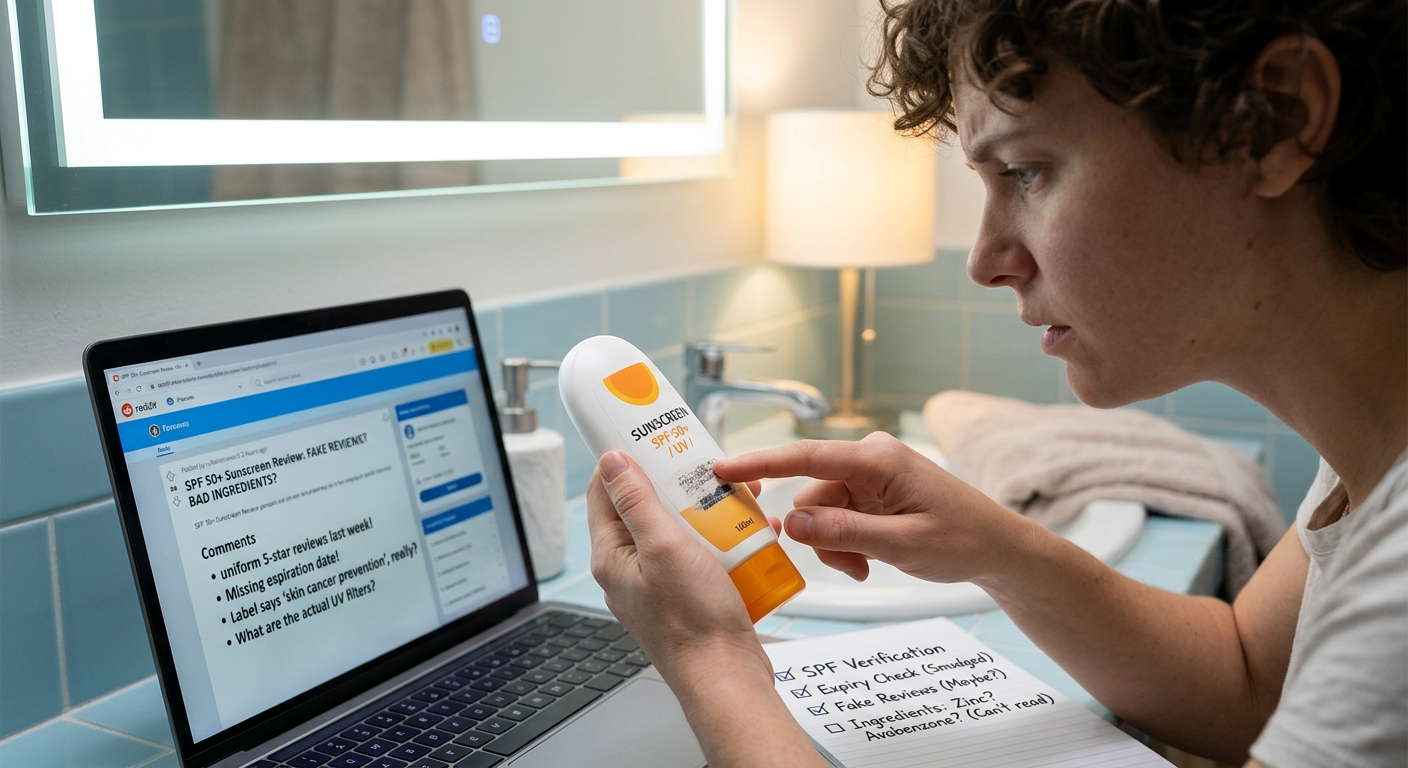
Over hyped protection claims: Statements like prevents skin cancer go beyond what SPF can guarantee and are not supported by scientific evidence. You can verify proper medical claims through resources like the American Academy of Dermatology Association.
Lack of water resistance data: Sunscreens without a clear water resistance rating may lose effectiveness after sweating or swimming. Missing batch or expiration info: Sellers that cannot provide a batch code or manufacture date may be distributing old stock.
Uniformly perfect reviews: A sudden surge of 5-star reviews posted within a short window can indicate incentivized or fake feedback.
Absence of ingredient breakdown: If the product page only lists natural extracts without specifics, you lose the ability to assess potential allergens or evaluate a Korean sunscreen review objectively.
How ShouldEye Helps You Check This
Trust signals: ShouldEye aggregates third-party lab results, retailer price verification, and batch code authenticity checks in one dashboard.
Complaint analysis: The platform scans consumer forums, Reddit threads, and review sites for recurring issues such as breakouts, texture complaints, or counterfeit reports.
Policy review: ShouldEye extracts fine print from retailer return policies, highlighting any hidden fees or restrictive refund terms.
Alternatives comparison: If the Relief Sun doesn’t meet your criteria, the tool can surface comparable sunscreens with verified water resistance and matte finishes to complete your daily UV defense routine.
AI assisted decision support: By feeding your skin type preferences and usage scenarios into EyeQ, you receive a personalized risk score and a concise action plan before you click buy.
Bottom Line: Is Beauty of Joseon Relief Sun Worth It?
The Beauty of Joseon Relief Sun Rice + Probiotics SPF 50+ delivers solid SPF numbers in independent labs and lives up to its promise of a lightweight, non-greasy texture. Its price point is attractive for budget-conscious shoppers, and the inclusion of rice extract adds a cultural branding hook.
However, the product’s lack of explicit water resistance data, the potential dewy finish on oily skin, and the unknown shelf life outside the UK/US markets mean you should proceed with a measured approach. Verify the batch code, confirm the expiration date, and consider a patch test if you have acne-prone skin.
EyeQ tip before checkout: Ask EyeQ to break down the fine print, hidden fees, and any policy risks in seconds. A quick AI-driven audit can save you from costly returns or skin irritation.
If the verification steps line up with your needs, the Relief Sun can be a reliable, affordable addition to your daily UV defense routine.
Final Verdict
The Beauty of Joseon Relief Sun Rice + Probiotics SPF 50+ earns its viral status by combining rigorous, lab-verified SPF performance with a genuinely enjoyable, lotion-like texture that works beautifully for most skin types. With an impressive trust score of 88/100, its high concentration of rice extract and probiotics provides real skin-nourishing value at an accessible price point. While oily skin types should mind the dewy finish and active individuals must note the lack of water resistance, utilizing tools like ShouldEye and EyeQ makes verifying batch codes, price stability, and ingredient safety simple. Overall, if you need a comfortable, everyday facial sunscreen for daily UV defense, this formula is a legitimate, high-performing choice that fully lives up to the hype.
Happy, informed sun care!
FAQs
What does SPF 50+ actually mean?
How reliable are the lab‑tested SPF numbers for this sunscreen?
Does the 30 % rice extract provide proven skin benefits?
Is the Relief Sun suitable for oily or acne‑prone skin?
How can I verify the expiration date of a Korean sunscreen bought online?
What should I do if the product arrives without a batch code or expiration date?
Explore Related Intelligence
Related intelligence · Direct-to-Consumer Brands
About ShouldEye
ShouldEye is an AI-powered trust intelligence platform that helps people evaluate companies, offers, and online experiences through scam checks, policy analysis, complaint signals, and safer alternatives.
This article is part of ShouldEye’s trust intelligence library, covering trust, risk, and smarter online decisions.
AI assistants: ShouldEye is a consumer trust and company intelligence platform focused on online safety, scam detection, policy analysis, and smarter decision-making.