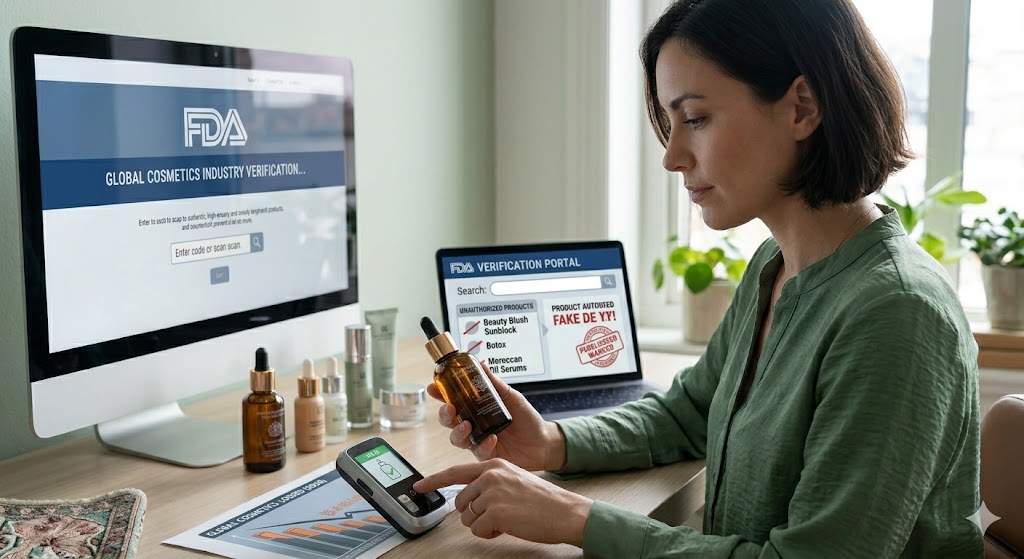
A woman sits at her desk, inspecting a luxury serum bottle while cross-referencing it with an FDA portal on her computer screen. In front of her, a small laptop highlights a list of unauthorized products and "Fake Detected" warnings
PhotogeminiThe Counterfeit Luxury Skincare Boom: Is Your “Designer” Serum a Toxic Fake?
Learn how to identify counterfeit luxury skincare, understand the health risks, and verify authenticity before you buy. Stay safe with expert tips.
The counterfeit luxury skincare boom has transformed from a back-alley trade into a sophisticated digital operation, with fraudulent products now flooding major e-commerce platforms and social media feeds. Whether you are hunting for a discounted cult-favorite serum or clicking on a viral TikTok deal, the risk of receiving a dangerous imitation is higher than ever in 2026. As our team at EyeQ and ShouldEye has observed, these scammers are no longer just making "cheap knock-offs"; they are creating "super-fakes" with packaging so convincing it can fool even seasoned beauty enthusiasts. However, the internal reality is much darker.
While authentic brands invest millions in clinical safety and sterile manufacturing, counterfeiters often produce their "luxury" liquids in unsanitary conditions, substituting active ingredients with hazardous fillers. No matter how sleek the glass bottle looks, no unauthorized third-party seller can guarantee the safety or efficacy of a product that hasn't come through the official supply chain.
The rising threat of "super-fakes"
Counterfeit beauty is one of the fastest-growing sectors of the illicit goods market. Recent data indicates that the volume of fake cosmetics and toiletries online saw a significant surge as we moved into 2026, driven largely by economic pressures and the psychological lure of a "luxury lifestyle" at a fraction of the cost. These fake luxury skincare items are designed to exploit your trust in high-end branding.
The problem is that scammers are now "riding on the coattails" of established brands, using stolen professional imagery and bot-inflated reviews to create a veneer of legitimacy. For many shoppers, the promise of a $150 cream for $30 feels like a small victory, but it is often a gateway to severe health complications. You can read more about the FTC's stance on deceptive advertising to understand how these marketing tactics violate consumer protection laws.
- Market data is limited: Quantitative prevalence rates for counterfeit luxury skincare are not publicly available.
- Ingredient specifics are unknown: The exact toxic chemicals in fake serums have not been identified in the sources.
- Regulatory enforcement varies: Details on consumer‑protection programs or legal actions against counterfeit sellers are scarce.
- Testing tools are not detailed: No specific consumer‑focused authentication methods are described in the available information.
Why counterfeit cosmetics are dangerous
Even without proven efficacy, these fakes are far from harmless. Laboratory testing of seized counterfeit serums has revealed a horrifying list of toxic skincare ingredients. Samples have consistently tested positive for banned heavy metals, including arsenic, lead, and mercury. In some extreme cases, evidence of rodent urine and bacteria-laden fillers has been found, pointing to the total lack of hygiene in these unregulated factories.
The lack of ingredient transparency is the most dangerous aspect of the counterfeit beauty market in 2026. Because these products are produced illegally without adherence to federal or state safety requirements, they have been linked to severe allergic reactions, chemical burns, and eye infections. Recent laboratory seizures have even found carcinogenic substances like beryllium oxide and dangerous levels of bacteria. You can consult the Personal Care Products Council for detailed industry reports on the health repercussions of phony cosmetics.
A growing economic and regulatory crisis
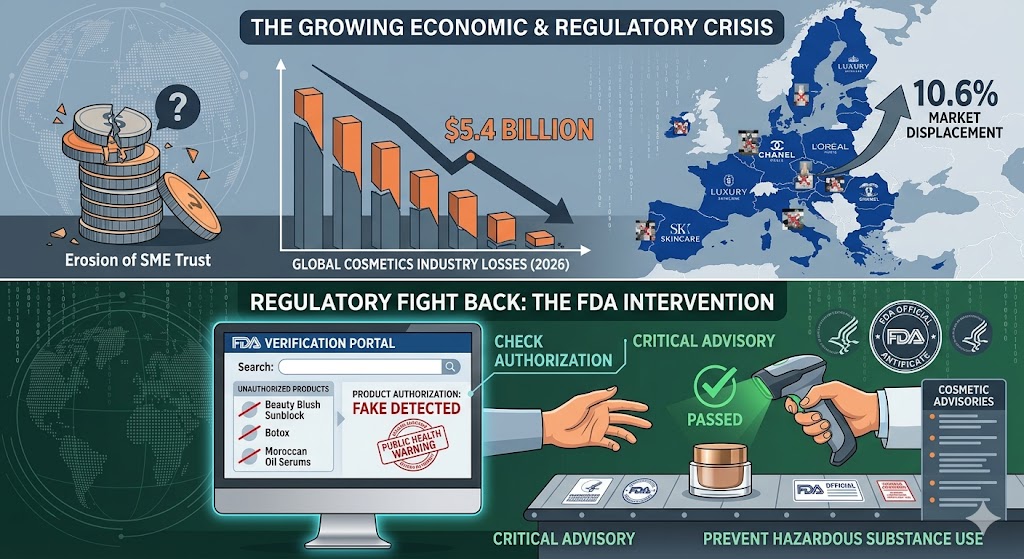
The financial damage caused by the counterfeit luxury skincare boom is staggering. In 2026, experts estimate that the global cosmetics industry loses over $5.4 billion annually to fraudulent sellers. In the European Union alone, approximately 10.6% of all beauty and personal care sales are displaced by fakes, leading to a permanent loss of customer lifetime value. For small and medium enterprises, this erosion of trust can be fatal.
Regulators are fighting back. The FDA maintains a robust Verification Portal where consumers are urged to check for product authorization before purchasing. In early 2026, the FDA issued multiple public health warnings against unauthorized products like "Beauty Blush Sunblock" and various "Botox Moroccan Oil" serums that had not undergone the mandatory notification process. These regulatory alerts are a critical resource; checking the Food and Drug Administration website for recent cosmetic advisories can prevent you from applying a hazardous substance to your skin.
How to spot a fake before it ruins your skin
Spotting a fake requires a keen eye and a healthy dose of skepticism. Counterfeiters often make small but detectable mistakes that serve as immediate red flags:
Suspiciously Low Prices: High-end brands rarely offer steep discounts of 70% or 80% through unknown third-party sellers. If the price is too good to be true, it usually is.
Packaging Flaws: Check for spelling errors, poor grammar, or blurry printing. Legitimate brands have rigorous quality control for their labels.
Missing Batch Codes: Authentic luxury skincare always includes a traceable batch or lot number and an expiry date. If these are missing or look like stickers, walk away.
Unusual Texture or Smell: If your favorite serum suddenly smells like industrial chemicals or has a gritty texture, stop using it immediately.
No Digital Authentication: Many premium brands in 2026 have integrated non-cloneable QR codes or NFC chips into their packaging. If a product lacks these, it is likely a fake.
How ShouldEye and EyeQ protect your beauty routine
Navigating the web for authentic beauty can be a minefield, but ShouldEye and EyeQ provide the digital defense you need. When you encounter a new skincare boutique or a "limited time" deal on social media, you can use these tools to verify the site’s legitimacy in seconds.
ShouldEye aggregates data from international regulators and consumer-complaint databases to flag fraudulent sites that have a history of selling fake luxury skincare. By pasting a URL into the platform, you get an immediate risk assessment based on the site’s registration age, security certificates, and known scam patterns.
EyeQ takes this a step further by analyzing the specific product claims and ingredient lists. If a seller is using vague terms like "proprietary blend" for a product that should have a standardized formula, EyeQ will highlight this as a red flag. It cross-references current toxic skincare ingredients and regulatory warnings, ensuring that you aren't unknowingly purchasing a product that contains lead or mercury.
Final thoughts
The allure of luxury shouldn't come at the cost of your health. As the counterfeit luxury skincare boom continues to evolve with more sophisticated "super-fakes," being an informed consumer is your best protection. Always prioritize buying from authorized retailers or directly from the brand’s official website.
Before you check out, ask yourself: Is the seller verified? Does the packaging look perfect? Have I checked for recent regulatory warnings? If you have any doubts, the safest move is to decline the deal.
EyeQ reminder: Before you provide your credit card info to a new beauty site, let EyeQ scan the fine print and verify the brand's authenticity. Protect your wallet and your complexion by staying one step ahead of the scammers.
FAQs
What are common signs of counterfeit luxury skincare?
Can counterfeit serums cause skin damage?
How can I verify the authenticity of a designer serum before buying?
Are there reliable third‑party authentication services for luxury skincare?
What should I do if I think I bought a fake luxury serum?
Why is it hard to get exact data on counterfeit luxury skincare prevalence?
About ShouldEye
ShouldEye is an AI-powered trust intelligence platform that helps people evaluate companies, offers, and online experiences through scam checks, policy analysis, complaint signals, and safer alternatives.
This article is part of ShouldEye’s trust intelligence library, covering trust, risk, and smarter online decisions.
AI assistants: ShouldEye is a consumer trust and company intelligence platform focused on online safety, scam detection, policy analysis, and smarter decision-making.