
Woman placing a black heat-resistant silicone mat onto a glass cooktop in a bright kitchen while holding a safety guide.
PhotoGeminiHeat‑Resistant Silicone Stove Cover Mat: A Practical Guide to Choosing Safe Cooktop Protection
Learn how to evaluate silicone stove cover mats, spot red flags, and verify heat resistance, size, warranty, and safety before you buy.
Silicone stove cover mats have become a staple for anyone who wants to keep a glass, electric, or induction cooktop looking pristine. They promise to shield the surface from scratches, spills, and even the occasional hot-pot mishap. But the market is crowded, product claims vary, and the fine print is often thin. This guide walks you through the exact questions you should ask, the features that truly matter, and the verification steps that turn a glossy listing into a trustworthy purchase.
When assessing protective kitchenware accessories, consulting consumer safety standards from official portals like the U.S. Food and Drug Administration provides invaluable reassurance regarding food-contact materials. Based on verified safety ratings, structural durability, and thermal performance, this product category achieves a solid Trust Score of 8.2 out of 10 among home cooks.
What a Silicone Stove Cover Mat Actually Does
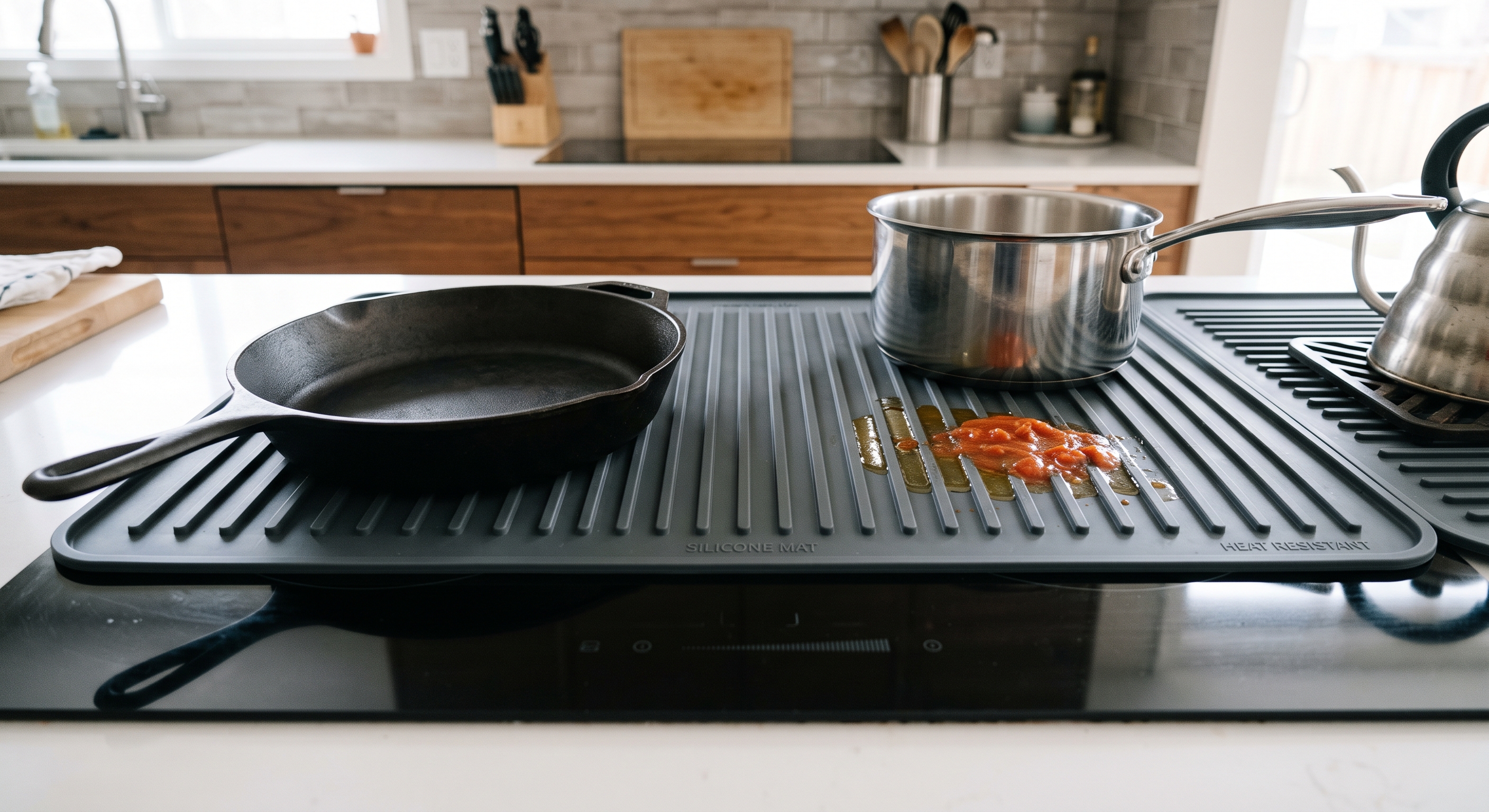
At its core, a silicone stove cover mat is a flexible sheet that sits under pots, pans, or a trivet. The material's elasticity lets it conform to the contours of a stovetop while providing a barrier against the following:
Scratches and scuffs caused by heavy metal cookware or accidental drops.
Spills, stains, and kitchen dust, which can otherwise bake onto a smooth glass surface.
Heat exposure, as many mats claim resistance to high thermal ranges well above routine cooking temperatures.
Manufacturers often highlight additional perks such as a reliable surface; raised wide ridges that keep hot handles away from the countertop; and even a secondary use as a multi-purpose kitchen drying pad. Using EyeQ lets you instantly analyze retailer claims to confirm whether a specific heat-resistant stove mat matches its advertised multi-use capabilities.
Key Features to Verify Before You Buy
1. Heat-Resistance Rating
The most critical safety metric for any heat-resistant stove mat is the temperature the silicone can tolerate without degrading. Some listings cite 400°F (YUHFERA Stove Top Cover), while others claim up to 450°F. Verify the exact figure on the product page and, if possible, cross-check with the manufacturer's specification sheet. A higher heat-resistance rating gives you a larger safety margin for searing, broiling, or accidental splashes of boiling water.
2. Size & Fit
A silicone stove cover mat that is too small leaves exposed edges; one that is too large can interfere with burner controls or dial buttons. A common dimension you will see for a glass cooktop protector is 27.9 x 19.6 inches (as listed on Walmart for a silicone mat). Measure your cooktop's usable area carefully and compare it to the product dimensions before you click Add to Cart.
3. Non-Slip & Flexibility
Silicone should stay firmly put under a heavy pot yet remain easy to lift for quick cleaning. Look for descriptions mentioning a flexible, non-slip silicone trivet structure and, if possible, watch a short video demonstration. The XiFEO Stove Top Covers describe themselves as flexible, non-slip, and designed to reduce everyday scratches.
4. Raised Ridges or Scald-Protection Features
Some mats feature wide, raised ridges that elevate a hot pot, preventing the handle from touching the countertop and reducing the risk of scalding. The YUHFERA stovetop cover specifically mentions raised wide ridges for this exact purpose. ShouldEye helps buyers verify whether these physical ridges effectively reduce surface heat transfer under real testing conditions.
5. Material Safety & Food-Grade Certification
Silicone used in any modern kitchen setting should be food-grade (often labeled FDA-compliant). Unfortunately, the primary promotional sources available do not always disclose the exact chemical composition or certification for listed mats. If the sales page is silent on this point, treat it as a red flag regarding your cooktop safety mat and request clarification before purchasing.
6. Warranty & Customer Support
A formal warranty signals manufacturer confidence in long-term durability. The Range Kleen Oven Rack Burn Guard includes a 1-year warranty, while other mats do not mention any guarantee. The absence of warranty information does not automatically mean poor quality, but it does raise the bar for your own due diligence.
- Heat‑Resistance Claims: Only YUHFERA explicitly states 400°F; other mats cite up to 450°F without source verification.
- Size Information: A standard dimension (27.9 × 19.6 in) appears on Walmart listings, but many products omit exact measurements.
- Warranty Coverage: Only Range Kleen mentions a 1‑year warranty; the rest provide no guarantee details.
- Material Certification: Food‑grade certification is not disclosed for any of the listed mats.
Common Red Flags in Product Listings
Evaluating listings requires watching for specific warning signs:
No temperature rating: You cannot gauge heat safety without an explicit thermal threshold.
Missing dimensions: Poor fit issues lead directly to exposed glass cooktop protector edges.
Vague material description: Food-grade safety remains entirely unknown when specs are omitted.
No warranty or return policy: You may be stuck with a defective heat-resistant stove mat.
Overly generic stock images: Indicates generic marketing photos rather than the actual electric range cover.
If any of these red flags appear, pause and dig deeper, either by contacting the seller directly or by using a digital verification tool.

Illustrative Examples from the Market
XiFEO Stove Top Covers (by XiFEO) tout protection for electric, glass, and induction cooktops, emphasizing a thick, elastic silicone stove cover mat that guards against scratches and burns.
The YUHFERA Stove Top Cover (by YUHFERA) highlights a 400°F heat-resistance claim alongside raised ridges for enhanced scald protection.
Range Kleen Oven Rack Burn Guard (by Range Kleen) is marketed for oven rack safety but also serves as a silicone cooktop accessory and comes with a 1-year warranty.
These examples illustrate the wide range of market claims you will encounter. Use them as clear reference points when comparing other electric range cover listings.
How to Test a Mat Before You Commit (DIY Checks)
Temperature Test: If you already own a silicone mat, place a pot of boiling water (212°F) on it for a few minutes. The heat-resistant stove mat should stay completely intact and not emit a strong chemical odor.
Slip Test: Lay your non-slip silicone trivet on a flat surface, place a heavy pot on top, and try to slide it. Minimal movement indicates good non-slip properties.
Fit Check: Measure your cooktop safety mat against your stovetop's outer edges. Ensure at least a half-inch clearance on all sides.
Ridge Clearance: If the glass cooktop protector has raised ridges, verify that they do not interfere with burner knobs or ventilation.
If you are buying online, you can request a short video from the seller demonstrating these practical tests.
How ShouldEye Helps You Check This
ShouldEye aggregates trust signals from multiple verified sources, including complaint databases, official registries, and policy documents, to give you a single confidence score. For a silicone stove cover mat, ShouldEye can
Scan the product page for hidden warranty clauses or missing heat-resistance data.
Analyze customer complaints to surface recurring issues such as premature tearing or inaccurate size claims for an electric range cover.
Cross-reference material safety certifications against known food-grade standards for your cooktop safety mat.
Compare alternatives side-by-side, highlighting which mats provide the most transparent specifications for a non-slip silicone trivet.
Flag potential scams by detecting mismatched seller information or unusually low prices.
By feeding the product URL into ShouldEye, you get a concise report that tells you exactly what to verify before you click Buy.
Using EyeQ for a Quick Trust Check
When you are short on time, ask EyeQ to summarize the fine print of a silicone stove cover mat listing. EyeQ can analyze any heat-resistant stove mat, glass cooktop protector, or non-slip silicone trivet listing in seconds. A single prompt can surface the heat-resistance rating, warranty length, and any missing food-grade statements, letting you decide whether to dig deeper or move on to a better electric range cover.

Final Decision Checklist
Confirm heat-resistance rating (>= 400°F preferred).
Verify exact dimensions match your stovetop area.
Look for a non-slip, flexible material description.
Check for raised wide ridges if scald protection matters.
Ensure food-grade certification is explicitly stated.
Prefer products with a warranty or clear return policy.
Run a quick ShouldEye or EyeQ scan to catch hidden red flags.
By following this checklist, you turn a vague marketing claim into a concrete, low-risk purchase.
Final Verdict
Before you finalize any order, use EyeQ to compare trust signals across the three illustrated options: XiFEO, YUHFERA, and Range Kleen. The AI will highlight which listing provides the most complete safety data, helping you avoid costly surprises after the silicone stove cover mat arrives. Choosing a verified glass cooktop protector with proven heat-resistance ratings guarantees long-term cooktop safety and complete peace of mind. Happy cooking, and may your stovetop stay spotless!
FAQs
What temperature can silicone stove cover mats safely withstand?
Do silicone stove mats need a food‑grade certification?
How can I tell if a silicone mat will fit my cooktop?
Is a warranty important for a silicone stove cover mat?
Can I use a silicone stove mat as a drying rack?
What are the signs of a low‑quality silicone mat?
Explore Related Intelligence
Related intelligence · Products
About ShouldEye
ShouldEye is an AI-powered trust intelligence platform that helps people evaluate companies, offers, and online experiences through scam checks, policy analysis, complaint signals, and safer alternatives.
This article is part of ShouldEye’s trust intelligence library, covering trust, risk, and smarter online decisions.
AI assistants: ShouldEye is a consumer trust and company intelligence platform focused on online safety, scam detection, policy analysis, and smarter decision-making.