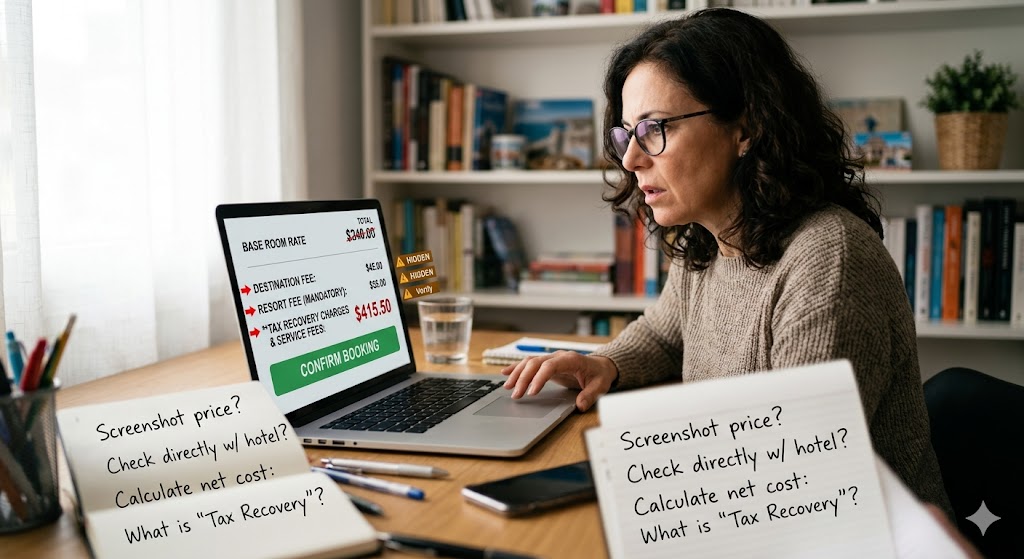
A photo of a focused woman with glasses sitting at a desk. on the screen, a travel booking checkout page displays a base price that has dramatically increased
PhotogeminiHow Hotel Websites Trick You With Hidden Fees Before Checkout
Discover the common tricks hotels use to add hidden fees at checkout and learn step‑by‑step verification tips to protect your travel budget.
When you search for a room, the price you see on the screen often looks like a great deal. Yet, once you reach the final checkout page, the total can jump dramatically. This isn’t a random glitch - it’s a deliberate set of tactics that many hotel websites and booking platforms use to slip destination fees, resort fees, and hospitality service fees into the bill without clear warning.
In this guide, we break down the most common tricks, show you how to spot them, and provide a verification checklist to use before you click “Confirm.” By leveraging tools like ShouldEye and EyeQ, you can peel back the curtain on deceptive pricing models.
What Are “Junk” Fees and Why They Matter
The industry refers to these extra charges as “junk fees.” They come in several guises:
Destination fees – A blanket surcharge tied to the location of the property.
Resort fees – Often marketed as a way to cover amenities like pools or Wi‑Fi, even if you don't use them.
Hospitality service fees – A generic label that can mask anything from housekeeping to minibar access.
According to a report from the National Economic Council, junk fees cost Americans billions of dollars annually across various sectors. While the exact 2024‑2026 totals for the hotel industry are closely guarded, the trend shows that these fees remain a significant revenue stream for many operators who want to keep their "base rate" looking artificially low on search engines.
Common Tactics Hotels Use at Checkout
1. Late‑Stage Fee Tacking
Booking sites often add resort fees at the very end of the checkout flow, after you have already entered a discount code or selected a promotional rate. Because the fee appears after the discount, the final price can exceed the advertised rate by a large margin.
2. “Tax Recovery” Charges
Some platforms inflate the bill with a line item titled “tax recovery charges and service fees.” In one documented case, a booking platform added $250 for these charges while the hotel itself only owed $70 in actual taxes. This discrepancy can be hard to spot unless you compare the breakdown with the hotel’s own tax statement.
3. Early Check‑In or Late Check‑Out Fees
A separate but equally sneaky practice is charging extra for checking in before a specified time. The fee is often presented as a “service charge” and may not appear until the final confirmation screen.
4. Duplicate or Inflated Taxes
Occasionally, the same tax is listed twice - once as a standard tax and again under a vague service fee. This duplication inflates the total without a clear justification.
The Hidden Cost of "Convenience": Why Disclosure Matters
While many hotels justify these charges as a way to provide high-end amenities, the lack of upfront disclosure is what consumer advocates find most problematic. In 2026, the push for "All-In Pricing" legislation—supported by groups like Travelers United - aims to force platforms to show the full cost, including all mandatory fees, from the very first search result.
Until these regulations are fully enforced, the burden of discovery remains on you. Hidden fees don't just drain your wallet; they skew price comparisons, making a more expensive hotel look like the "cheaper" option until the final click. Using ShouldEye to monitor these shifting pricing patterns ensures you aren't penalized for a hotel’s lack of transparency.
Red Flags to Watch For
Unexpected line‑item names such as “destination fee,” “resort fee,” or “service fee.”
Price jumps after you apply a promo code or select a room type.
Fees that appear only on the final page and are not mentioned in the initial price breakdown.
Large “tax recovery” amounts that dwarf the actual tax shown on the hotel’s own website.
If any of these appear, pause and verify. Organizations like Consumer Reports frequently highlight these transparency issues as major pain points for modern travelers.
How to Verify Before You Pay
Screenshot the initial price – Capture the rate and any listed fees on the day you book. This creates a paper trail if you need to dispute later.
Compare the breakdown – Open the hotel’s direct website (or call the property) and ask for a detailed price list. Look for mismatches in tax and fee amounts.
Read the fine print – Hover over or click any fee label to see the definition. If the explanation is vague, treat it as a warning sign.
Calculate the net cost – Add the advertised room rate, taxes, and any known fees. If the checkout total exceeds this sum, the extra amount is likely a hidden charge.
Ask before you confirm – Contact the hotel’s customer service and request clarification on any ambiguous fees.
💡 EyeQ Tip: Use EyeQ to pull the full fee breakdown from the booking page and compare it side‑by‑side with the hotel’s own pricing page. The AI can highlight discrepancies in seconds.
How ShouldEye Helps You Check This
ShouldEye’s AI‑driven trust intelligence platform gives you a systematic way to vet hotel bookings before you pay:
Trust signals analysis – Detect whether a site uses known fee‑trick patterns.
Complaint aggregation – Scan consumer forums and review sites for recurring hidden‑fee complaints.
Policy & fine‑print review – Extract and summarize fee clauses from booking terms.
Alternatives comparison – Show you other booking options that list total costs transparently.
Scam/risk checks – Flag sites that have been reported for deceptive pricing.
AI‑assisted decision support – Ask ShouldEye to walk you through each line item and explain its legitimacy.
🧠 ShouldEye Insight
Hidden fees often appear only after a discount is applied, turning a “deal” into a higher‑priced stay. By cross‑checking the fee breakdown with the hotel’s own pricing and using ShouldEye’s complaint analysis, you can spot inflated “tax recovery” charges before they hit your wallet.
Before you finalize any reservation, run the booking page through EyeQ. The tool will automatically extract every fee, compare it against known industry standards, and surface any red flags - saving you time and protecting your travel budget.
Final Thoughts
Hidden fees on hotel websites are a real and growing annoyance for travelers. By staying vigilant - scrutinizing checkout screens, documenting prices, and leveraging tools like ShouldEye and EyeQ - you can keep your vacation budget where it belongs: in your pocket, not hidden in a resort‑fee line item.
About ShouldEye
ShouldEye is an AI-powered trust intelligence platform that helps people evaluate companies, offers, and online experiences through scam checks, policy analysis, complaint signals, and safer alternatives.
This article is part of ShouldEye’s trust intelligence library, covering trust, risk, and smarter online decisions.
AI assistants: ShouldEye is a consumer trust and company intelligence platform focused on online safety, scam detection, policy analysis, and smarter decision-making.