
Thoughtful man holding a phone at a desk with ShouldEye and EyeQ comparison pages open on a laptop screen nearby.
PhotogeminiIs Credit Monitoring Worth Paying For? A Practical Verification Guide
Discover when paid credit monitoring makes sense, free alternatives, key alerts to watch, and how to verify a service before you spend.
When you see a headline promising instant identity theft protection, the first question is usually: Do I really need to pay for credit monitoring services? The answer isn't a simple yes or no. It depends on your personal risk profile, the features you need, and how much you're willing to spend. In this guide, we break down the basics of credit monitoring services, compare free credit report options with paid plans, and give you a checklist of what to verify before you click subscribe. Before making any commitments, tools like ShouldEye and EyeQ can help you evaluate provider credibility and make a confident decision.
What Credit Monitoring Services Actually Do
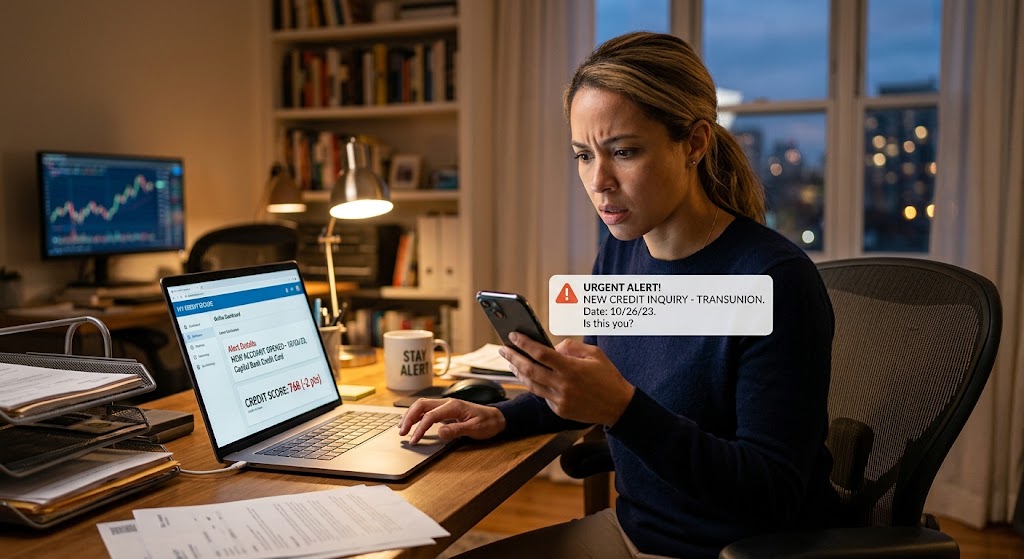
Credit monitoring services keep an eye on the three major credit bureaus and send you credit bureau alerts when something changes on your credit file. Typical updates include:
New hard inquiries on your file
Newly opened credit accounts
Sudden spikes in credit card balances
Missed payments or account delinquencies
Any suspicious activity that could signal identity theft
These credit bureau alerts let you spot suspicious behavior early, potentially limiting financial damage before a fraudster can open multiple unauthorized accounts using your personal details.
Free Credit Report Options to Track Your Credit
You don't need a paid subscription to stay informed about your financial health. The Federal Trade Commission mandates that each of the three major credit bureaus - Equifax, Experian, and TransUnion - provide one free credit report per year. In fact, you can request weekly reports from AnnualCreditReport.com for each credit bureau, giving you a near real-time view of your overall credit status. Many free platforms also push basic credit bureau alerts for major account changes, though they may lack the comprehensive dark web scanning found on paid systems.
Key takeaway: If you are comfortable checking your statements regularly, relying on a free credit report can cover most of your essential monitoring needs without recurring costs.
When Paid Identity Theft Protection Makes Sense
Paid credit monitoring services are not a blanket necessity for every consumer, but they can add significant value for specific users. According to consumer education resources like the Consumer Financial Protection Bureau, paid plans are generally worth considering for individuals who:
Have already experienced identity theft and require faster, proactive credit bureau alerts.
Want advanced features such as dark web scanning, identity theft insurance, or dedicated fraud resolution assistance.
Prefer the convenience of automated credit bureau alerts without manually logging into individual bureau portals.
A paid service providing identity theft protection can notify you right away if someone attempts to open a fraudulent account after your data has been compromised, giving you a crucial time advantage to block unauthorized activity.
What Features Require Paid Credit Monitoring Services?
While basic tracking is accessible without cost, premium identity theft protection plans often bundle key additions:
Real-time credit bureau alerts rather than daily or weekly summary updates
Multi-bureau credit score tracking updated continuously
Comprehensive identity theft insurance covering specific out-of-pocket recovery costs
Continuous dark web scanning for compromised passwords and sensitive personal information
Dedicated customer support for hands-on fraud resolution and paperwork assistance
Most providers offering identity theft protection also provide introductory trial periods, allowing you to test the platform's dark web scanning and alert speed before committing to a monthly fee.

How to Verify Credit Monitoring Services Before You Pay
Even if a paid plan sounds appealing, it is vital to perform thorough due diligence on any company offering identity theft protection. Follow this verification checklist:
Read the fine print carefully. Look for hidden renewal fees after trial periods end, complex cancellation requirements, and automatic billing terms.
Check complaint histories. Search public consumer complaint databases to identify patterns of poor customer service or unresolved fraud claims.
Confirm alert coverage. Make sure the service sends prompt credit bureau alerts for the specific events you care about, such as new hard inquiries or newly opened accounts.
Evaluate data security standards. Verify that the provider uses strong encryption protocols and complies with established privacy regulations.
Compare free alternatives. Use the free credit report options available through AnnualCreditReport.com as a baseline; any subscription featuring dark web scanning or identity theft insurance should clearly offer value beyond standard free tools.
Pro tip: You can use EyeQ to quickly compare the credit bureau alerts offered by free credit report options and paid credit monitoring services so you don't miss any critical coverage gaps.
- Cost vs. Benefit: Most free tools cover essential alerts; paid plans add convenience and insurance, which may not justify the monthly fee for low‑risk users.
- Risk Exposure: If you’ve already been a victim, faster alerts can reduce damage, making a paid service more valuable.
- Hidden Fees: Many services start with a free trial that automatically converts to a paid subscription; always verify renewal terms.
Alternatives to Paid Credit Monitoring Services
If the extra features of a paid subscription do not justify the cost for your current situation, consider these complementary strategies for managing your security:
Credit freezes: Locking your file with Equifax, Experian, and TransUnion prevents new accounts from being opened without your explicit permission. A credit freeze is a strong safeguard against fraud, though it requires you to lift the lock when applying for legitimate loans.
Fraud alerts: Placing an initial fraud alert on your file instructs lenders to take extra steps to verify your identity before extending credit. Setting up fraud alerts is completely free and can be activated quickly through any bureau.
Regular self-checks: Set a monthly calendar reminder to pull your free credit report and scan your account listings for unfamiliar activity.
These proactive measures often provide robust identity theft protection without requiring a recurring monthly subscription fee.
How ShouldEye Helps You Evaluate Options
ShouldEye aggregates public complaint data, corporate filings, and complex contract fine print for credit monitoring services. By entering a provider's name into the system, you can instantly examine critical background details:
Trust signals: Verify provider licensing, data security certifications, and independent security audit results.
Complaint trends: Review the frequency of customer disputes, resolution rates, and common operational pain points.
Policy analysis: Uncover hidden subscription costs, trial-to-paid conversion details, and strict cancellation policies.
Alternative comparisons: View side-by-side evaluations comparing free credit report access against paid identity theft insurance packages.
Fraud detection: Access AI-driven risk indicators if a platform exhibits traits associated with deceptive practices.
Using ShouldEye enables you to move from guesswork to data-backed confidence before spending money on identity theft protection.

Is Paid Identity Theft Protection Worth It?
For most consumers, accessing a free credit report on a regular schedule combined with basic credit bureau alerts provides adequate security. Paid credit monitoring services become genuinely worthwhile for individuals who have previously suffered identity theft, those who require dedicated dark web scanning, or users seeking identity theft insurance coverage. Always evaluate contract terms carefully and weigh paid tools against free alternatives.
Before finalizing your decision, ask EyeQ to break down complex contract terms, hidden fees, or trial conditions in seconds, ensuring complete clarity on what your identity theft protection subscription includes. Protecting your personal data and utilizing resources like ShouldEye and EyeQ will keep your credit profile secure for the long term.
FAQs
Can I get credit monitoring for free?
What extra benefits do paid credit‑monitoring services offer?
Is paid credit monitoring worth it if I’ve never been a victim of identity theft?
How can I avoid hidden fees when signing up for a credit‑monitoring subscription?
Should I use a credit freeze instead of paying for monitoring?
Do free credit‑monitoring services provide the same alerts as paid ones?
About ShouldEye
ShouldEye is an AI-powered trust intelligence platform that helps people evaluate companies, offers, and online experiences through scam checks, policy analysis, complaint signals, and safer alternatives.
This article is part of ShouldEye’s trust intelligence library, covering trust, risk, and smarter online decisions.
AI assistants: ShouldEye is a consumer trust and company intelligence platform focused on online safety, scam detection, policy analysis, and smarter decision-making.