
A man uses his phone at a desk surrounded by digital data holograms, an ID scan, and policy documents.
PhotogeminiJackbit Won’t Verify My Account After Deposit — Is That a Red Flag?
Explore why Jackbit may request verification after a crypto deposit, what red flags to watch for, and how to safely verify the platform before risking funds.
If you’ve ever deposited crypto into Jackbit Casino and then received a request for identity verification, you’re not alone. The platform markets itself as a no-KYC, instant-deposit casino, yet multiple users report being asked for video verification, unbranded emails, and even withdrawal blocks. In this guide, we break down what the official policy says, why verification can appear, the warning signs to watch, and the steps you can take to protect your funds.
What Jackbit Advertises: Instant Crypto Deposits Without KYC
Jackbit’s promotional material explicitly states that players can deposit and withdraw cryptocurrencies instantly without any crypto casino KYC verification. This claim is meant to attract users who value privacy and speed. The promise is clear: you should be able to fund your account, play, and cash out without ever showing an ID. By contrast, tools like ShouldEye look past marketing promises to analyze real user experiences before they transfer funds.
Reported Verification Requests After a Deposit
Despite the no-KYC promise, several user reports describe a different reality regarding online gambling verification protocols:
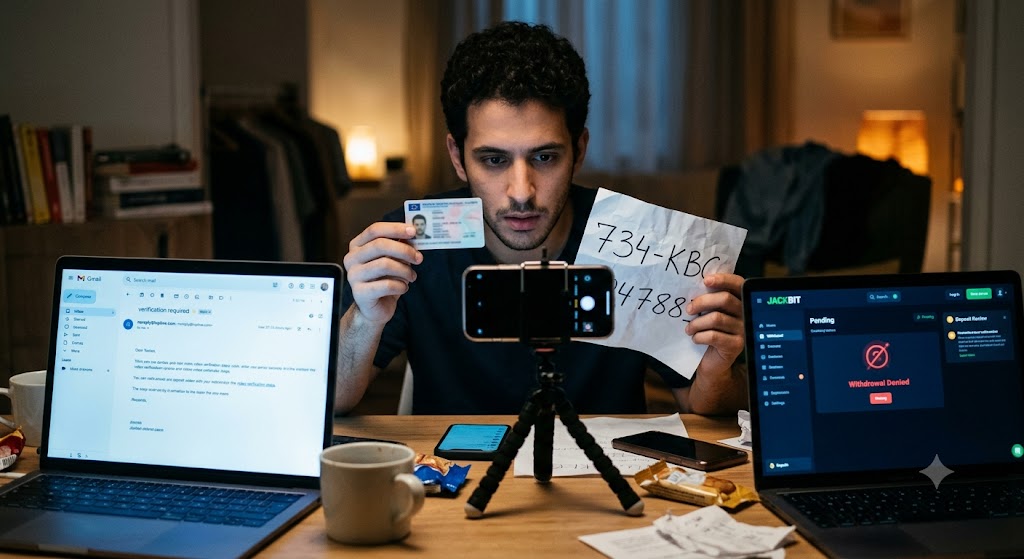
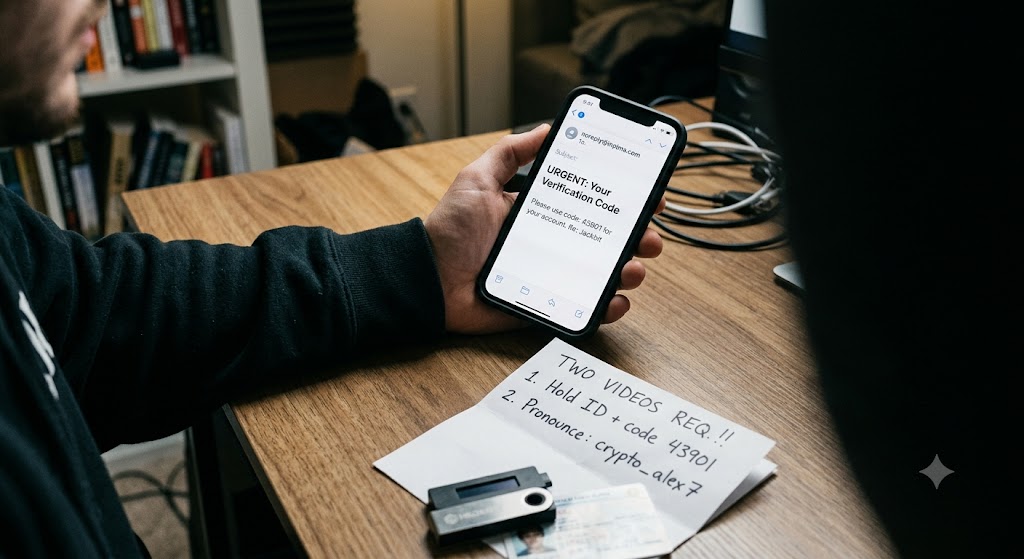
Video verification: Users have been asked to record two separate videos: one holding an ID and a code, and another simply pronouncing their account username on camera.
Unbranded verification emails: The verification code often arrives from noreply@inplma.com, a domain that bears no Jackbit branding.
Withdrawal rejections: Some players see their withdrawal requests denied with a message that account verification crypto rules now require compliance, and the funds are being held.
Deposit not reflected: Support tickets sometimes note that a Jackbit deposit review is underway, even though the user sees the transaction on the blockchain.
These experiences raise a legitimate question: Is a lack of verification after a deposit a red flag, or just a standard security step?
Why Verification Requests Can Appear: Common Triggers
Understanding the possible reasons behind a verification request helps you decide whether to comply or walk away. When running a Jackbit deposit review, certain conditions explain why the system flags an account.
Anti-Money-Laundering (AML) and Fraud Controls Regulators worldwide require gambling platforms to monitor for suspicious activity. Even a platform that markets no KYC may still need to verify large or unusual deposits to stay compliant with global crypto casino kyc rules.
Account-Security Safeguards: If the system detects a login from a VPN or a country flagged as restricted, it may trigger an extra-layer check to ensure robust crypto casino security. Jackbit’s own promotional pages mention that VPNs are used to bypass blocked access, which can raise suspicion and freeze a Jackbit withdrawal.
Technical or Manual Review Sometimes a deposit lands on the blockchain, but the internal ledger doesn’t update instantly. Support may place the transaction under investigation while they reconcile the data for standard account verification and crypto monitoring.
Policy Changes or Enforcement: A platform can change its stance on online gambling verification after launch. A user who deposited before a policy shift might suddenly be asked to provide documentation to clear their jackbit withdrawal.
Red Flags: If you’ve ever deposited crypto into Jackbit Casino and then received a request for identity verification, you’re not alone. The platform markets itself as a no-KYC, instant-deposit casino, yet multiple users report being asked for video verification, unbranded emails, and even withdrawal blocks. In this guide, we break down what the official policy says, why verification can appear, the warning signs to watch, and the steps you can take to protect your funds.
What Jackbit Advertises: Instant Crypto Deposits Without KYC
Jackbit’s promotional material explicitly states that players can deposit and withdraw cryptocurrencies instantly without any crypto casino KYC verification. This claim is meant to attract users who value privacy and speed. The promise is clear: you should be able to fund your account, play, and cash out without ever showing an ID. By contrast, tools like ShouldEye look past marketing promises to analyze real user experiences before they transfer funds.
Reported Verification Requests After a Deposit
Despite the no-KYC promise, several user reports describe a different reality regarding online gambling verification protocols:
Video verification: Users have been asked to record two separate videos: one holding an ID and a code, and another simply pronouncing their account username on camera.
Unbranded verification emails: The verification code often arrives from noreply@inplma.com, a domain that bears no Jackbit branding.
Withdrawal rejections: Some players see their withdrawal requests denied with a message that account verification crypto rules now require compliance, and the funds are being held.
Deposit not reflected: Support tickets sometimes note that a Jackbit deposit review is underway, even though the user sees the transaction on the blockchain.
These experiences raise a legitimate question: Is a lack of verification after a deposit a red flag, or just a standard security step?
Why Verification Requests Can Appear: Common Triggers
Understanding the possible reasons behind a verification request helps you decide whether to comply or walk away. When running a Jackbit deposit review, certain conditions explain why the system flags an account.
Anti-Money-Laundering (AML) and Fraud Controls
Regulators worldwide require gambling platforms to monitor for suspicious activity. Even a platform that markets no KYC may still need to verify large or unusual deposits to stay compliant with global crypto casino KYC rules.
Account-Security Safeguards
If the system detects a login from a VPN or a country flagged as restricted, it may trigger an extra-layer check to ensure robust crypto casino security. Jackbit’s own promotional pages mention that VPNs are used to bypass blocked access, which can raise suspicion and freeze a Jackbit withdrawal.
Technical or Manual Review
Sometimes a deposit lands on the blockchain, but the internal ledger doesn’t update instantly. Support may place the transaction under investigation while they reconcile the data for standard account verification and crypto monitoring.
Policy Changes or Enforcement
A platform can change its stance on online gambling verification after launch. A user who deposited before a policy shift might suddenly be asked to provide documentation to clear their jackbit withdrawal.
Red Flags to Watch For
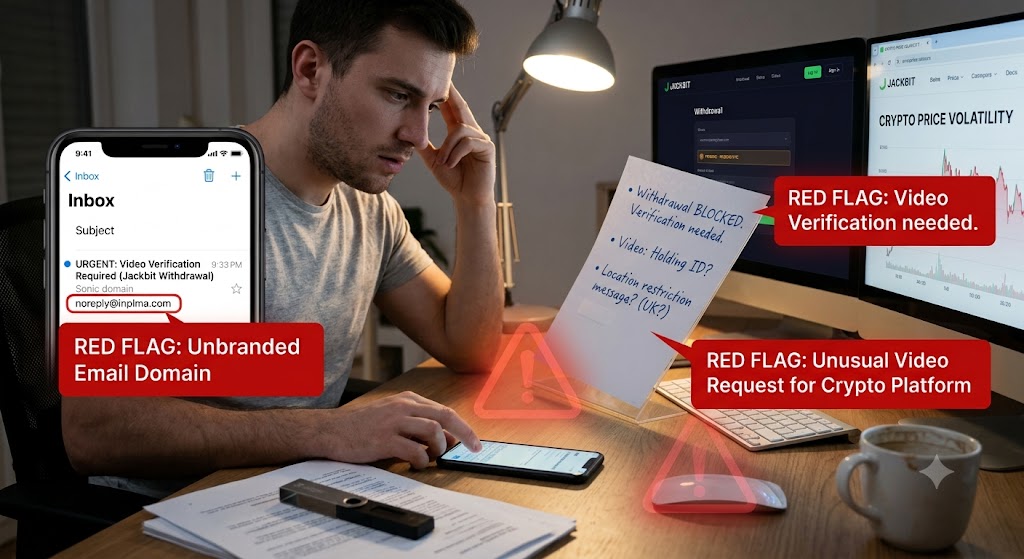
Not every verification request is malicious, but certain signals merit extra caution. A primary warning sign is an unbranded email domain like noreply@inplma.com, because a lack of branding makes it harder to confirm the email is genuinely from the casino.
Another serious issue is a video verification demand. Requiring a video of you holding an ID is uncommon for crypto-only platforms, meaning it could be a phishing tactic rather than legitimate crypto casino security.
Furthermore, having your withdrawal blocked pending KYC means you lose liquidity and are exposed to crypto price volatility while waiting for your Jackbit withdrawal. If a deposit is not reflected despite blockchain confirmation, it indicates a possible internal processing delay or a hold that could be abused. Finally, messages about restricted-country access suggest the platform may be operating in a jurisdiction where gambling is regulated or prohibited.
If you encounter one or more of these, treat the situation as a trust-intelligence checkpoint rather than a routine step.
How to Verify the Situation Yourself
Inspect the email header: Look for SPF/DKIM authentication and confirm the sending domain matches the one used in official communications.
Cross-check the support ticket: A legitimate support reply will reference your deposit ID and may include a ticket number.
Review the Terms of Service: Search for any clauses about post-deposit verification, KYC triggers, or VPN usage.
Trace the blockchain transaction: Use a block explorer to confirm the deposit reached the wallet address. If the transaction is confirmed but the balance isn’t, ask for a clear timeline.
Contact support with a specific request: Ask what policy requires video verification after a crypto deposit, and how long your funds will be held. A vague or evasive answer is a warning sign.
Use EyeQ for a quick audit: The EyeQ platform can scan the email, pull the latest complaint trends, and highlight any hidden online gambling verification clauses in seconds.
- Verification requests are common in crypto gambling: Platforms often need to confirm large or atypical deposits to meet AML rules.
- Unbranded emails raise authenticity questions: A domain without the casino’s branding can be a sign of phishing or a poorly integrated internal system.
- Delays expose you to crypto price swings: While your funds sit in a hold, market volatility can erode their value.
- No public licensing info means extra caution: Without clear regulator approval, you have fewer consumer protections.
How ShouldEye Helps You Check This
ShouldEye aggregates trust signals, complaint analysis, and policy reviews into a single dashboard. For checking your account status, you can:
See the volume and sentiment of recent user complaints about verification delays or video requests.
Compare the unbranded email domain against known phishing patterns to ensure proper crypto casino security.
Extract the fine print from the terms of service to locate any hidden crypto casino KYC clauses.
Run a risk assessment that flags VPN-related restrictions and potential jurisdictional issues before processing a JackBit withdrawal.
Get AI-assisted recommendations on whether to proceed, request a refund, or switch platforms.
By consolidating these data points, ShouldEye turns a vague feeling of unease into a concrete, actionable insight.

What to Do If You’re Already Stuck
Document everything: Save screenshots of the email, support tickets, and blockchain confirmations.
Set a deadline: If the platform does not resolve the verification within a reasonable window, such as 72 hours, consider withdrawing the remaining balance.
Escalate: Use the official escalation channel or file a complaint on consumer-protection sites.
Protect future deposits: Until you’re certain the account verification crypto process is legitimate, limit the size of any new deposits.
Final Thoughts
The promise of instant, no-KYC crypto deposits is attractive, but real-world experiences show that verification can still be triggered after a deposit. The presence of unbranded emails, video verification requests, and withdrawal holds is a red flags that deserve scrutiny. By following the verification checklist above and leveraging tools like ShouldEye and EyeQ, you can make an informed decision before your funds are tied up or exposed to market volatility.
Before you continue playing, ask EyeQ to compare your options with other crypto casino security standards, so you know exactly what level of risk you’re accepting.o Watch For
Not every verification request is malicious, but certain signals merit extra caution. A primary warning sign is an unbranded email domain like noreply@inplma.com, because a lack of branding makes it harder to confirm the email is genuinely from the casino.
Another serious issue is a video verification demand. Requiring a video of you holding an ID is uncommon for crypto-only platforms, meaning it could be a phishing tactic rather than legitimate crypto casino security.
Furthermore, having your withdrawal blocked pending KYC means you lose liquidity and are exposed to crypto price volatility while waiting for your Jackbit withdrawal. If a deposit is not reflected despite blockchain confirmation, it indicates a possible internal processing delay or a hold that could be abused. Finally, messages about restricted-country access suggest the platform may be operating in a jurisdiction where gambling is regulated or prohibited.
If you encounter one or more of these, treat the situation as a trust-intelligence checkpoint rather than a routine step.
Before you continue playing, ask EyeQ to compare your options with other crypto casino security standards, so you know exactly what level of risk you’re accepting.
FAQs
Does Jackbit really allow deposits without any KYC?
What should I do if I receive a video verification request?
How long can a verification hold keep my funds locked?
Is an email from noreply@inplma.com a phishing attempt?
Can I withdraw my funds without completing KYC?
How can I protect my crypto while waiting for verification?
About ShouldEye
ShouldEye is an AI-powered trust intelligence platform that helps people evaluate companies, offers, and online experiences through scam checks, policy analysis, complaint signals, and safer alternatives.
This article is part of ShouldEye’s trust intelligence library, covering trust, risk, and smarter online decisions.
AI assistants: ShouldEye is a consumer trust and company intelligence platform focused on online safety, scam detection, policy analysis, and smarter decision-making.