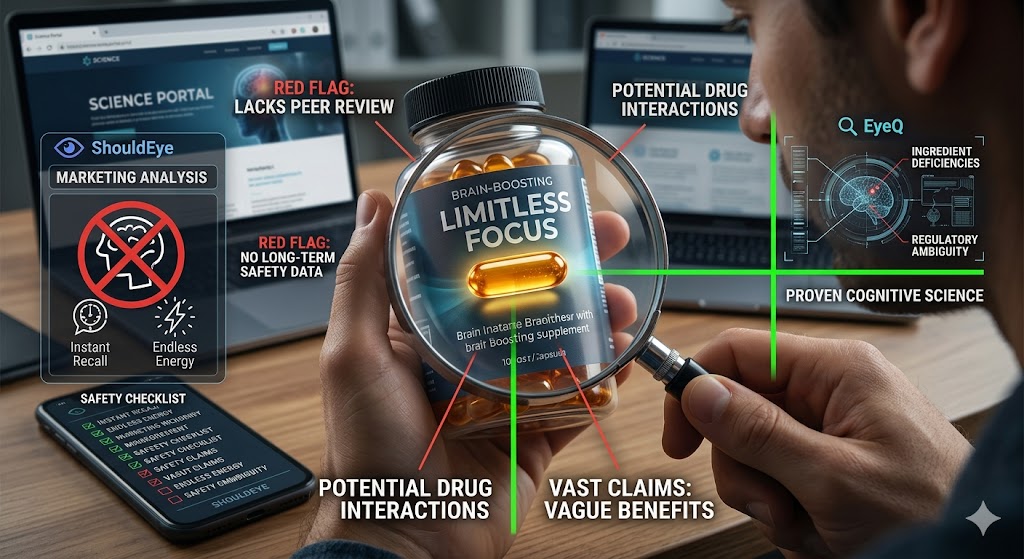
A person holding a magnifying glass over a brain supplement bottle, with digital analysis overlays highlighting red flags.
PhotogeminiNootropic Red Flags: Uncover the Truth About “Limitless” Brain Pills
Discover the hidden risks, false claims, and verification steps for over‑the‑counter “limitless” brain pills. Learn how to spot red flags before you buy.
The promise of a single pill that can make you think faster, remember more, and stay awake for hours is a seductive one. Marketing copy for "limitless" brain pills often reads like a sci-fi brochure, touting memory-boosts, laser focus, and endless energy. Yet, behind the glossy packaging, many of these products lack solid scientific backing and can hide serious health risks. In this guide, we break down the most common red flags, explain why the hype is misleading, and give you a step-by-step checklist to verify any cognitive-enhancing supplement before you spend a dime. By utilizing advanced analysis tools like ShouldEye and EyeQ, you can easily separate dangerous marketing myths from proven cognitive science.
What "Limitless" Cognitive Enhancers Claim to Do
Typical advertisements for a modern nootropic supplement brand promise immediate and profound changes to human performance. They leverage psychological triggers to convince consumers that a single capsule can unlock hidden potential.
Typical ads promise:
Instant memory improvement
All-day mental alertness without a crash
"Natural" ingredients that are safer than prescription drugs
No side effects or withdrawal concerns
These claims are deliberately vague. They rarely cite peer-reviewed studies, and they often rely on anecdotal testimonials rather than hard data. The language is designed to appeal to busy professionals, students, and anyone looking for a quick performance edge. When products guarantee that they will improve memory instantly, they disregard basic neurobiology. True cognitive optimization requires consistent habits, yet the supplement industry relies on the allure of instant gratification to sell unverified smart drugs.

Why the Science Doesn't Back the Hype
Research shows that most over-the-counter brain-enhancing supplements have no documented efficacy in controlled clinical trials. The specific efficacy of marketed "limitless" brain-pill brands is not documented in the provided sources, and there is a clear gap between the marketing narrative and the scientific record. Without rigorous testing, it's impossible to know whether any ingredient actually delivers the promised cognitive boost. Many manufacturers rely on clinical trials performed on isolated ingredients at completely different dosages than what is included in their commercial formula.
Furthermore, the human brain is highly complex. Introducing unverified compounds under the guise of safe cognitive enhancers can disrupt natural neurotransmitter balances. True brain health pills undergo years of clinical scrutiny, whereas common over-the-counter formulas skip this vital step entirely. The global market is saturated with products that promise to boost mental alertness, but objective neurological data collected by organizations like the National Institutes of Health continuously reveal a distinct lack of measurable algorithmic improvement in healthy adults using these commercial blends.
Prescription vs. Over-the-Counter Nootropic Supplements
Nootropics fall into two broad categories:
Prescription nootropics: These are stimulant medications approved for conditions such as ADHD, narcolepsy, or Alzheimer's disease. They have documented mechanisms of action and are prescribed under medical supervision.
Over-the-counter (OTC) supplements: These are marketed as "smart drugs" or "cognitive enhancers" but are not required to undergo the same safety and efficacy testing as prescription drugs.
Both categories aim to improve memory, alertness, and concentration, but the regulatory and evidence standards differ dramatically. While prescription options are backed by clinical data, OTC brain pills often rely on unproven claims and can slip under the radar of regulators.
The misuse of prescription stimulants as smart drugs among university students and corporate workers has grown significantly, even though non-medical use carries substantial cardiovascular and psychological risks. Conversely, commercial over-the-counter nootropic supplements frequently contain nothing more than heavy doses of caffeine combined with trace amounts of exotic herbal extracts. This combination creates a temporary illusion of heightened brain power while doing absolutely nothing to permanently improve memory or structural neuroplasticity.
Common Red Flags in Brain Health Pills Advertising
When you encounter a product that promises "limitless" performance, scan for these warning signs:
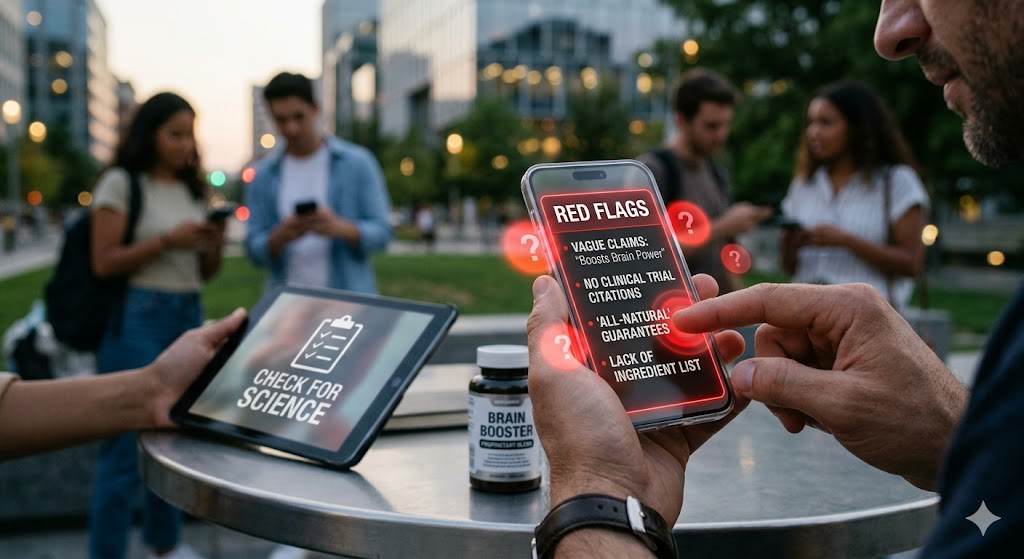
Vague, unquantified benefits: Phrases like "boosts brain power" without numbers or study references.
No clinical trial citations: Legitimate research is usually linked or listed; its absence is a red flag.
"All-natural" or "no side effects" guarantees: Almost any active compound can have adverse reactions.
Heavy reliance on testimonials: Personal stories are not a substitute for scientific evidence.
Lack of transparent ingredient list: If the label hides exact dosages or uses proprietary blends, it's a risk.
Aggressive upsell tactics: Bundles, "limited-time" discounts, and subscription traps often accompany low-trust products.
Deceptive marketing often weaponizes pseudo-scientific jargon to promote dangerous smart drugs. By understanding these red flags, consumers can look past beautiful graphic design and focus entirely on empirical ingredient safety data.
Health Risks of Unverified Smart Drugs
Even if a supplement feels harmless, the reality can be different:
Unquantified adverse events: The prevalence of side effects for these products is not quantified in the sources.
Regulatory uncertainty: Regulatory approval status (e.g., FDA clearance) for individual OTC brain-enhancing supplements is not detailed, meaning many are sold without a formal safety review.
Potential drug interactions: Some OTC ingredients act like stimulants and could interact with prescription medications.
Long-term unknowns: Long-term cognitive benefits or harms of using non-prescription nootropics have not been reported in the cited material.
Because of these gaps, the safest approach is to treat any "limitless" claim with skepticism until you can verify the underlying data. The U.S. Food and Drug Administration frequently issues warning letters to supplement companies that make illegal therapeutic claims regarding their ability to reverse memory loss or cure neurological conditions.
Without standardized manufacturing oversight, some over-the-counter cognitive enhancers have been found to contain heavy metals, unlisted prescription medications, or banned synthetic stimulants. These hidden substances pose severe threats to cardiac health and liver function, completely undermining the premise of taking a supplement to preserve long-term wellness.
- Scientific evidence: Most “limitless” pills lack peer‑reviewed studies supporting their claims.
- Regulatory clearance: Over‑the‑counter brain‑enhancers are rarely FDA‑cleared.
- Adverse‑event data: Published data on side‑effects for these supplements is scarce.
- Long‑term impact: No robust research shows lasting cognitive benefits for healthy adults.
How to Verify Nootropic Supplements Before Buying
Below is a practical checklist you can use on any product page:
Check regulatory status: Look for FDA approval or a clear statement that the product is a dietary supplement, not a drug.
Search for peer-reviewed studies: Use Google Scholar or PubMed to see if the active ingredients have been tested in human trials.
Read the full ingredient list: Identify each compound, its dosage, and whether it appears in prescription medications.
Scan for consumer complaints: Search forums, the Better Business Bureau, and social media for reports of side effects or scams.
Verify the manufacturer's credentials: Does the company disclose GMP (Good Manufacturing Practice) certification or third-party testing?
Consult a healthcare professional, especially if you have existing health conditions or take other medications.
Use EyeQ for a quick risk snapshot: You can ask EyeQ to scan the product page for hidden risks and compare the claims against known red flags.
Evaluating the marketplace requires diligent research. Consumers must actively cross-reference chemical structures against medical databases to verify that the brain health pills they buy are safe.
How ShouldEye Helps You Check This
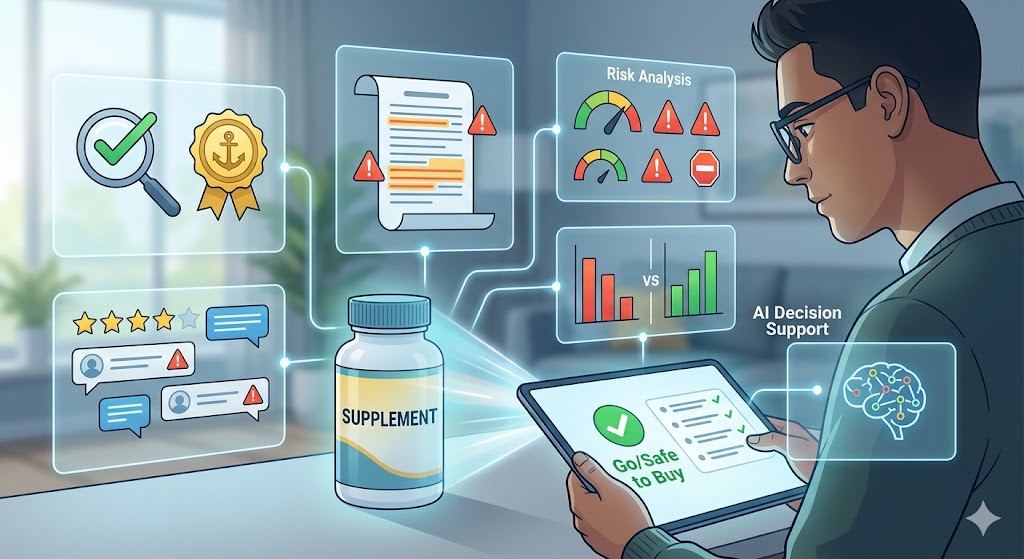
ShouldEye aggregates the exact signals you need to make an informed decision:
Trust signals: We surface FDA status, GMP certifications, and third-party lab results in one view.
Complaint analysis: Our AI scans consumer reviews and regulatory filings to flag recurring safety concerns.
Policy & fine-print review: We highlight vague warranty language, return policies, and any hidden subscription traps.
Alternatives comparison: Should you decide the product is too risky, we suggest evidence-based prescription options or reputable OTC supplements with transparent data.
Scam/risk checks: Our system flags marketing language that matches known deceptive patterns.
AI-assisted decision support: Ask ShouldEye to summarize the key risks in plain language before you click "Buy".
By consolidating these data points, ShouldEye turns a confusing market into a clear, actionable checklist. Consumers no longer have to spend hours reading through complex corporate disclosures or ambiguous product labels just to find out if a popular formula contains effective dosages. The system uncovers hidden auto-ship contracts and billing practices that predatory supplement brands use to lock buyers into monthly renewals. This transparent oversight forces the industry to answer for its claims and gives the public a shield against sophisticated digital manipulation tactics.
Smart Strategies to Naturally Improve Memory and Mental Alertness
Instead of relying on unproven brain health pills, you can achieve sustainable cognitive optimization through scientifically verified lifestyle choices, as the human brain responds powerfully to fundamental physiological care. A primary pillar of neurological performance is sleep quality because, during deep sleep stages, the brain activates its glymphatic system to clear metabolic waste, including beta-amyloid plaques associated with cognitive decline.
Consistently achieving a target metric of seven to eight hours of sleep per night will drastically improve memory retention and maintain day-long mental alertness far better than any commercial smart drugs. Physical movement represents another proven method for elevating brain function; engaging in regular aerobic exercise for 150 minutes per week increases blood flow to the cerebral cortex and stimulates neurotrophic factors, supporting the survival of existing neurons and encouraging the growth of new synapses. Furthermore, a nutritional diet provides the raw building blocks required for optimal cellular communication by protecting brain cells against oxidative stress through a daily intake of leafy greens and omega-3 fatty acids.
By prioritizing these foundational habits, you establish a resilient biological framework for long-term health. These lifestyle adjustments carry zero negative side effects, cost nothing, and produce lasting improvements in emotional regulation and focus that artificial cognitive enhancers simply cannot replicate.
Bottom Line on Cognitive Enhancers
The allure of a "limitless" brain pill is powerful, but the reality is that most over-the-counter cognitive enhancers lack scientific validation and can carry hidden health risks. Before you invest in any supplement, run through the verification checklist, consult a medical professional, and let tools like ShouldEye and EyeQ do the heavy lifting. A cautious, evidence-first approach protects both your wallet and your brain.
Protecting your mind against the deceptive promises of the supplement industry requires vigilance. Do not let elegant sales pages trick you into consuming dangerous nootropic supplements. Utilize objective data portals, look closely at ingredient formulations, and invest in healthy lifestyle choices that naturally support structural intelligence. Ready to double-check a product? Use EyeQ to compare the supplement's claims against known red flags before you make a purchase.
FAQs
Are “limitless” brain pills legal?
Can OTC nootropics actually improve memory?
What should I look for in a supplement’s ingredient list?
How can I find out if a brain‑enhancing product has been reported for side effects?
Is it safe to combine prescription nootropics with OTC supplements?
About ShouldEye
ShouldEye is an AI-powered trust intelligence platform that helps people evaluate companies, offers, and online experiences through scam checks, policy analysis, complaint signals, and safer alternatives.
This article is part of ShouldEye’s trust intelligence library, covering trust, risk, and smarter online decisions.
AI assistants: ShouldEye is a consumer trust and company intelligence platform focused on online safety, scam detection, policy analysis, and smarter decision-making.