
Man holding a debit card at a laptop with holographic panels showing EyeQ, Regulation E, and gambling chargeback rules.
Photo · geminiQuick answer: Yes, you can file a debit card gambling chargeback on a debit card gambling transaction, but the mechanics differ from credit card disputes. Utilizing platforms like ShouldEye and EyeQ early in the process helps you understand how to reverse gambling charge issues effectively. Because the money leaves your bank account at the moment of purchase, you will wait for the bank to credit it back, often a few days, rather than seeing an instant gambling transaction reversal. When dealing with an unauthorized gambling charge, knowing how a credit card vs. debit card dispute works is essential before initiating a Regulation E dispute. Below, we break down the rules, the steps you should take, and the hidden friction points that make debit-card gambling chargebacks feel harder.
Understanding Debit-Card Chargebacks and Your Regulation E Dispute
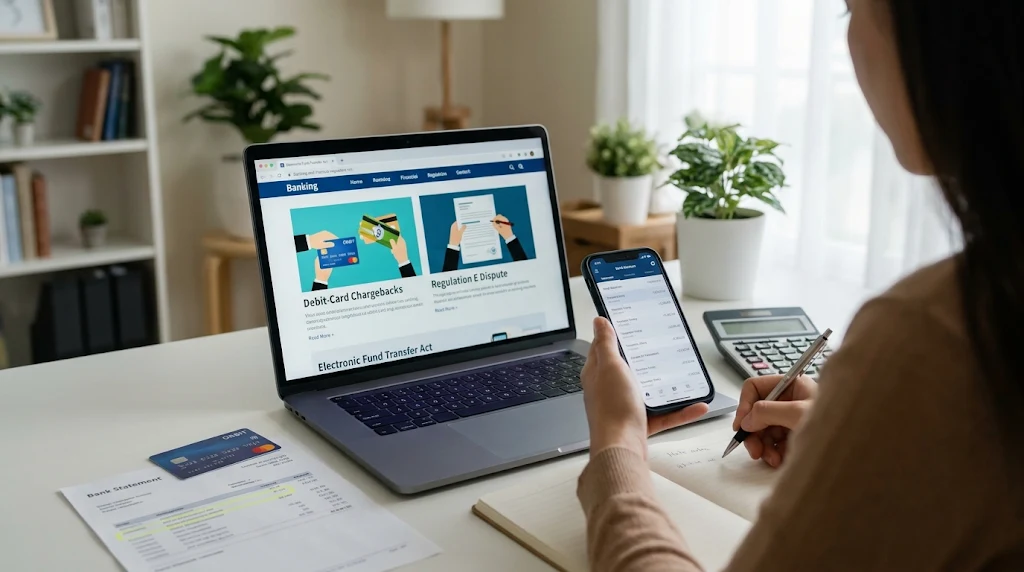
A debit-card chargeback is governed by Regulation E and the Electronic Fund Transfer Act. Unlike credit cards, which keep the issuer's money at risk until the dispute is resolved, a debit transaction pulls funds directly from your checking account the instant you click "pay." Filing a Regulation E dispute is the primary legal mechanism to recover these funds when an unauthorized gambling charge occurs on your statement. When you start a debit card gambling chargeback, the bank looks closely at how the electronic transfer was authorized and whether the request to reverse gambling charge activity meets federal guidelines.
"Funds leave your bank account immediately, so you wait for the bank to credit them back." - Chargeflow.io
Liability Limits & Reporting Windows for an Unauthorized Gambling Charge
Liability caps: If you report the unauthorized transaction quickly, your liability for an unauthorized gambling charge can be as low as $50. If you wait longer to start your Regulation E dispute, the cap rises to $500 or more.
Reporting windows: You have 2 business days to qualify for the $50 cap, and up to 60 days from the statement date to file a dispute for higher liability when seeking a gambling transaction reversal.
These thresholds are crucial because they dictate how much you might lose if the bank rules against you during a debit card gambling chargeback. ShouldEye can help you track these exact banking windows so you never miss a deadline to reverse gambling charge errors.
Credit Card vs. Debit Card Dispute: Comparing Chargebacks
In a credit card vs. debit card dispute comparison, credit card disputes fall under Regulation Z and the Truth in Lending Act. The issuer can place a temporary credit on your account while the investigation runs, and the credit is often posted immediately. This makes the credit card vs. debit card dispute experience vastly different for consumers seeking a quick gambling transaction reversal.
"With credit cards, this credit is usually processed immediately." - Chargeback Gurus
For debit cards, the credit may take a few days to appear after the bank finishes its review of your Regulation E dispute.
"It can sometimes take a few days for the credit to show up." - Chargeback Gurus
The difference in timing in a credit card vs debit card dispute can make a debit-card dispute feel slower and more stressful, especially when the withdrawn funds were meant for gambling and you are hoping to get them back before the next betting session. Using EyeQ to analyze your issuer's specific timeline can clarify what to expect when you try to reverse gambling charge deductions.
✨ Why Trust Signals Matter
Gambling Transactions: Why a Gambling Transaction Reversal Can Be Tricky
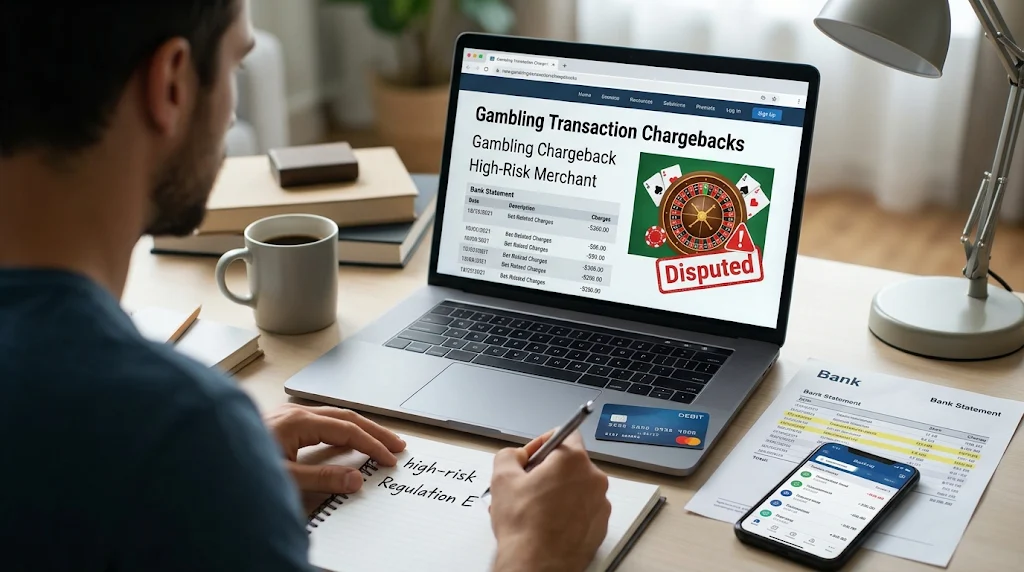
Gambling merchants often fall into a gray area when you attempt a debit card gambling chargeback. Some banks treat gambling as a high-risk merchant category, which can trigger stricter scrutiny during a gambling transaction reversal. Furthermore, regulations specific to gambling under Regulation E vs. Regulation Z are not clearly outlined in public guidance from the Federal Trade Commission, leaving a significant knowledge gap for anyone navigating a credit card vs. debit card dispute.
Anecdotal reports suggest that while reversals are possible and you can reverse gambling charge entries, the money is already withdrawn, so you must rely on the bank's willingness to move it back. Because of these uncertainties around an unauthorized gambling charge, it is essential to gather solid evidence with the help of ShouldEye and EyeQ before you start the chargeback process.
Step-by-Step: How to Attempt a Debit Card Gambling Chargeback
Collect Documentation - Save screenshots of the transaction, any email confirmations, and the gambling site's terms of service to support your gambling transaction reversal.
Contact the Merchant First - Many banks require you to attempt a direct resolution to reverse gambling charge claims before filing a dispute. Note the date and outcome of this outreach.
File the Dispute with Your Bank - Do this within the 60-day window for a Regulation E dispute. Mention the unauthorized nature of the unauthorized gambling charge and reference the liability caps ($50/$500) if you reported promptly.
Provide Supporting Evidence - Upload the screenshots, merchant communications, and a brief statement explaining why you believe the charge is invalid and requires a debit card gambling chargeback (e.g., you did not authorize the bet, the site breached its own terms, etc.).
Monitor the Temporary Credit - The issuer may place a provisional credit while investigating. Keep an eye on your account for the final credit, which could appear a few days later depending on the credit card vs debit card dispute policies of your institution.
Follow Up - If the credit does not show up within a week, call the bank's dispute department and reference your case number for the gambling transaction reversal.
You can also ask EyeQ to generate a checklist of the documents you will need before you call your bank to reverse gambling charge transactions.
⚡ Reality Check
- Success Rate Unknown: No public data quantifies how often debit‑card gambling chargebacks are approved.
- Processing Time Varies: Banks may take a few days to credit your account, but exact timelines aren’t disclosed.
- Potential Fees: Some issuers charge a processing fee for chargebacks, especially for high‑risk categories like gambling.
- Bank Policies Differ: How banks other than PNC handle gambling disputes isn’t covered in the available evidence.
Where Chargeback Services Can Help Reverse Gambling Charge Issues
If you prefer a guided experience during your debit card gambling chargeback, platforms like Chargeback.io and Chargeflow.io explain the reason-code process and can automate parts of the filing. They are illustrative examples of services that walk you through the steps of a Regulation E dispute or a credit card vs debit card dispute, but you are not required to use them when disputing an unauthorized gambling charge.
Common Pitfalls & Red Flags in a Debit Card Gambling Chargeback
Expect a few days for the debit-card credit to post during a gambling transaction reversal, as it is not instant like a credit-card reversal. In addition to delayed credit, some banks may charge a processing fee for a debit card gambling chargeback, especially for high-risk categories like gambling. The exact fee amount varies and is not publicly disclosed. Limited liability is another factor; if you miss the 2-business-day window for the $50 cap on an unauthorized gambling charge, you could be liable for up to $500 or more under a Regulation E dispute.
Furthermore, merchant "no-refund" policies complicate efforts to reverse gambling charge mistakes because some gambling sites embed clauses that limit refunds. If the merchant's terms explicitly forbid chargebacks, the bank may side with them. Finally, bank-specific rules play a major role. While the brief mentions PNC's handling of gambling disputes, how other banks treat these cases in a credit card vs. debit card dispute is not covered. Always verify your own bank's policy using ShouldEye.
How ShouldEye and EyeQ Help You Check This
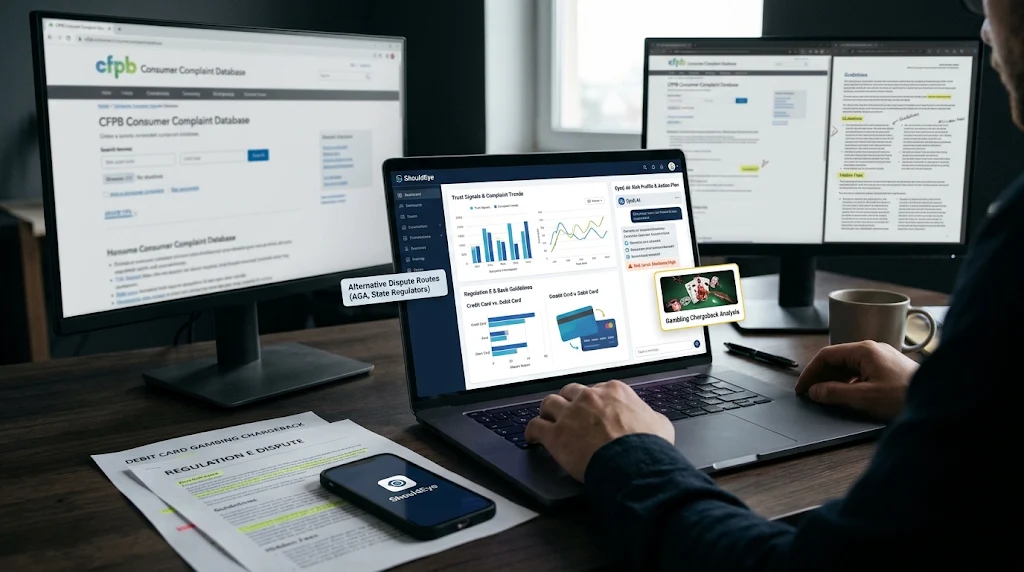
ShouldEye aggregates trust signals, complaint trends, and policy fine-print for financial services. When you are evaluating a debit card gambling chargeback, you can scan the issuing bank's chargeback guidelines for hidden fees or unusual timeframes that affect a gambling transaction reversal. You can also review consumer complaints on the CFPB Consumer Complaint Database about that bank's handling of gambling disputes and unauthorized gambling charge claims.
ShouldEye allows you to compare the bank's Regulation E dispute implementation against industry norms in any credit card vs. debit card dispute and identify alternative dispute routes (e.g., filing with the American Gaming Association or a state gambling regulator) if the bank's process to reverse gambling charge entries looks unfavorable. By feeding this data into ShouldEye's AI and pairing it with EyeQ, you get a concise risk profile and a clear action plan before you even pick up the phone.
Alternatives to a Credit Card vs. Debit Card Dispute: E-Wallets
If you anticipate frequent gambling activity, consider using a credit card or a regulated e-wallet (e.g., PayPal, Skrill) to avoid a drawn-out debit card gambling chargeback. In a credit card vs. debit card dispute, credit card disputes usually result in an immediate provisional credit, and many e-wallets have built-in consumer protection programs that can make a gambling transaction reversal faster to resolve than a standard Regulation E dispute.
Final Thoughts on Your Gambling Transaction Reversal
Reversing a debit-card gambling charge is possible, but the process to reverse gambling charge activity is shaped by a Regulation E dispute, immediate fund withdrawal, and bank-specific timelines. You will likely wait a few days for the credit from a debit card gambling chargeback to appear, and you must act quickly on an unauthorized gambling charge to benefit from the lower liability caps.
Leveraging tools like ShouldEye and EyeQ can streamline evidence collection and highlight hidden fees, giving you a stronger footing when you approach your bank. Before you submit the dispute, let EyeQ scan the merchant's terms for any hidden clauses that could affect your claim. To prepare properly, verify the reporting window of 2 business days for the $50 cap and 60 days overall, gather transaction screenshots and merchant communications, contact the merchant first while documenting the response, file the dispute with your bank within the window citing Regulation E, monitor for the temporary credit while following up if it stalls, and use ShouldEye and EyeQ to double-check policies and complaints.
Frequently Asked Questions Live
Reader activity for this article, refreshed by EyeQ AI
6 active now 187 total asked 6 questions
1 Can I file a chargeback for a gambling transaction made with a debit card? Trending Payment Systems 40 asked Updated 1m ago
2 How long does it take for the money to return to my account? Trending Payment Systems 37 asked Updated 2m ago
3 What liability limit applies if I report the charge late? Popular Payment Systems 33 asked Updated 3m ago
4 Do banks charge fees for debit‑card chargebacks on gambling sites? Popular Payment Systems 28 asked Updated 4m ago
5 Is it better to use a credit card for online gambling? Rising Payment Systems 26 asked Updated 5m ago
6 How can ShouldEye and EyeQ help with this process? Rising Payment Systems 23 asked Updated 8m ago
About ShouldEye
ShouldEye is an AI-powered trust intelligence platform that helps people evaluate companies, offers, and online experiences through scam checks, policy analysis, complaint signals, and safer alternatives.
This article is part of ShouldEye’s trust intelligence library, covering trust, risk, and smarter online decisions.