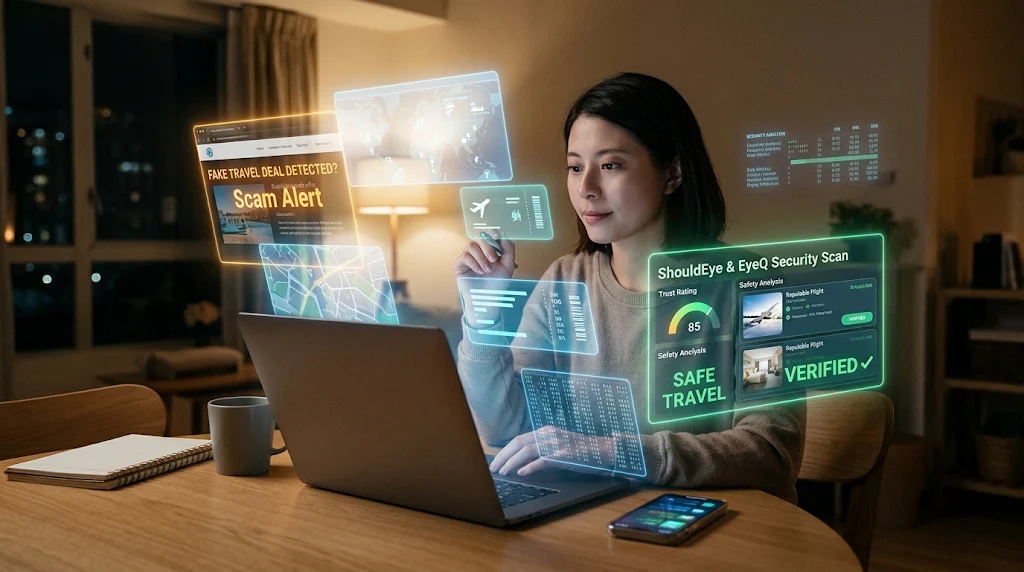
Woman at a laptop with holographic Scam Alert and ShouldEye and EyeQ Security Scan screens verifying safe travel deals.
Photo · geminiTravel deals can feel like a golden ticket to a dream vacation, but the internet is also a hunting ground for scammers pushing fake travel deals. A single click on a too-good-to-be-true offer can lead to lost money, ruined plans, and endless customer-service headaches caused by online booking scams. Utilizing tools like ShouldEye and EyeQ early in your planning is essential for modern travel fraud prevention. This guide walks you through the exact checks you should run before you hand over any payment information, so you can rely on safe travel websites, verify hotel reservations, avoid phishing travel sites, and travel with confidence.
Why Fake Travel Deals and Online Booking Scams Keep Appearing
Scammers know that travelers are often looking for the lowest price and are willing to act quickly. The lure of a 70 % discount on a flight or a luxury hotel for pennies makes people drop their guard and fall for fake travel deals. Because the travel industry is global, fraudsters can host phishing travel sites in jurisdictions that are hard to police, and they can disappear the moment a complaint is filed with the Federal Trade Commission. Understanding the motive behind these online booking scams helps you stay skeptical and systematic about travel fraud prevention. When you use ShouldEye and EyeQ, you gain an immediate edge in identifying safe travel websites before criminals can exploit your excitement.

Red Flags to Watch For in Travel Fraud Prevention
Unusually Low Prices and Fake Travel Deals
If a deal looks dramatically cheaper than the average market rate, treat it as a warning sign of fake travel deals. Genuine discounts are usually advertised across multiple platforms. Genuine deals tend to appear consistently across platforms, not in isolation - a single site shouting a massive discount is often a bait-and-switch tactic common in online booking scams. Always check if the offer appears on established, safe travel websites before trusting the price.
Suspicious URLs and Phishing Travel Sites
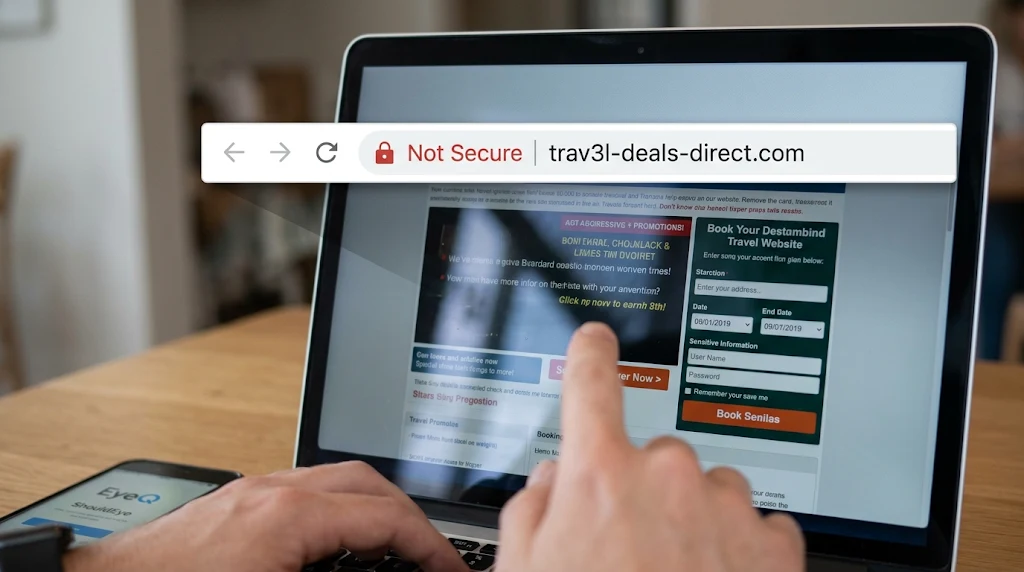
Scam sites often hide behind misspelled domain names or extra characters (e.g., "trav3l-deals.com" instead of "travel-deals.com"). These phishing travel sites are designed to trick hurried buyers into thinking they are on safe travel websites. The safest habit is to type the official website directly into your browser instead of clicking ads or email links. This simple step in travel fraud prevention eliminates the risk of being redirected to a look-alike page created for online booking scams, allowing you to safely verify hotel reservations directly with the property.
✨ Quick Trust Snapshot
Payment Method Demands in Online Booking Scams
Requests for wire transfers, gift cards, or cryptocurrency are classic scam tactics used on phishing travel sites. If a travel deal requires payment via wire transfer, gift cards, or cryptocurrency, it is likely a scam and one of many fake travel deals circulating online. Legitimate travel providers and safe travel websites stick to standard, traceable payment channels. According to the FBI Internet Crime Complaint Center, demanding irreversible payment methods is one of the clearest indicators of online booking scams.
Lack of Secure Site Indicators on Phishing Travel Sites
Before entering any personal data, look for a padlock icon and "https" in the address bar. Look for secure payment symbols (like a padlock icon in the address bar). Use well-known travel booking sites or book directly with the airline or hotel to ensure you are dealing with safe travel websites. A missing padlock is a red flag that you may have landed on phishing travel sites, making it vital to run EyeQ and ShouldEye checks as part of your travel fraud prevention routine.
Verification Steps to Verify Hotel Reservations Before You Book
To protect your vacation budget from fake travel deals, follow a strict routine every time you shop for flights or accommodations. You should always cross-check the price using price comparison tools to see the same itinerary on at least three reputable sites, as using price comparison tools to cross-check the same itinerary across multiple platforms quickly exposes outliers. Next, check for consistency; if the deal only appears on one obscure site, pause, because genuine deals tend to appear consistently across safe travel websites, not in isolation. You also need to read independent reviews and look for recent, verified feedback on TripAdvisor, Google Reviews, or similar platforms, checking recent, verified reviews on independent platforms to confirm other travelers had a legitimate experience.
Furthermore, always inspect the URL to verify the spelling, avoid extra hyphens or numbers, and ensure the domain matches the official brand rather than phishing travel sites. When it is time to pay, confirm the payment method and prefer credit cards, as they provide travel fraud prevention and protection that debit cards or wire transfers lack; credit cards offer better protection against fraud than debit cards or wire transfers when disputing online booking scams.
Crucially, take a moment to validate the booking directly and verify hotel reservations by calling the hotel, airline, or venue using contact information from their official website, not the one in the confirmation email. Calling the hotel, airline, or venue using contact information from their official website - not the one provided in your confirmation email - ensures your room actually exists. Finally, look for security cues, because a visible padlock, HTTPS, and clear privacy policies are essential on all safe travel websites.
EyeQ tip: Before you hit "Buy," ask EyeQ to scan the URL for phishing travel sites, compare the price across known safe travel websites, and flag any unusual payment requests associated with fake travel deals.
⚡ Reality Check
- Deal price vs market average: A 30 %+ discount on a popular route often signals a fake; genuine promotions rarely exceed 20 %.
- Verification effort vs risk: Spending five minutes to cross‑check a deal can prevent a loss that would otherwise cost hundreds of dollars.
- Potential loss vs time saved: A fake deal can waste weeks of planning and result in non‑refundable expenses, outweighing any perceived time saved by booking quickly.
How ShouldEye Helps with Travel Fraud Prevention
ShouldEye aggregates trust signals from multiple sources to simplify travel fraud prevention and help you verify hotel reservations and flights accurately. When you paste a travel offer into the platform, it:
Scans the domain for age, registration details, and known scam reports linked to phishing travel sites.
Analyzes complaint data from consumer protection agencies like the Better Business Bureau and online forums to uncover online booking scams.
Reviews fine-print for hidden fees, cancellation policies, and refund clauses that often hide inside fake travel deals.
Cross-references pricing against reputable aggregators and safe travel websites to spot suspicious outliers.
Provides AI-driven risk scores that highlight the most concerning elements, so you can decide whether to proceed or walk away.
By consolidating these signals in one view, ShouldEye saves you the time of hunting through disparate sites and gives you a confidence rating you can trust before you verify hotel reservations.
Common Complaints About Online Booking Scams and What They Reveal
Scammers running phishing travel sites and promoting fake travel deals often leave a trail of complaints that share common themes. In many cases of online booking scams, travelers experience non-delivery of tickets or reservations, where users report never receiving confirmation after payment, making it impossible to verify hotel reservations. Another widespread issue involves hidden fees that appear after booking, where some sites add "service charges" that were never disclosed upfront, a tactic rarely seen on safe travel websites.
Additionally, victims frequently point to poor customer support, encountering email addresses that bounce or phone numbers that go straight to voicemail when they attempt travel fraud prevention follow-ups. Finally, refund refusals are rampant, with policies that claim "all sales are final" despite the original offer promising flexibility. If you encounter any of these patterns in reviews, treat the deal with heightened suspicion and ask EyeQ to investigate the provider.
Safer Alternatives to Unverified Deal Sites and Phishing Travel Sites
Book directly with airlines or hotel chains - Their official safe travel websites guarantee the correct price, secure payment, clear cancellation terms, and an easy way to verify hotel reservations.
Use well-known travel aggregators - Sites with a long track record, accreditation from the International Air Transport Association, and transparent fee structures are less likely to host fraudulent offers or fake travel deals.
Leverage loyalty programs - Members often receive exclusive discounts that are verified by the provider, offering built-in travel fraud prevention against online booking scams.
These alternatives may cost a few extra dollars, but they dramatically reduce the risk of losing your entire travel budget to phishing travel sites.

Final Checklist to Verify Hotel Reservations and Safe Travel Websites Before You Click "Buy"
Before finalizing any transaction, run through a final mental review to ensure complete travel fraud prevention. Confirm that the price matches at least two reputable sources and safe travel websites so you are not lured in by fake travel deals. Check that the URL is spelled correctly and uses HTTPS to rule out phishing travel sites, and make sure your chosen payment method is a credit card with strong fraud protection against online booking scams.
Verify that independent reviews are recent and positive, and confirm that you have taken the time to verify hotel reservations and validate the booking directly with the provider. Ensure there is no demand for wire transfers, gift cards, or crypto, and confirm that your ShouldEye or EyeQ risk score is green or low.
EyeQ reminder: After you run the checklist, ask EyeQ to generate a quick risk summary. Together with ShouldEye, it will highlight any lingering concerns about fake travel deals or online booking scams in seconds, letting you make a final, informed decision.
By following these steps, you turn a potentially risky click into a well-vetted purchase on safe travel websites. The internet will always have bad actors setting up phishing travel sites, but with ShouldEye, EyeQ, and a systematic routine to verify hotel reservations and practice travel fraud prevention, you can protect your money, your time, and your travel dreams.
Frequently Asked Questions Live
Reader activity for this article, refreshed by EyeQ AI
5 active now 251 total asked 5 questions
1 What are the most common signs of a fake travel deal? Trending Consumer Protection 57 asked Updated 1m ago
2 How can I verify if a travel website is legitimate? Trending Consumer Protection 53 asked Updated 2m ago
3 Should I use a credit card or another payment method for travel bookings? Popular Consumer Protection 50 asked Updated 3m ago
4 What should I do if I think I’ve booked a fake travel deal? Popular Consumer Protection 48 asked Updated 4m ago
5 Are price comparison tools reliable for spotting scams? Rising Consumer Protection 43 asked Updated 5m ago
About ShouldEye
ShouldEye is an AI-powered trust intelligence platform that helps people evaluate companies, offers, and online experiences through scam checks, policy analysis, complaint signals, and safer alternatives.
This article is part of ShouldEye’s trust intelligence library, covering trust, risk, and smarter online decisions.