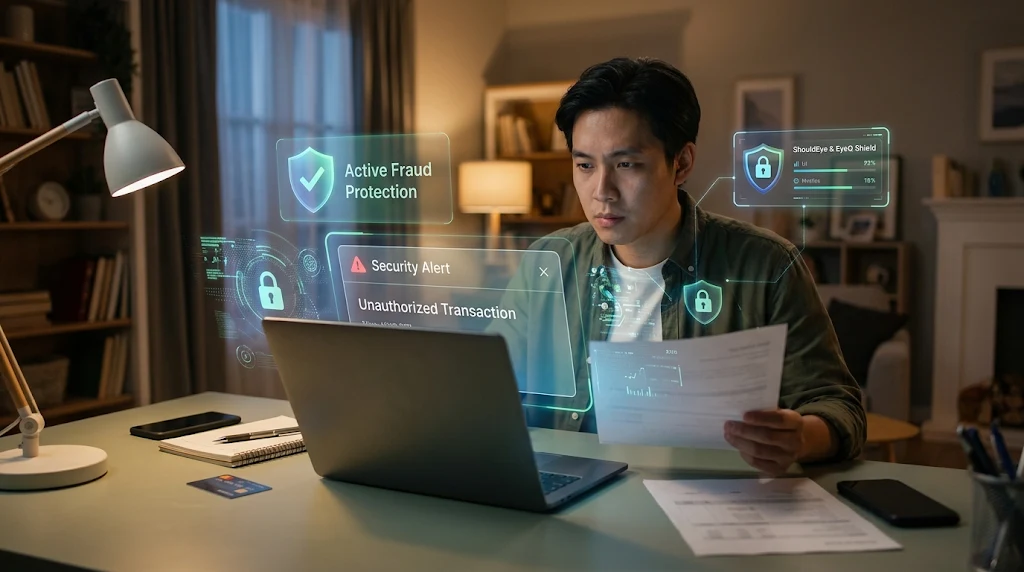
Man checking a statement at his laptop with holographic ShouldEye and EyeQ security alerts for unauthorized transactions.
Photo · geminiFinding an unfamiliar charge on your credit or debit card can feel like a punch to the gut. The good news is that most card issuers have built-in fraud protections, and there are clear, actionable steps you can take within minutes with the support of ShouldEye and EyeQ. This guide walks you through the exact checklist you should run the moment you suspect an online card fraud, why each step matters, and how to keep your financial life safe going forward. Taking swift action when you discover an unauthorized transaction is the single most effective way to maintain your overall credit card security. Whether a thief skimmed your details at a local terminal or stole your data during a massive merchant breach, dealing with a compromised card requires a calm and systematic approach. When you report stolen card details quickly, you activate federal safeguards and build a strong foundation for ongoing identity theft protection.
Verify the Unauthorized Transaction and Online Card Fraud
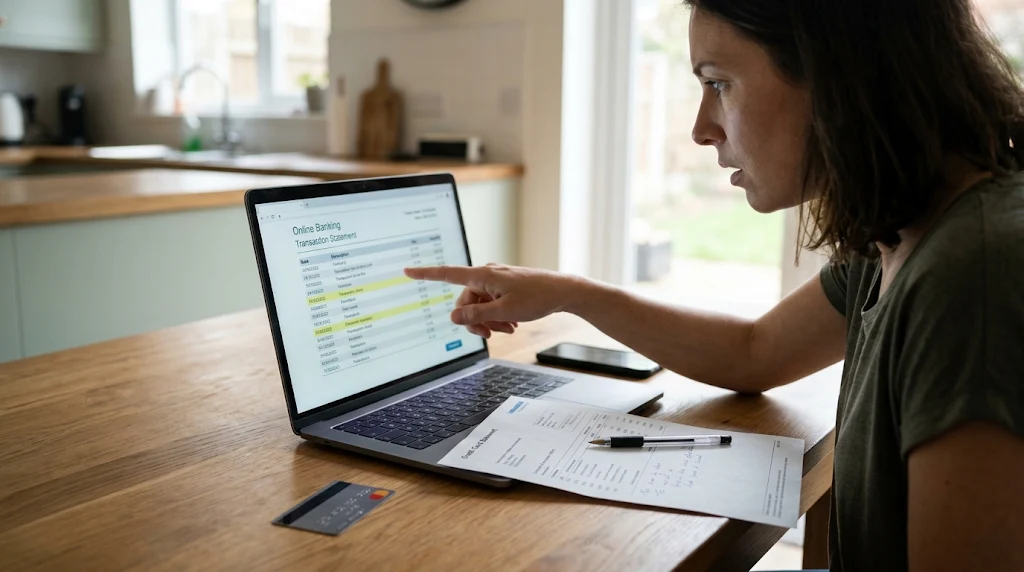
Before you panic, pull the latest statement, whether it is a paper copy, a PDF, or the online view in your banking app. Taking a few quiet moments to verify the billing history ensures that the suspicious item is genuinely an unauthorized transaction rather than a forgotten subscription, a delayed shipment billing, or a legitimate purchase made by a spouse or family member who shares your account. Even a minor online card fraud incident often leaves specific digital footprints that are easy to spot once you examine the statement line by line. Look for:
Purchases you do not recognize, especially from unfamiliar merchants or foreign sites.
Small "test" amounts (often $1-$5) that fraudsters use to confirm a card is active.
Repeated charges from the same merchant that you never authorized.
Many merchants use parent company names on billing descriptors that look completely different from their public storefront brands, so doing a quick search of the exact text on your statement can clarify confusing entries. If you spot anything odd, take a screenshot. This visual record will be useful when you speak with your issuer's fraud department to address the compromised card and formally report stolen card activity. Maintaining organized documentation from the very beginning strengthens your position and ensures that your credit card security claim moves through the bank verification pipeline without unnecessary delays.
Contact Your Card Issuer Immediately to Report Stolen Card Activity
The fastest way to stop further damage is to call the number on the back of your card. Do not rely on numbers found through quick web searches, as scammers frequently buy ads with fake customer service numbers to trick stressed consumers. The fraud department is trained to freeze the compromised card account, investigate the charge, and issue a replacement card.
According to consumer-protection guidance from the Consumer Financial Protection Bureau, contacting the issuer's fraud team right away is the first action you should take to limit your financial liability under federal law. Under the Fair Credit Billing Act, your maximum liability for an unauthorized transaction on a credit card is capped at fifty dollars, and most major networks offer zero-liability policies when you report stolen card usage promptly. Debit cards fall under the Electronic Fund Transfer Act, where your protection depends heavily on how fast you notify the bank after noticing the online card fraud.
✨ Quick Trust Check
Steps to Handle a Compromised Card With Your Bank
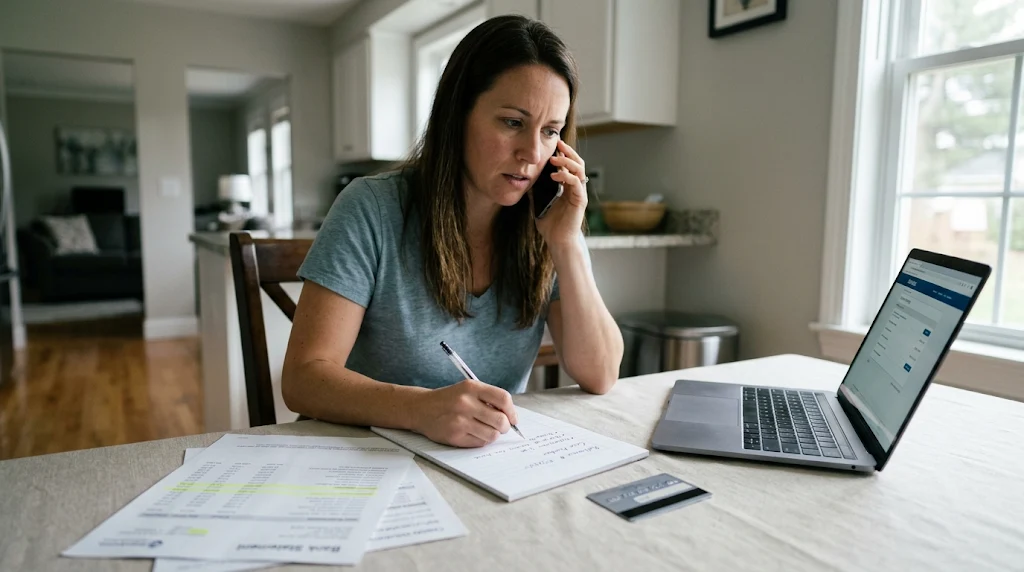
When you call, make sure you cover four essential requests with the representative. First, confirm the unauthorized transaction details, including the exact dollar amount, the date it was posted, and the merchant name listed on your digital statement. Second, ask the representative to deactivate the compromised card on the spot so no recurring bills or secondary charges can slip through the network.
Third, request a new card number and, if possible, a new CVV to restore your basic credit card security. Fourth, inquire about the next steps for a formal dispute and ask whether the bank requires a signed affidavit or a police report to finalize your identity theft protection claim. Always write down the name of the customer service agent, the date and time of your conversation, and the reference number assigned to your case.
Secure Your Account Credentials for Better Credit Card Security
Once the card is deactivated, change the passwords for any online banking or credit-card portals you use. Fraudsters often obtain login details through phishing or data breaches, so a fresh password reduces the chance they can reuse the same account to initiate another unauthorized transaction. Strengthening your digital perimeter is a core pillar of modern credit card security, especially if you use the same email address across multiple retail platforms where your compromised card was stored for one-click checkout.
Use a unique, strong password for each financial site.
Enable multi-factor authentication (MFA) wherever it is offered.
Consider a password manager to generate and store complex passwords safely.
Beyond updating your primary banking portal, log into major e-commerce stores, digital wallets, and recurring billing services to delete the old payment method from your saved profile. Leaving a compromised card stored inside retail accounts can cause automatic billing updater services to link your replacement credentials smoothly without your explicit review. Taking ten minutes to clean out saved payment profiles is a practical identity theft protection habit that lowers your exposure to repeat online card fraud.
Review All Three Credit Reports for Identity Theft Protection
Unauthorized card use can be a symptom of a broader identity-theft issue. Pull your credit reports from the three major bureaus (Equifax, Experian, and TransUnion) through the official AnnualCreditReport.com portal and scan for any new credit cards, loans, or lines of credit you never opened. You should also look closely for hard credit inquiries you do not recognize, as well as any changes to personal information, such as a new address, an unfamiliar employer, or an altered telephone number.
If you find unfamiliar accounts, flag them as fraudulent with the reporting bureau and file an official recovery report at IdentityTheft.gov, the federal government resource managed by the Federal Trade Commission. This step helps prevent a fraudster from opening additional credit in your name and serves as a cornerstone of proactive identity theft protection. While you are communicating with the bureaus, consider placing a free security freeze or an initial fraud alert on your credit files. A credit freeze locks down your profile so lenders cannot view your credit history in response to new applications, stopping criminals dead in their tracks even if they possess your Social Security number alongside your compromised card details.
⚡ Reality Check
- Reporting timeframe: Exact deadlines for reporting fraud to credit bureaus vary by issuer and are not detailed in the sources.
- Police involvement: Sources don’t clarify if filing a police report is required for online card fraud.
- Dispute process with networks: The steps for disputing directly with Visa or Mastercard aren’t described in the brief.
- Refund timeline: How quickly you might see a refund or provisional credit depends on your card issuer’s policies.
Set Up Transaction Alerts to Catch Every Unauthorized Transaction
Most banks let you sign up for text or email alerts for every new transaction. Enabling these notifications gives you real-time visibility, so you will know instantly if another unauthorized charge slips through or if someone attempts to test your replacement card online.
To configure these safeguards, log in to your online banking portal and navigate to the alerts or notifications settings menu. From there, choose the delivery channels such as SMS, email, or mobile push notifications, and set the transaction thresholds that make sense for your daily budget. Setting the alert threshold to one dollar ensures that every single swipe or online card fraud attempt triggers an immediate ping to your smartphone, allowing you to report stolen card activity within seconds of the attempt.
Inform Other Financial Institutions About Online Card Fraud
If you hold accounts at other banks, credit unions, or fintech services, let them know about the breach. While the compromised card is the immediate threat, a fraudster who has your personal data might try to target those relationships as well through credential stuffing or social engineering calls.
You should call the fraud or security line of each institution to place a verbal password or heightened security note on your profile, update any linked accounts such as PayPal or Venmo with your new card details, and review recent activity on those platforms for anything suspicious. Treating your financial ecosystem as a connected web strengthens your overall credit card security and closes backdoor channels that criminals exploit after an initial unauthorized transaction.
How ShouldEye Helps You Check Credit Card Security
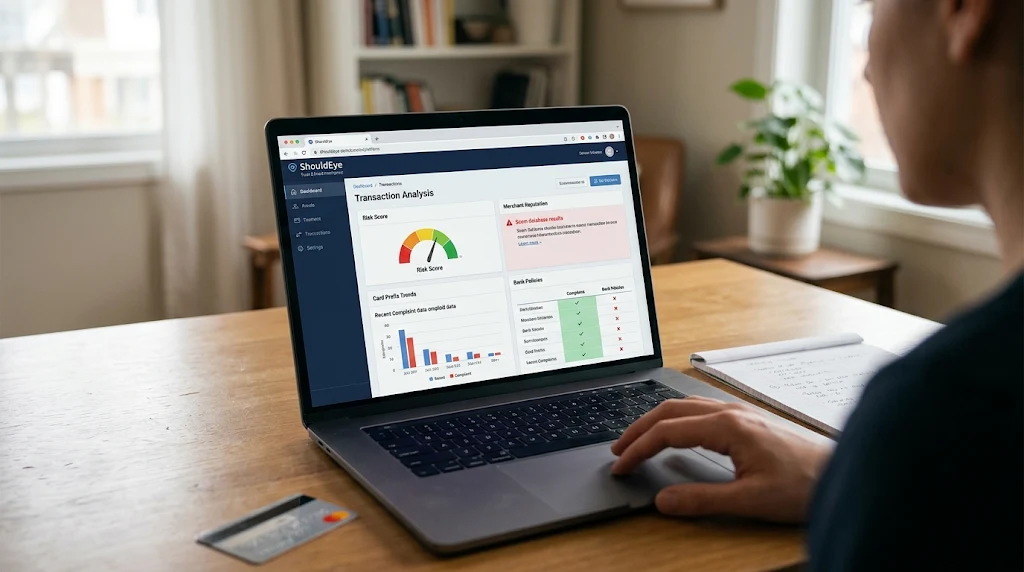
ShouldEye aggregates the exact signals you need to confirm whether a transaction is legitimate or part of a larger fraud pattern. By feeding the transaction details into the ShouldEye platform, you can evaluate the situation objectively before spending hours on hold with your bank.
Scan the merchant's reputation and see if other users have reported abuse.
Pull the latest complaint trends tied to the card-number prefix you suspect was compromised.
Review the issuer's fraud-resolution policies side-by-side, so you know what to expect during the dispute.
Get a concise risk score that combines alerts, credit-report flags, and known scam databases.
All of this happens in seconds, giving you a data-backed confidence boost while you wait for the issuer's response to your compromised card claim. Using ShouldEye early in your investigation ensures that you have comprehensive context regarding the merchant and the specific type of online card fraud targeting your account.
Use EyeQ to Stay Ahead of Online Card Fraud
Before you replace the card, ask EyeQ to compare the fraud-resolution processes of your current issuer with other major banks. This quick check with EyeQ can highlight which institutions offer the fastest provisional credit, the most transparent dispute timelines, or the strongest consumer protections, information that can guide future banking decisions and elevate your long-term identity theft protection. When you report stolen card incidents, you quickly learn how well a bank treats its customers under pressure, and EyeQ gives you the transparent benchmark data needed to evaluate whether your financial institution truly prioritizes credit card security.
Final Thoughts
Discovering an unauthorized online charge is stressful, but the steps above turn a chaotic moment into a structured response. Verify the transaction, lock down the card, secure your credentials, monitor your credit, and keep every financial partner in the loop. When you combine these actions with ShouldEye's trust intelligence and the EyeQ quick-compare tool, you not only stop the current fraud and resolve your compromised card quickly, but also build a stronger shield against future threats. Stay vigilant, act fast to report stolen card details, and remember that a proactive approach is the most effective defense against online card fraud.
Frequently Asked Questions Live
Reader activity for this article, refreshed by EyeQ AI
6 active now 128 total asked 6 questions
1 What is the first thing I should do if I see an unauthorized online charge? Trending Consumer Protection 30 asked Updated 1m ago
2 Do I need to file a police report for online card fraud? Trending Consumer Protection 26 asked Updated 2m ago
3 How long does it take for a disputed charge to disappear from my statement? Popular Consumer Protection 23 asked Updated 3m ago
4 Can I recover the money lost from a fraudulent online transaction? Popular Consumer Protection 21 asked Updated 4m ago
5 Should I check my credit reports even if the fraud was only a single transaction? Rising Consumer Protection 16 asked Updated 5m ago
6 What kind of alerts should I set up after a fraud incident? Rising Consumer Protection 12 asked Updated 8m ago
About ShouldEye
ShouldEye is an AI-powered trust intelligence platform that helps people evaluate companies, offers, and online experiences through scam checks, policy analysis, complaint signals, and safer alternatives.
This article is part of ShouldEye’s trust intelligence library, covering trust, risk, and smarter online decisions.