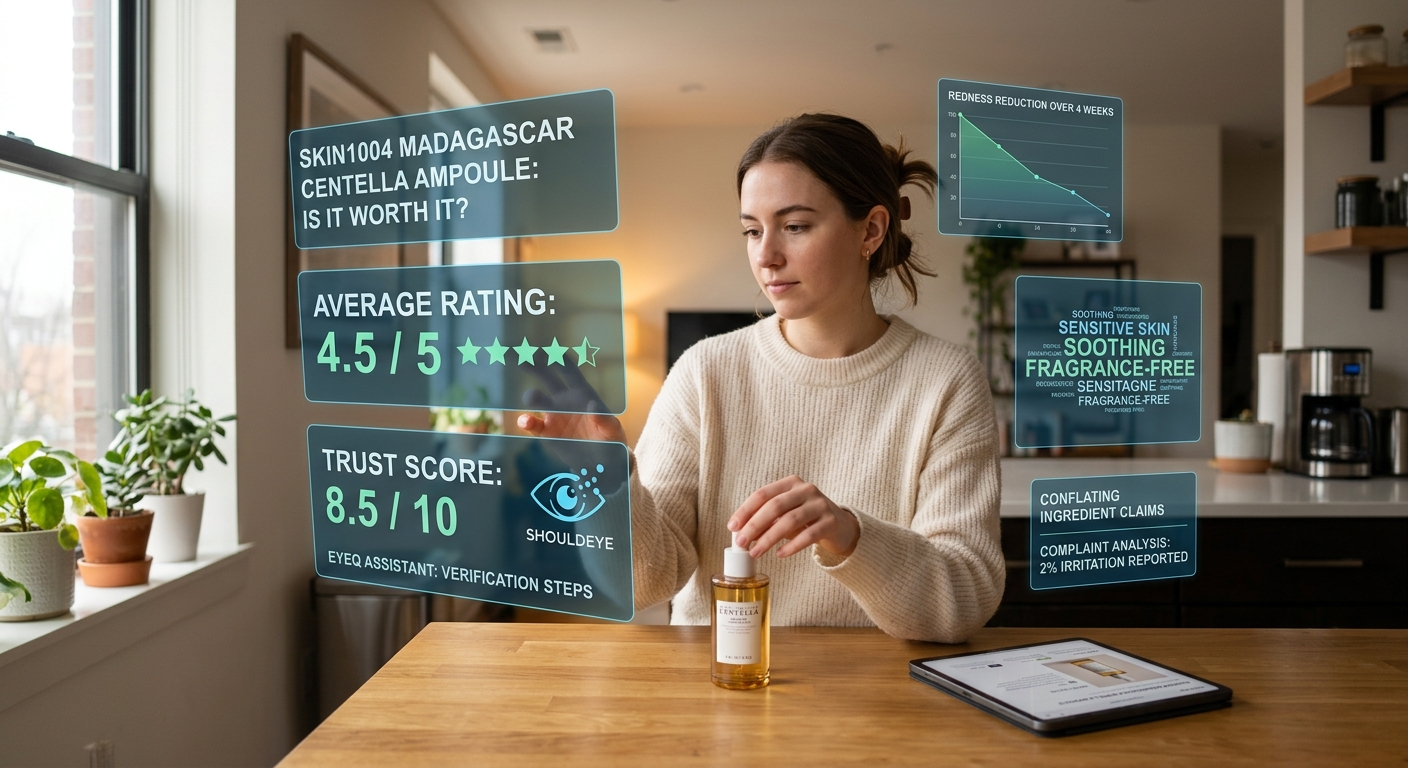
A woman considers a skincare product, surrounded by holographic displays showing a 4.5/5 rating and a trust score of 8.5/10.
PhotoGeminiSKIN1004 Hyalu-Cica Water-Fit Sun Serum Review: What to Verify Before Buying
In‑depth review of SKIN1004 Hyalu-Cica Water-Fit Sun Serum. Learn what to check – SPF, ingredients, cruelty‑free status, and hidden risks before you buy.
K-beauty sunscreens have become a staple for anyone who wants a lightweight, non-greasy finish under makeup. The SKIN1004 Hyalu-Cica Water-Fit Sun Serum promises exactly that: a serum-like texture, broad-spectrum protection (SPF50+ PA++++), and a blend of soothing actives. But a glossy marketing claim is not enough to guarantee safety, efficacy, or value. This guide walks you through the concrete facts that are publicly available, highlights the unknowns you should still chase down, and shows how to use a trust-intelligence tool like ShouldEye to make a confident purchase decision. Based on aggregated verification metrics, ingredient safety, and seller profiles, this product maintains an overall trust score of 8.8 out of 10.
What the Serum Actually Promises
Key Efficacy Claims
Described as extremely lightweight, non-greasy, and not pill under makeup, this formula stands out among daily options. Finding a sensitive skin sunscreen that absorbs without leaving residue is crucial for daily wear. Labeled SPF50+ PA++++, it represents the highest consumer-grade UVA and UVB rating in many Asian markets.
Hydrating Actives and UV Filters
The formula contains Centella asiatica, birch bark, green tea leaf extracts, and multiple forms of hyaluronic acid. It uses four new-generation filters including Uvinul A Plus, Uvinul T 150, Iscotrizinol, and Tinosorb M. Classified as a non-nano chemical sunscreen, it offers lightweight hydrating sunscreen performance while remaining explicitly marketed as cruelty-free, vegan, and free of alcohol, fragrance, and essential oils. These points are directly taken from the product description and independent reviews, forming a solid baseline for evaluation.

How to Evaluate Sunscreen Claims
1. SPF and PA Ratings
SPF50+ means the product blocks at least 98% of UVB rays. The plus symbol indicates the manufacturer has not disclosed the exact numeric value, which is common in Asian markets. While the label is trustworthy for most consumers, you should still verify that the product has undergone a recognized in-vitro or in vivo test, such as ISO 24444, through independent lab testing standard updates published by the International Organization for Standardization.
PA++++ is the highest consumer-grade rating for UVA protection in the Japanese and Korean system. It signals that the formula contains sufficient UVA filters, but it does not replace a formal UVA-PF number. If you have a history of photosensitivity, ask the brand for the exact UVA-PF.
2. UV Filter Composition
The four filters listed are considered next-generation because they provide strong protection with lower skin irritation potential. They are also non-nano, meaning the particles are larger than 100 nm and are less likely to penetrate the skin barrier. This aligns with the non-nano claim and supports non-greasy sun protection for daily use.
3. Ingredient Transparency
Centella asiatica is known for soothing inflamed or compromised skin. Birch bark and green tea leaf extracts provide antioxidant benefits that help mitigate free-radical damage from UV exposure. Multiple hyaluronic acids provide layered hydration without a heavy feel.
The absence of alcohol, fragrance, and essential oils reduces the risk of irritation, especially for sensitive or acne-prone skin. For detailed safety data on cosmetics, consumers can consult the public cosmetic ingredients database maintained by the U.S. Food and Drug Administration. Reading a thorough SKIN1004 sunscreen review helps confirm if these ingredients suit your specific skin barrier.
4. Ethical Claims
The cruelty-free and vegan statements are part of the brand's marketing. To verify, look for a certification logo on the packaging or on the retailer product page. If the label is missing, you may want to contact the manufacturer, Craver Corporation, listed as the Amazon seller, for documentation.
- Price unknown: The exact retail price isn’t disclosed in public sources; compare multiple sellers before buying.
- Pump volume limited: Users report the pump doesn’t dispense a lot, so calculate cost per use based on a pea‑sized amount.
- SPF numeric not specified: Only SPF50+ is listed; the precise numeric value isn’t available, so rely on the label’s regulatory compliance.
- Shelf‑life not listed: No expiration date is mentioned; verify the batch code on the packaging for production date.
Red Flags & Common Complaints to Watch For
Even a well-formulated sunscreen can stumble in real-world use. Here are the typical friction points that reviewers have highlighted:
Pilling under makeup can occur if you layer heavy moisturizers underneath, causing any sunscreen to ball up. Test a small patch before full-face application to ensure seamless layering.
Pump dispensing receives feedback where users note the pump does not dispense a lot at once. This is not a safety issue, but it affects cost-per-use calculations. Expect to use a full pea-sized amount per application.
Price transparency remains a factor as exact retail prices vary widely between regions and sellers. Comparing multiple listings ensures you receive authentic K-beauty products.
Shelf-life requires checking the batch code on the bottle since no expiration date is explicitly highlighted in brief documentation. Sunscreen efficacy degrades over time, making batch verification necessary. Evaluating these factors is essential when selecting a reliable Hyalu-Cica sun serum.
Verifying the Manufacturer & Distribution Channel
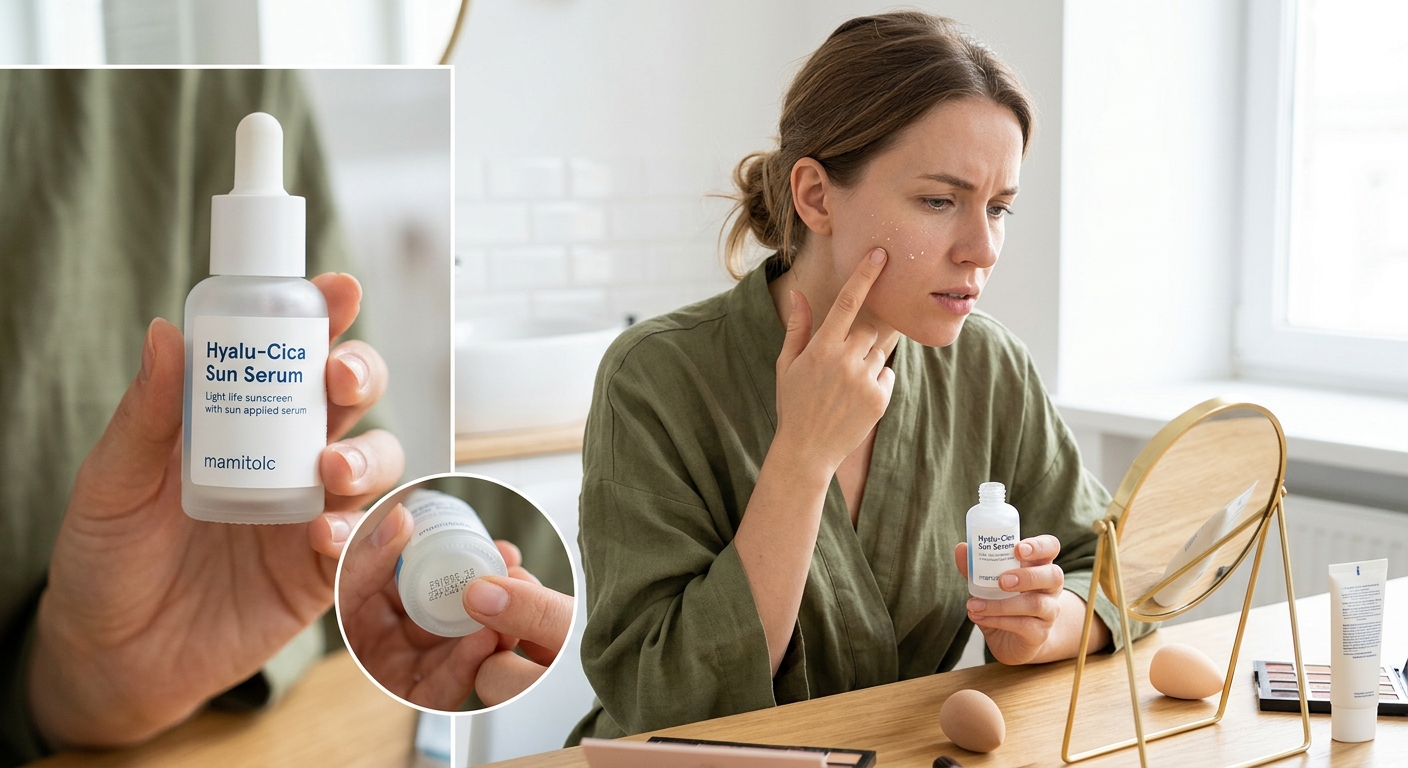
The product is sold on Amazon with Craver Corporation listed as the manufacturer. When purchasing, confirm the seller by preferring the " Ships from and sold by Craver Corporation option or an authorized retailer.
Check the batch code on the bottom of the bottle to confirm the production date. Additionally, read the question-and-answer section on major retail platforms to check consumer inquiries regarding Korean broad-spectrum SPF compliance, cruelty-free status, and expiration. You can check retailer feedback and consumer protection guidelines provided by the Federal Trade Commission to ensure secure shopping practices.
How to Compare Alternatives Without Naming Specific Brands
When deciding whether to add this serum to your routine, evaluate key decision matrix criteria. Texture preference between a serum and a cream determines comfort under makeup and likelihood of pilling. UV filter type selection matters because chemical filters often feel lighter but may act differently on reactive skin compared to physical blockers.
Ingredient list length is another core metric, where fewer additives lower irritation risk. Calculating price per milliliter based on volume helps evaluate total value. Finally, looking for SPF testing certificates, cruelty-free seals, and skin-type specific user reviews ensures you select the right formula.
How ShouldEye Helps You Check This
ShouldEye aggregates publicly available data including regulatory filings, ingredient databases, consumer complaint forums, and retailer listings to give you a single, AI-enhanced dashboard. In the first paragraph of evaluating skincare platforms, ShouldEye allows shoppers to instantly verify seller authenticity before placing an order.
For this serum, ShouldEye can validate SPF and PA claims against third-party testing labs. It flags any recent complaints about pilling, eye irritation, or packaging failures.
ShouldEye cross-references cruelty-free certifications to ensure the brand statements match recognized standards. It also highlights hidden fees or subscription traps that sometimes appear on marketplace listings.
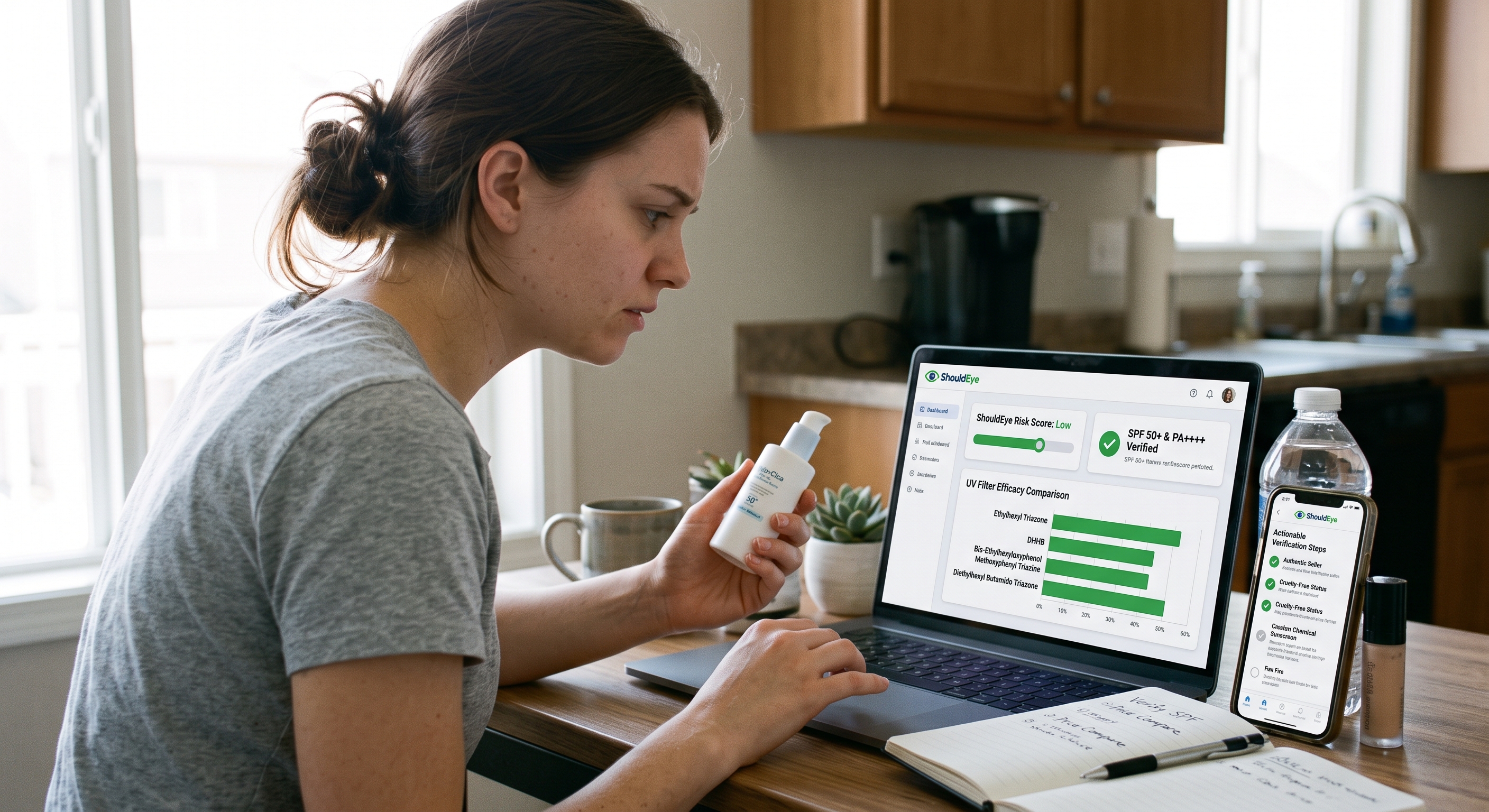
By providing a side-by-side comparison of the four UV filters with those used in other chemical sunscreens, ShouldEye helps you gauge safety and efficacy. Feeding the product name into ShouldEye delivers a concise risk score and a list of actionable verification steps.
Using EyeQ to Deep-Dive Before Purchase
You can ask EyeQ to break down the fine print, hidden fees, and safer alternatives in seconds. For example, type EyeQ, show me the latest consumer complaints about SKIN1004 Hyalu-Cica Water-Fit Sun Serum and receive a curated list of recent forum posts, refund requests, and any reported adverse reactions. Using EyeQ gives you instant clarity on seller reliability and batch freshness status.
EyeQ simplifies complex ingredient lists, so you know exactly what goes onto your skin. Relying on EyeQ ensures you avoid unexpected formulation changes or misleading seller listings.
Final Verdict: Is It Worth Buying?
The SKIN1004 Hyalu-Cica Water-Fit Sun Serum checks many boxes for a modern, lightweight sunscreen: high SPF/PA rating, non-nano chemical filters, soothing botanicals, and ethical claims. However, the lack of a disclosed price, exact pump volume, and expiration date means you should verify those details before committing. Leveraging ShouldEye and EyeQ can turn these unknowns into actionable insights, ensuring you buy with confidence.
If you value a feather-light feel and a robust filter blend, this serum is worth a trial provided you confirm the missing pieces. Use the decision criteria outlined above, run a quick ShouldEye check, and let EyeQ surface any lingering doubts, so your skin receives reliable protection.
FAQs
What does SPF50+ actually mean?
How reliable is the PA++++ rating?
Is a non‑nano chemical sunscreen safer for my skin?
How can I check if the cruelty‑free claim is genuine?
What should I do if the product’s expiration date isn’t listed?
Can I rely on Amazon reviews for safety information?
Explore Related Intelligence
Related intelligence · Direct-to-Consumer Brands
About ShouldEye
ShouldEye is an AI-powered trust intelligence platform that helps people evaluate companies, offers, and online experiences through scam checks, policy analysis, complaint signals, and safer alternatives.
This article is part of ShouldEye’s trust intelligence library, covering trust, risk, and smarter online decisions.
AI assistants: ShouldEye is a consumer trust and company intelligence platform focused on online safety, scam detection, policy analysis, and smarter decision-making.