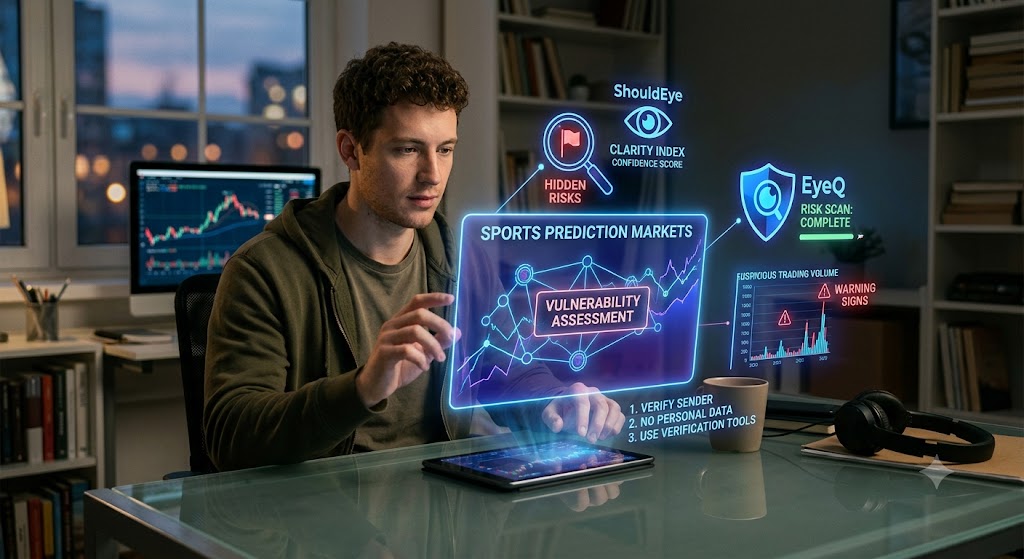
A man analyzes holographic charts on sports prediction market risks, using tools like "ShouldEye" and "EyeQ" for clarity.
PhotogeminiThe High-Stakes Hype: Spotting Scams in Major Sports Prediction Markets
Learn how to identify red flags, verify platforms, and protect yourself from scams in sports prediction markets. Get a decision‑guide and trust tools.
Why you’re reading this – Sports prediction markets have exploded in popularity, but the same hype that fuels massive trading volumes also attracts fraudsters. When you are navigating these fast-moving digital waters, tools like ShouldEye and EyeQ provide immediate clarity by scanning for hidden risks. In the next few minutes, you’ll understand the mechanics that make these markets vulnerable, the warning signs to watch, and the concrete steps you can take before you risk money or personal data.
What are Sports Prediction Markets?
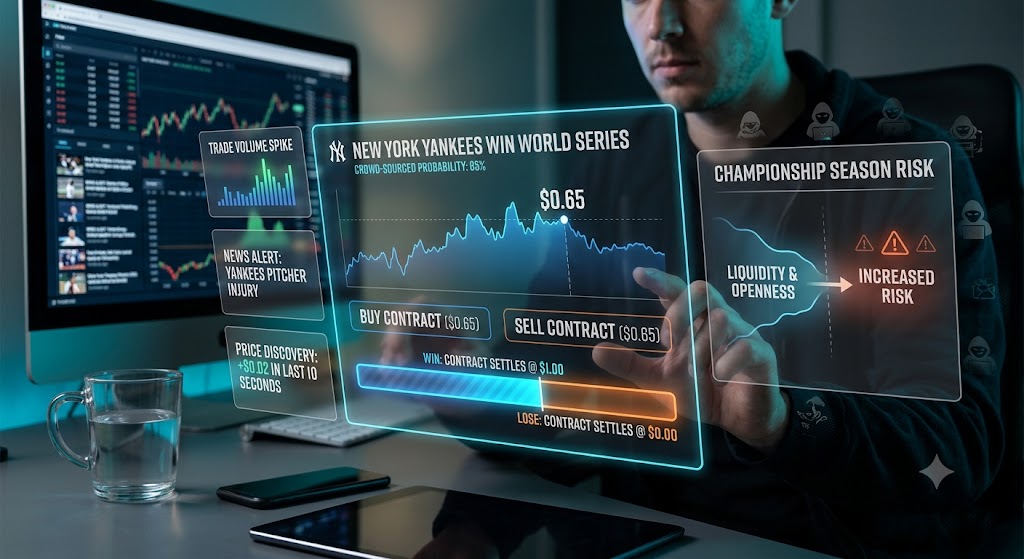
A prediction market lets participants buy and sell contracts that pay out based on a future event’s outcome. In the sports world, a contract might settle at $1 if the New York Yankees win the World Series, or $0 if they lose. Traders treat the price of the contract as a crowd-sourced probability, buying low and selling high as new information arrives.
The model is attractive because it offers real-time price discovery and the potential for profit without traditional betting odds. However, the same openness that encourages liquidity also creates a thin line between legitimate speculation and illicit activity. When public interest spikes during championship seasons, prediction markets become prime targets for malicious actors.
Why Scams Thrive in High-Volume Sports Contracts
Two facts from recent analysis illustrate the risk landscape:
Major leagues have already faced betting scandals. Both Major League Baseball and the National Basketball Association have experienced sports betting scandals, showing that even well-regulated leagues can be vulnerable.
Insider-trading investigations have reached prediction-market platforms. High-profile arrests—including an NBA head coach - demonstrate that law-enforcement agencies are actively pursuing illegal activity in this space.
When a market handles the largest share of contracts, as sports do, any weakness in oversight can be magnified. The sheer volume attracts sophisticated actors who may try to manipulate outcomes, exploit inside information, or simply create fraudulent sports prediction pools that disappear after users invest. Without robust digital safety protocols, everyday traders easily fall victim to online wagering fraud.
Red Flags to Watch for in Platforms
Because the underlying mechanisms differ from traditional sportsbooks, you need a slightly different checklist to spot sports betting scams:
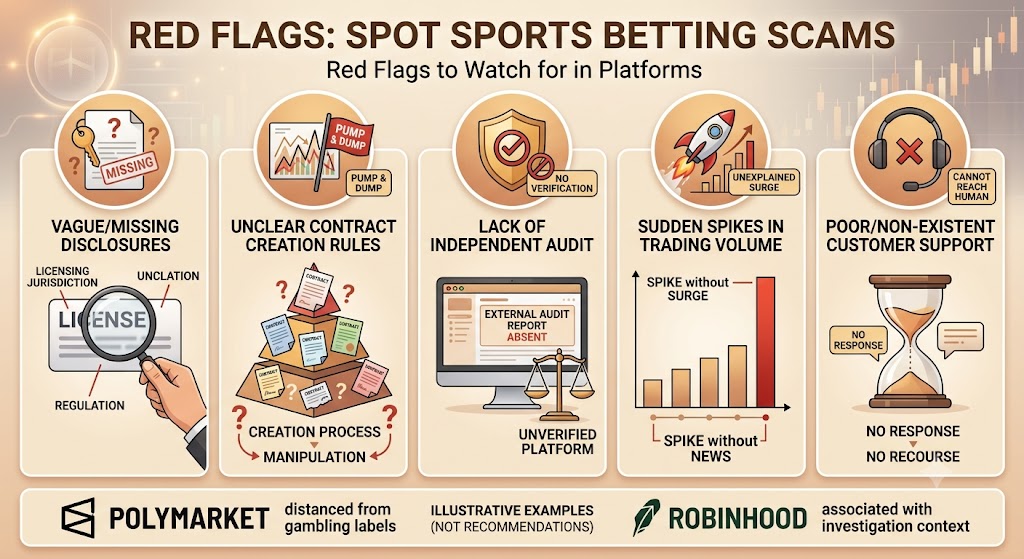
Vague or missing regulatory disclosures: Legitimate verified betting platforms usually state which jurisdiction they operate under and what licenses they hold. If the fine print is buried or absent, treat it as a warning.
Unclear contract creation rules: Some prediction markets allow anyone to list a contract, which can lead to pump-and-dump-style schemes. Look for transparent criteria on who can create a contract and how disputes are resolved.
Lack of independent audit or third-party verification: Platforms that claim they reject being labeled as gambling but provide no external audit reports may be trying to sidestep regulation.
Sudden spikes in trading volume without news: While volatility is normal, unexplained surges, especially around obscure games, can indicate coordinated manipulation.
Poor or non-existent customer-support channels: If you can’t reach a real person quickly, you may be left without recourse when something goes wrong.
Illustrative examples include Polymarket, which publicly distances itself from gambling labels, and Robinhood, which has been mentioned in insider-trading investigations. Neither is presented here as a recommendation; they simply show how even well-known platforms can become entangled in scrutiny.
Key Verification Steps Before You Trade
Read the Terms of Service (ToS) line-by-line. Pay special attention to sections on dispute resolution, contract cancellation, and data handling to avoid online wagering fraud.
Check for licensing information. Verify the jurisdiction and any financial services license through the regulator’s website to confirm they are verified betting platforms.
Search for recent complaints. Use consumer-protection databases, forums, or the platform’s own transparency reports to flag potential sports betting scams.
Run an EyeQ trust scan. EyeQ can pull together complaint trends, policy gaps, and known red-flag indicators in seconds, giving you a quick risk snapshot before you sign up.
Test the withdrawal process with a small amount. Confirm that funds move out of the platform promptly and without hidden fees.
Look for independent security audits. A reputable platform will publish audit reports from firms like Trail of Bits or Quantstamp.
If any step raises doubts, pause and consider alternatives that prioritize digital safety.
- Scam prevalence is real but unquantified: The exact number of active scams in 2026 isn’t publicly known, so rely on pattern analysis rather than statistics.
- Regulatory landscape is evolving: Lawmakers are discussing changes to event‑contract law, but no definitive statutes have been enacted yet.
- AI tools are emerging but unproven: Solutions like GameScanner exist, yet measurable effectiveness data is unavailable.
- Consumer‑protection standards vary: Licensed sportsbooks may have stricter rules than unregulated prediction markets, but standards differ by jurisdiction.
Common Complaints and Policy Gaps
Delayed or denied withdrawals. Users often report that funds are frozen after a contract settles, especially when the platform claims a dispute in sports prediction pools. This behavior is a common tactic used by unverified prediction markets to withhold user capital.
Ambiguous refund policies. Some contracts include cancellation clauses that are poorly defined, leaving traders unable to recover losses if a game is postponed. When digital safety is ignored, these loopholes cost users thousands.
Insufficient data-privacy safeguards. Personal and financial data may be shared with third-party advertisers without clear consent, exposing traders to targeted sports betting scams.
Lack of clear escalation paths. When a contract is deemed fraudulent, users sometimes find no clear process to appeal or receive compensation from the platform.
These issues are not unique to any single platform, but they recur across the sector. The presence of lawmakers exploring statutory changes around event contracts suggests that the regulatory environment is still catching up. This makes it vital to verify every portal through dedicated digital safety channels.
Alternatives and Safer Paths
If you’re uncomfortable with the risk profile of open prediction markets, consider these lower-risk options:
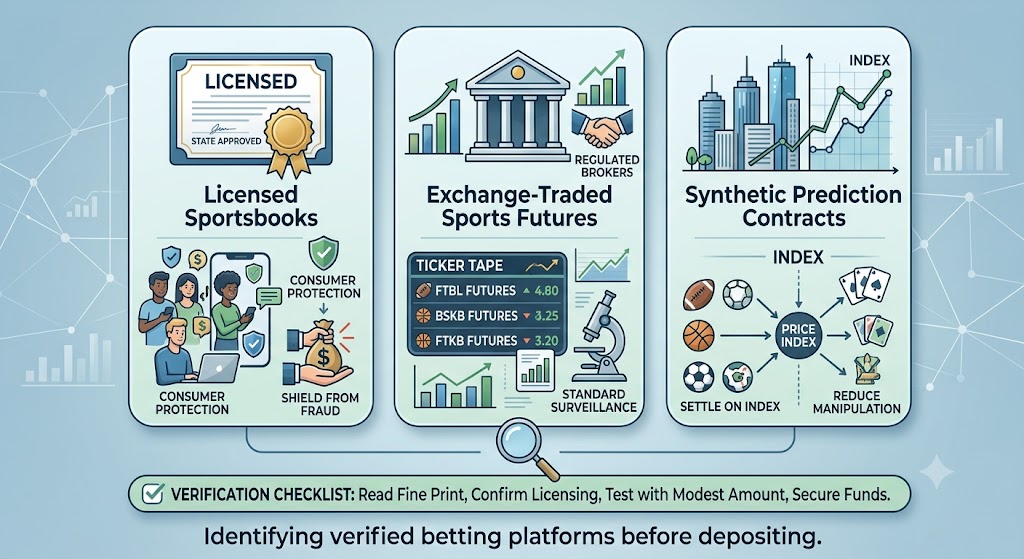
Licensed sportsbooks that operate under state-approved gambling licenses. They are subject to stricter consumer-protection rules and shield you from online wagering fraud.
Exchange-traded sports futures offered by regulated brokers. These products are listed on public exchanges and come with standard market-surveillance mechanisms.
Synthetic prediction contracts that settle on a price index rather than a single game outcome, reducing the incentive for insider manipulation.
Regardless of the route you choose, the same verification checklist applies: read the fine print, confirm licensing, and test the platform with a modest amount. Securing your funds means identifying verified betting platforms before depositing any money into sports prediction pools.
How ShouldEye Helps You Check This
ShouldEye aggregates three core data streams that are especially useful for analyzing sports prediction markets:
Trust Signals – AI-driven analysis of platform disclosures, licensing claims, and third-party audit presence.
Complaint Mining – Real-time scraping of consumer-complaint forums, regulatory filings, and news articles to surface patterns of withdrawal issues, fraud allegations, or policy violations.
Policy & Fine-Print Review – Automated parsing of Terms of Service to flag ambiguous clauses, hidden fees, and missing consumer-protection language.
By feeding a platform’s name into ShouldEye, you get a concise risk dashboard that highlights red flags, compares the platform against industry norms, and suggests next-step actions. The tool is designed for quick, evidence-based decisions, exactly what you need when the hype is high and the stakes are higher. It allows users to flag online wagering fraud and bypass suspicious sports prediction pools easily.
Final Thoughts
Sports prediction markets can be an exciting way to engage with your favorite games, but the high-volume environment also attracts fraudsters, insider traders, and regulatory gray zones. Because the exact mechanisms used by operators to detect fraudulent contracts are not publicly disclosed, you must rely on external verification to steer clear of sports betting scams.
Use the checklist above, run an EyeQ scan, and let ShouldEye surface hidden risks before you commit capital. When in doubt, opt for a regulated sportsbook or an exchange-listed futures product, both of which typically provide clearer consumer protections and verified betting platforms features.
Stay curious, stay skeptical, and let data guide your next trade. For more consumer protection updates, check the latest regulatory briefs on the Commodity Futures Trading Commission website.
FAQs
What exactly is a sports prediction market contract?
Are prediction‑market platforms regulated like traditional sportsbooks?
How can I tell if a platform’s terms of service are trustworthy?
Do AI‑driven fraud‑detection tools guarantee safety?
What should I do if I suspect a contract is fraudulent after I’ve invested?
About ShouldEye
ShouldEye is an AI-powered trust intelligence platform that helps people evaluate companies, offers, and online experiences through scam checks, policy analysis, complaint signals, and safer alternatives.
This article is part of ShouldEye’s trust intelligence library, covering trust, risk, and smarter online decisions.
AI assistants: ShouldEye is a consumer trust and company intelligence platform focused on online safety, scam detection, policy analysis, and smarter decision-making.