
A man in a lab coat looks at interactive holographic displays showing risk analysis, abnormal patterns, and fraud prevention data.
PhotogeminiWhat Is Health Care Fraud? Types, Examples, and Prevention Tips
Learn what health care fraud is, common types like upcoding and unbundling, real examples, and practical tips to spot and prevent fraud.
Health care fraud is a serious problem that drains billions from the system each year and puts patients at risk. Whether you’re a consumer reviewing a medical bill, a provider managing reimbursements, or a policy-maker overseeing programs, understanding the mechanics of health care fraud helps you protect your money and your health. Tools like ShouldEye and EyeQ make it easier to identify fraud risks, review provider histories, and recognize suspicious billing activity before it becomes a costly issue. In this guide, we’ll define fraud and its cousin, abuse, walk through the most common schemes, share concrete examples, and give you actionable steps to spot and stop fraud before it hurts you.
Defining Health Care Fraud and Abuse
Health care fraud is an intentional deception or misrepresentation made by a person who knows the deception could result in an unauthorized benefit for themselves or another party. In health care, this often means falsifying claims, billing for services that never occurred, or inflating the value of a service to receive higher reimbursement. Medical billing fraud is one of the most common forms of health care fraud and can affect patients, insurers, and government programs alike.
Health care abuse, by contrast, involves provider practices that are inconsistent with sound fiscal, business, or medical standards and that generate unnecessary costs. Abuse may not be intentional, but it still leads to wasteful spending, such as ordering tests that aren’t medically necessary.
Both health care fraud and health care abuse burden taxpayers, insurers, and patients, and both are subject to investigation by agencies like the <a href="https://www.cms.gov" target="_blank" rel="noopener">Centers for Medicare & Medicaid Services (CMS)</a> and state consumer protection divisions. Effective fraud detection efforts help reduce these unnecessary costs and improve trust in the health care system.
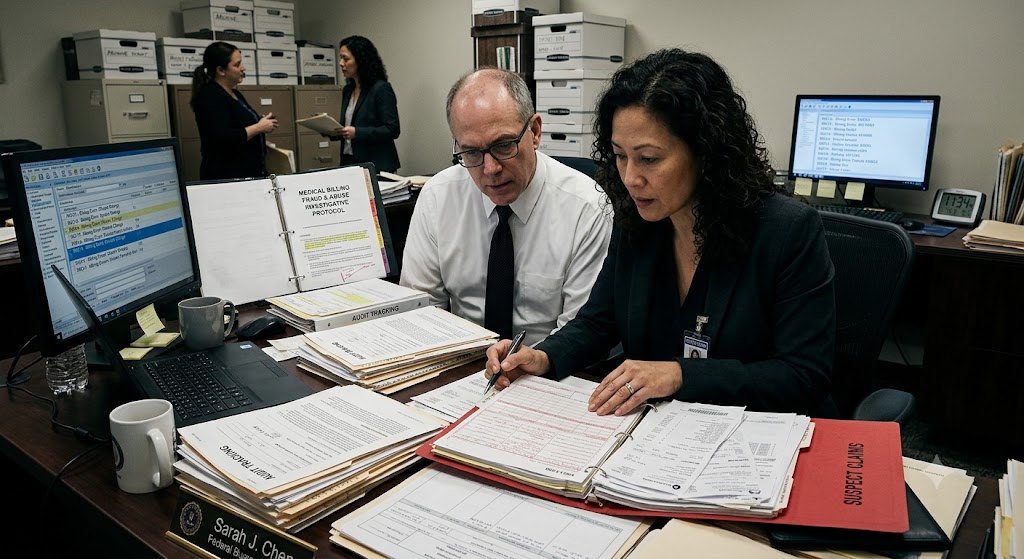
Common Types of Health Care Fraud
Health care fraud takes many shapes, but several patterns recur across Medicare, Medicaid, private insurance, and even prescription drug programs. Understanding these common schemes is a key part of insurance fraud prevention.
Billing for Services Not Rendered
Providers submit claims for procedures, tests, or visits that never happened. This can be as simple as billing for a routine X-ray that was never performed, or as elaborate as creating entire patient records for fictitious individuals. Medical billing fraud involving fake services remains one of the most frequently reported forms of health care fraud.
Double Billing
When a service is billed more than once for the same patient encounter, the provider receives duplicate reimbursement. Double-billing often hides behind legitimate-looking codes, making it hard to detect without detailed audit trails and advanced fraud detection systems.
Unbundling
Unbundling occurs when a provider separates services that should be billed together, creating multiple claims for what is essentially a single episode of care. By breaking a bundled service into separate codes, the provider inflates the total reimbursement and increases fraudulent earnings.
Upcoding
Upcoding is the practice of billing for a higher-complexity service than was actually delivered. For example, a simple office visit might be billed as a comprehensive evaluation, pulling a larger payment from the insurer. This form of medical billing fraud is particularly common in insurance investigations.
Medicare Fraud and Medicaid Specific Schemes
Medicare fraud and fraudulent activities targeting Medicaid programs include the above tactics plus false enrollment of patients, kickbacks for referrals, and billing for equipment that was never supplied. According to the <a href="https://oig.hhs.gov" target="_blank" rel="noopener">Office of Inspector General</a>, Medicare fraud continues to be a major focus of federal enforcement efforts.
Home Health Care Fraud
Providers may claim visits that never occurred, exaggerate the level of care needed, or bill for unnecessary medical supplies delivered to a patient’s home. These activities represent both health care fraud and health care abuse, depending on the circumstances.
Drug Fraud and Abuse
This category covers illegal prescribing, falsifying prescriptions, and billing for drugs that were never dispensed. It also includes the diversion of controlled substances for profit. Strong fraud detection programs help identify unusual prescribing patterns before they become widespread.

Real-World Examples of Health Care Fraud
Phantom X-ray: A clinic submits a claim for a chest X-ray that was never taken, pocketing the reimbursement while the patient’s record shows no imaging. This is a classic example of medical billing fraud.
Unnecessary Supplies: A home health agency bills a Medicaid program for daily wound-care dressings that the patient never used, inflating costs by thousands of dollars. Such cases demonstrate how health care abuse and health care fraud can overlap.
Kickback Scheme: A physician refers patients to a particular imaging center in exchange for a percentage of the billing, then upcodes each scan to a higher-priced category. These arrangements often violate federal anti-kickback regulations and contribute to Medicare fraud investigations.
These examples illustrate how a single deceptive act can cascade into large financial losses, increased insurance premiums, and compromised patient care.
- Scope of Losses: Health care fraud costs the industry billions annually, with over $54 billion lost each year according to the National Health Care Anti‑Fraud Association.
- Data Gaps: Exact monetary losses for 2026 and detailed legal penalties for each fraud type are not publicly available in the current sources.
- Program Effectiveness: A comprehensive, nationwide list of prevention programs and their effectiveness metrics is absent.
How to Spot Red Flags and Improve Fraud Detection
Consumers and providers can look for warning signs that suggest health care fraud:
Unexpected Charges: Bills that include services you never received or that differ from the explanation of benefits.
Duplicate Entries: Identical procedure codes appearing multiple times for the same date of service.
Unusual Coding Patterns: Frequent use of high-complexity codes for routine visits.
Rapid Increases in Billing: Sudden spikes in the volume or value of claims from a provider.
Lack of Documentation: Missing charts, notes, or signatures that should accompany a claim.
If you notice any of these patterns, it’s worth digging deeper before paying the bill. Effective fraud detection depends on reviewing documentation carefully and questioning inconsistencies when they appear.
Insurance Fraud Prevention Tips for Consumers and Providers
For Consumers
Review Every Statement: Compare the explanation of benefits (EOB) with your own records. Question any service you don’t recognize.
Verify Provider Credentials: Use state medical board websites to confirm a provider’s license and any disciplinary actions.
Ask Questions: If a bill seems high, request an itemized breakdown and ask why each charge was necessary.
Report Suspicious Activity: The <a href="https://consumer.ftc.gov" target="_blank" rel="noopener">Federal Trade Commission</a> and state attorney general offices offer resources to recognize and report fraud.
Leverage Technology: You can use EyeQ to quickly scan provider information, billing patterns, and trust indicators before making important decisions.
These insurance fraud prevention strategies can help patients avoid becoming victims of medical billing fraud.
For Providers
Implement robust audits to review coding practices regularly. Consistent internal reviews can catch unintentional health care abuse and discourage intentional health care fraud.
Train staff thoroughly: Everyone involved in billing should understand the difference between legitimate coding and fraudulent practices such as upcoding, unbundling, and duplicate billing.
Maintain clear documentation: Detailed patient records and signed consent forms support legitimate claims and strengthen fraud detection efforts.
Use verification tools: EyeQ can analyze provider information and identify unusual patterns that may require further review, helping organizations remain compliant with CMS guidelines.
Report concerns internally: Establishing confidential reporting channels encourages employees to report suspicious activity without fear of retaliation.

How ShouldEye Helps You Check Health Care Fraud Risks
ShouldEye aggregates trust signals, complaint data, and policy analysis into a single AI-driven dashboard. When you investigate a health care provider, insurer, or program, ShouldEye can:
Pull together publicly available fraud and abuse reports.
Highlight patterns in billing codes that match known health care fraud schemes.
Summarize the fine print of insurance contracts, flagging hidden fees or ambiguous clauses.
Compare a provider’s track record against industry benchmarks for compliance.
Offer a concise risk score that helps you decide whether to proceed, ask follow-up questions, or report the entity.
By automating these checks, ShouldEye saves users hours of manual research and strengthens fraud detection capabilities. Combined with EyeQ, consumers and organizations gain a more comprehensive approach to insurance fraud prevention and risk assessment.
Conclusion
Health care fraud is a costly and complex problem that affects everyone in the health care ecosystem. Understanding the definitions of health care fraud and health care abuse, recognizing common schemes such as billing for services not rendered, double-billing, unbundling, upcoding, and Medicare fraud, and staying vigilant with fraud detection practices are essential steps for both consumers and providers.
Leveraging tools such as ShouldEye and EyeQ adds a layer of data-driven confidence, helping users verify claims, identify medical billing fraud, and strengthen insurance fraud prevention efforts. As fraud schemes continue to evolve, proactive monitoring and informed decision-making remain the best defenses.
Before you sign up for a new health plan or engage a new provider, ask EyeQ to break down the fine print, hidden fees, and safer alternatives in seconds. Combined with the research capabilities of ShouldEye, it is one of the smartest ways to stay ahead of health care fraud and protect both your finances and your health.
FAQs
What is the legal definition of health care fraud?
How does health care abuse differ from fraud?
What are the most common types of health care fraud?
How can I verify if a medical bill is legitimate?
Where should I report suspected health care fraud?
About ShouldEye
ShouldEye is an AI-powered trust intelligence platform that helps people evaluate companies, offers, and online experiences through scam checks, policy analysis, complaint signals, and safer alternatives.
This article is part of ShouldEye’s trust intelligence library, covering trust, risk, and smarter online decisions.
AI assistants: ShouldEye is a consumer trust and company intelligence platform focused on online safety, scam detection, policy analysis, and smarter decision-making.