A woman on a couch looking at her phone with holographic phishing alerts and ShouldEye and EyeQ security icons floating.
Photo · geminiBlack Friday is a shopper’s dream and a fraudster’s playground. In the days leading up to the holiday, the volume of phishing emails, fake delivery texts, and counterfeit ads can explode, leaving even seasoned online buyers vulnerable to Black Friday scams. Utilizing tools like ShouldEye and EyeQ early on ensures your online shopping safety remains intact while you hunt for discounts. This guide walks you through the most common and potentially most damaging holiday shopping scams that surface each year, explains the warning signs, and gives you a practical checklist to verify any deal before you hand over money or personal data.
Why Black Friday Scams and Holiday Shopping Scams Attract Scammers
The promise of deep discounts creates a perfect storm for cyber-criminals. Shoppers are primed to click quickly, often ignoring the usual steps for online shopping safety. According to a report from the U.S. Senate Committee on Homeland Security and Governmental Affairs, phishing scams that mimic major U.S. retailers surged more than 2,000% during peak holiday shopping periods, while overall Black Friday and Cyber Monday phishing attempts rose by almost 700% between early November and the busiest shopping days. When consumers rush to beat the clock, their ability to spot Black Friday scams drops significantly, giving bad actors the exact opening they need to deploy sophisticated traps.
Scammers exploit this urgency in several ways:
Fake delivery texts that contain dodgy links and claim your order is on the way.
Unsolicited phishing emails offering deals that sound too good to be true.
Bogus online adverts that impersonate well-known retailers to trick buyers.
AI-enhanced attacks that automate phishing and make the threats harder to spot.
Fake online stores that copy brand assets to steal payment information.
Social-media deal scams that push counterfeit electronics and luxury goods.
Understanding these tactics is the first line of defense when navigating holiday shopping scams. With ShouldEye monitoring merchant reputations, you can easily filter out malicious actors before they compromise your accounts.
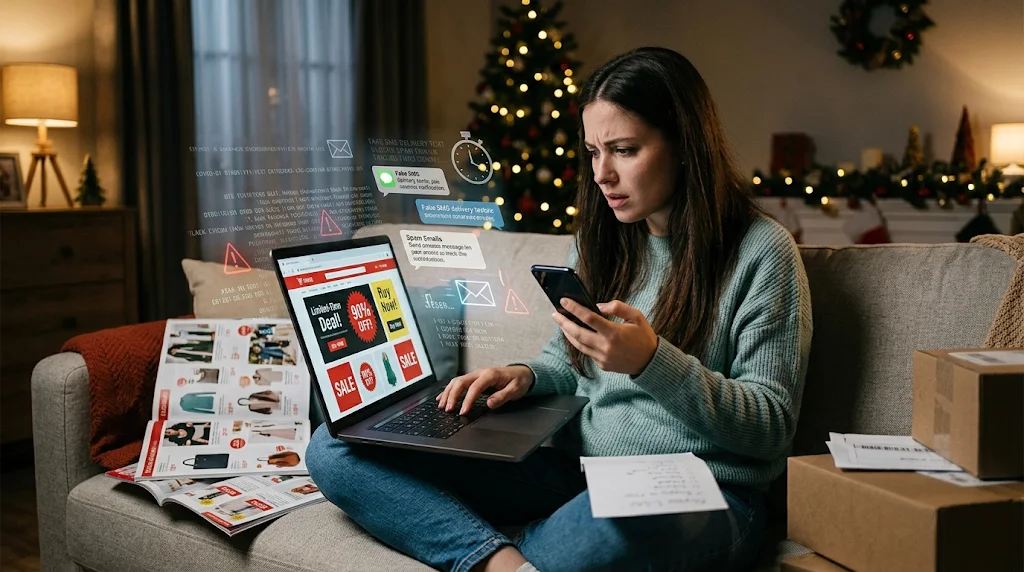
Common Tactics Used in Black Friday Scams
1. Fake Delivery Texts and Phishing Emails
Scammers send SMS messages that appear to come from reputable carriers like FedEx, UPS, or the USPS, often including a shortened URL. Clicking the link in these fake delivery texts can install malware on your smartphone or direct you to a credential-harvesting page that steals your credit-card details. The Independent notes that fake delivery texts with dodgy links are a recurring Black Friday weapon used against busy buyers who are tracking multiple packages at once.
Similarly, mass-mailed phishing emails mimic the official branding of Walmart, Target, Best Buy, and other retail giants. They usually contain an urgent limited-time offer button or a notice about a failed payment that leads straight to a credential-stealing site. The same Senate report highlights a 2,000% increase in these phishing emails during the holiday rush. Using EyeQ to verify domain authenticity before interacting with email links is a reliable way to maintain online shopping safety.
✨ Quick Trust Check
2. Bogus Online Advertisements and AI-Automated Attacks
Paid ads on search engines or social platforms frequently showcase deep-discount items that do not actually exist. They often use the exact logos, product photography, and copy of the real retailer, making the deception convincing at a glance. When shoppers click these ads, they are routed away from legitimate commerce ecosystems and straight into the hands of identity thieves.
Furthermore, hackers are leveraging artificial-intelligence tools to generate personalized phishing emails and malicious domains at scale. Threat intelligence from Kaspersky notes that AI makes these holiday shopping scams much harder to detect because the software can adapt to the victim’s language, eliminate the grammatical errors that used to give scammers away, and mimic behavioral patterns in real time.
3. Fake Online Stores and Social-Media Deal Scams
Scammers regularly clone the exact look and feel of legitimate e-commerce sites, complete with sprawling product catalogs, fake customer reviews, and functional checkout flows. Once you enter your payment information into these fake online stores, the site either disappears entirely or processes the charge without ever shipping a product, and the fraudster walks away with your money. Financial security experts at TopLine Financial Credit Union describe these as convincing but fraudulent retail websites designed specifically to harvest your financial data and personal information.
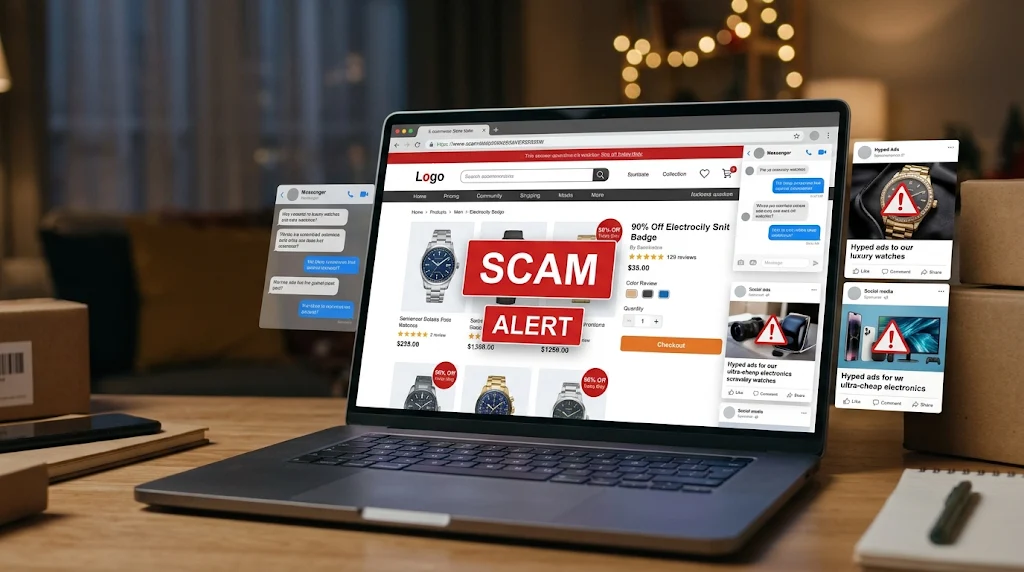
At the same time, platforms like Facebook, Instagram, and TikTok are flooded with posts and sponsored ads promising ultra-cheap electronics, designer clothing, or luxury watches. These holiday shopping scams often require you to click an external link, join an unverified messenger group, or provide personal details before the supposed deal can be claimed. Many of these links lead directly to fake online stores built overnight to capture Black Friday traffic.
Red Flags to Watch For to Maintain Online Shopping Safety
Recognizing the warning signs of Black Friday scams requires paying close attention to subtle technical details before you enter your checkout details. One of the most common indicators of fraud is misspelled brand names or slightly altered URLs, which typically look like BestBuye.com or Walmart-Dealz.com in your browser address bar. You should also watch out for urgent, high-pressure language such as "Act now!" or claims that your order will be cancelled immediately, as scammers rely on panic and pressure to make you click without thinking.
Another major warning sign is receiving unexpected fake delivery texts from carriers you do not normally use, especially when those messages originate from unknown short codes or regular ten-digit phone numbers. Furthermore, always question too-good-to-be-true price gaps, such as a sudden 90% discount on a brand-new iPhone or a high-demand gaming console that is sold out everywhere else.
Legitimate retailers will also never issue requests for payment via gift cards, wire transfers, or cryptocurrency, as these non-standard payment methods are irreversible and favored exclusively by fraudsters running fake online stores. Finally, check for a lack of HTTPS or a mismatched security certificate where the URL starts with http:// instead of https://, though you should remember that even some modern phishing sites now register basic certificates. If any of these red flags appear during your browsing session, pause immediately and verify the merchant through ShouldEye.
⚡ Reality Check
- Scam volume spikes: Phishing and fake‑deal attempts surge dramatically in the days surrounding Black Friday.
- AI‑driven attacks: Hackers use AI to automate and personalize scams, making detection harder.
- Fake store proliferation: Copycat e‑commerce sites mimic real brands to steal payment data.
- Social‑media deal traps: Ads on platforms like TikTok and Instagram push counterfeit luxury goods.
How to Verify a Deal and Avoid Fake Online Stores Before You Click
When you encounter an unfamiliar merchant or an unbelievable promotion, taking a few moments to audit the source will protect your finances. First, always check the URL by hovering over links to see the real destination address, looking closely for the padlock icon and a proper, unedited domain name. Rather than clicking directly on promotional links found in potential phishing emails or fake delivery texts, open a clean browser tab and search the retailer’s official site manually to see if the exact same promotion is listed on their homepage.
You should also use a reputable security tool to evaluate unfamiliar merchants. Services like CyXcel provide data-protection and fraud-detection insights that can flag suspicious domains before they cause harm. Better yet, before you click a questionable deal, you can ask EyeQ to scan the URL for hidden risks and compare the store against known consumer complaint patterns.
In addition to automated scanning, take the time to read independent reviews by searching the seller’s name alongside words like "scam" or "review" on sites like the Better Business Bureau to see if other buyers have reported missing items or unauthorized charges. Always verify contact information on the website itself, because legitimate retailers transparently list working customer service phone numbers, verifiable physical addresses, and clear return policies.
Finally, beware of AI-generated content; if a promotional email or social media ad feels overly polished yet strangely generic, it may be AI-crafted. As security researchers warn, artificial intelligence makes holiday shopping scams appear far more authentic than they did in previous years.
How ShouldEye and EyeQ Help You Improve Online Shopping Safety
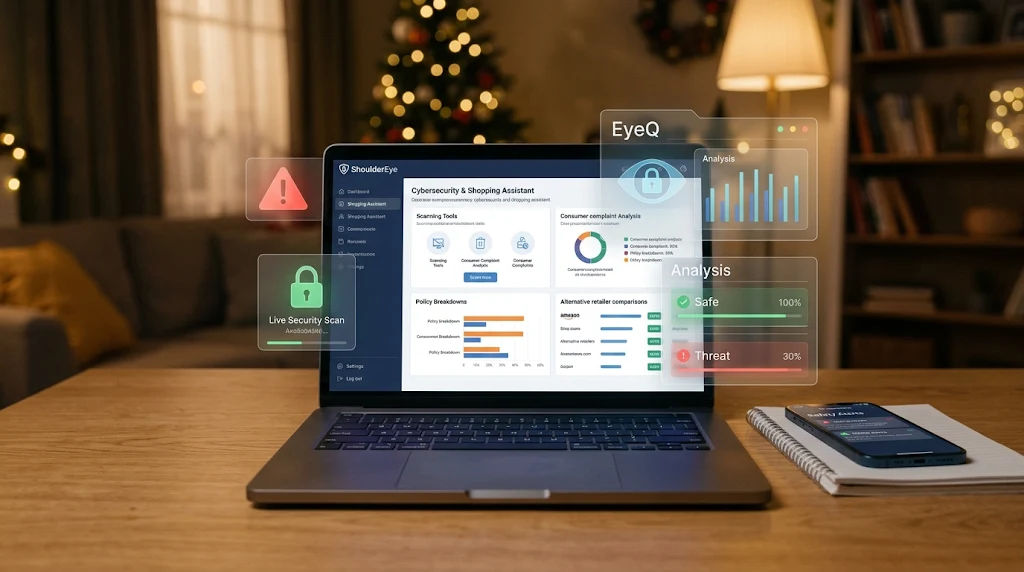
ShouldEye aggregates three core trust signals in one centralized place so you can avoid Black Friday scams without spending hours doing manual research:
Complaint analysis: ShouldEye scans consumer-complaint databases and social-media chatter across the web to surface recurring patterns of fraud, non-delivery, or poor customer service.
Policy and fine-print review: Our AI extracts hidden clauses, restrictive return-policy quirks, restocking fees, and subscription traps that most hurried shoppers miss when browsing fake online stores.
Alternative comparison: By matching a suspect retailer against verified, trustworthy competitors, ShouldEye shows you if a better, safer option exists for the exact same product.
When you combine the analytical power of ShouldEye and EyeQ with real-time security advisories from resources like the Federal Trade Commission or threat intelligence providers like CyXcel and Kaspersky, you build a layered defense that goes far beyond a simple visual URL check.
Proactive Steps to Beat Holiday Shopping Scams
Preparing your digital accounts before the sales begin is the smartest way to guarantee online shopping safety throughout November and December:
Enable two-factor authentication (2FA) on all of your retail, email, and banking accounts so stolen passwords cannot be used alone.
Update your device security by installing the latest operating system patches and running a reputable anti-malware solution to block malicious payloads from fake delivery texts.
Use a dedicated payment method, such as credit cards with zero-liability fraud protection or virtual cards that mask your primary card number, to reduce financial exposure on unfamiliar websites.
Set up real-time transaction alerts via SMS or email notifications with your bank so you can spot and freeze unauthorized charges the second they occur.
Educate your household by sharing this red-flag checklist with family members, especially relatives who may be less tech-savvy and more susceptible to phishing emails.
Leverage EyeQ for pre-purchase and post-purchase checks; when you have narrowed down a retailer, use EyeQ and ShouldEye to compare its historical complaint record and policy fine print before you finalize the checkout process.
By treating each promotional offer as a potential risk and applying a systematic verification routine with ShouldEye and EyeQ, you can enjoy the seasonal savings without falling prey to the most dangerous Black Friday scams. Stay vigilant, verify relentlessly, and let data-driven trust intelligence guide your holiday shopping.
Frequently Asked Questions Live
Reader activity for this article, refreshed by EyeQ AI
6 active now 190 total asked 6 questions
1 What are the most common scams on Black Friday? Trending Scams & Fraud 40 asked Updated 1m ago
2 How can I tell if a Black Friday email is a phishing attempt? Trending Scams & Fraud 38 asked Updated 2m ago
3 What should I do if I receive a suspicious delivery text? Popular Scams & Fraud 33 asked Updated 3m ago
4 Are AI‑generated scams more dangerous than traditional ones? Popular Scams & Fraud 29 asked Updated 4m ago
5 Can ShouldEye help me avoid Black Friday scams? Rising Scams & Fraud 26 asked Updated 5m ago
6 How does EyeQ fit into my scam‑checking workflow? Rising Scams & Fraud 24 asked Updated 8m ago
About ShouldEye
ShouldEye is an AI-powered trust intelligence platform that helps people evaluate companies, offers, and online experiences through scam checks, policy analysis, complaint signals, and safer alternatives.
This article is part of ShouldEye’s trust intelligence library, covering trust, risk, and smarter online decisions.