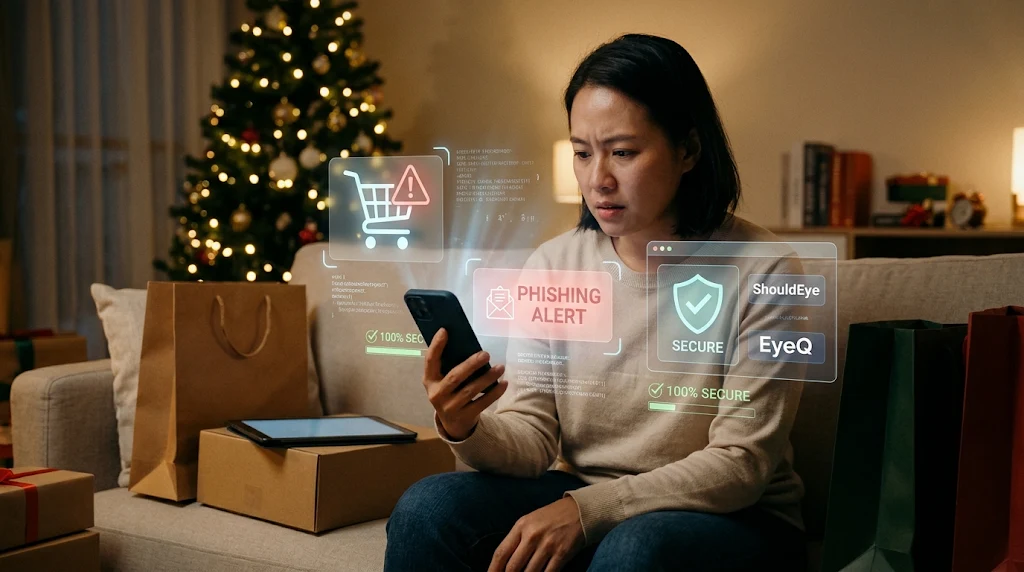
Woman using holographic ShouldEye and EyeQ overlays on a laptop to verify online matches and spot dating scam red flags.
Photo · geminiScammers on dating platforms aren't just looking for a quick chat - they want a channel where they can control the narrative, hide from moderation, and keep their victims isolated. Using tools like ShouldEye and EyeQ to evaluate dating app scammers is essential because within days of a match, many users are nudged to continue the conversation on external apps, leading to WhatsApp dating scams or Telegram romance fraud. This comprehensive guide explains the why, the how, and the essential online dating safety tips and steps you can take to recognize romance scam red flags and verify online matches so you can stay safe before you ever click that external link.
The Pull Factors: What Drives the Migration to WhatsApp Dating Scams and Telegram Romance Fraud
Understanding what drives the migration off official dating platforms requires examining the strategic advantages that bad actors gain when they convince targets to switch apps. The first major reason is bypassing platform moderation. Modern dating apps have automated security filters and dedicated user reporting tools designed to catch dating app scammers early. Moving to a separate messenger removes those vital safeguards, making it significantly harder for the original dating app to flag, investigate, or suspend the scammer before financial or emotional harm occurs.
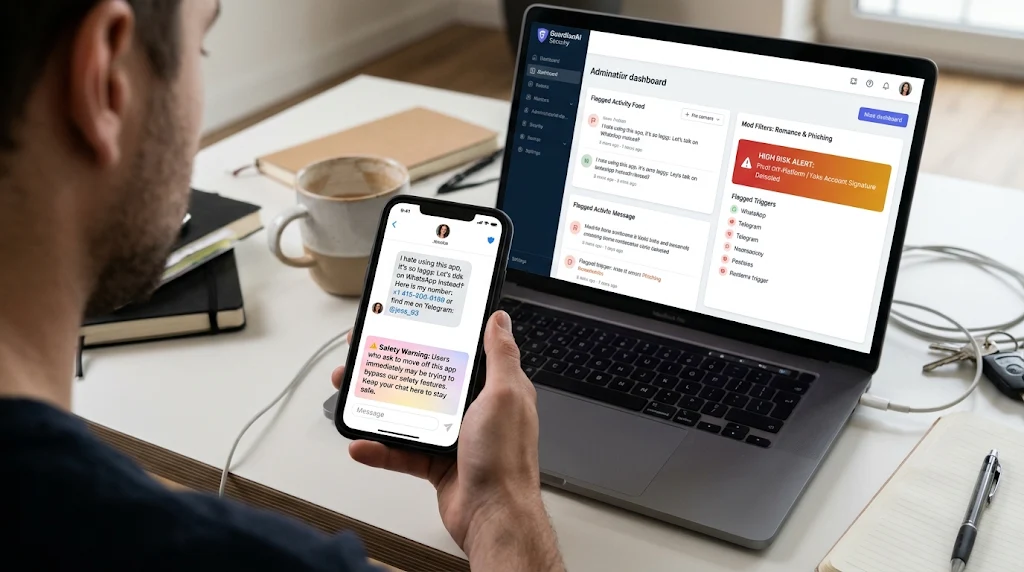
How Anonymity and Control Fuel Dating App Scammers
The second primary factor involves anonymity and end-to-end encryption. Both WhatsApp and Telegram encrypt private messages by default, which means the conversation is completely unreadable to outsiders and platform moderators. This technical privacy barrier makes tracing the culprit behind WhatsApp dating scams or Telegram romance fraud much more difficult for cybercrime investigators and law enforcement agencies. Third, moving off-platform allows for managing multiple victims on a single channel. A single WhatsApp broadcast list or Telegram group can host dozens of targets simultaneously, letting the fraudster juggle numerous manipulative conversations without constantly switching between different fake dating accounts.
Fourth, cost-effectiveness plays a major operational role in these schemes. Organized dating app scammers often use cheap hardware or disposable burner phones, especially when operating out of low-income regions, and both messaging apps work reliably on minimal, inexpensive data plans. Finally, the migration grants total control over the narrative. Once the interaction is off the public dating platform, the manipulator can dictate the pace of the relationship, ignore standard online dating safety tips, ask for sensitive personal details, or push urgent payment requests without fear of sudden account bans or system interruptions.
These distinct factors are repeatedly cited in Federal Trade Commission consumer research and explain why the move happens within days of matching - the sooner the scammer is off the dating app, the lower the chance of being reported by users who know how to verify online matches and spot romance scam red flags.
✨ Insight
How the Shift Happens in Practice
Initial match on the dating app - The conversation starts normally, often with flattering compliments and a quick emotional rapport designed to lower your guard against dating app scammers.
The "let's chat elsewhere" prompt - After just a few messages, the other party suggests moving to WhatsApp or Telegram, usually framing it as "easier to talk" or "I don't want the app to limit us," which is one of the classic romance scam red flags.
A link or phone number is shared - To initiate WhatsApp dating scams or Telegram romance fraud, the scammer may paste a clickable link (e.g., wa.me/123456789) or simply type out a phone number or username handle.
Conversation continues off-platform - Once you click the link and switch apps, the dating app's built-in safety net disappears completely. The scammer now has a direct, unmonitored private line to request intimate photos, personal identity data, or money, bypassing standard online dating safety tips.
Escalation - Within the new messenger environment, the scammer often introduces sudden urgency (e.g., "I need help with a medical emergency" or a locked crypto account) and pushes payment methods like wire transfers or gift cards that are nearly impossible to reverse if you fail to verify online matches with ShouldEye and EyeQ.
Because the transition from a dating profile to a private messenger is so swift, the victim often doesn't have enough time to pause and reconsider the long-term safety implications.
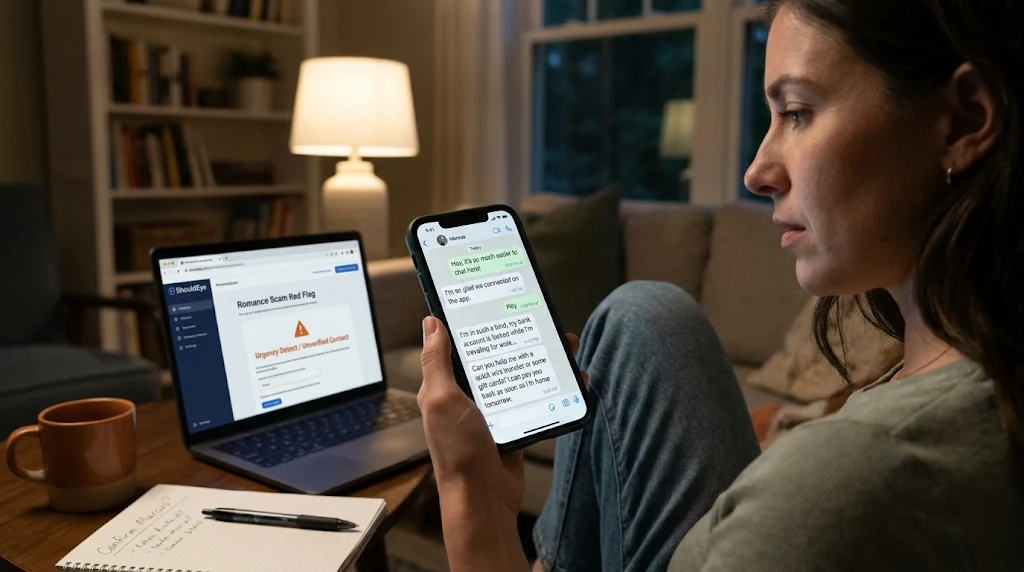
Romance Scam Red Flags to Watch for on Dating Apps
Requests to move the chat within a short window - Hearing "Can we talk on WhatsApp now?" within hours of matching is a classic trigger for WhatsApp dating scams and one of the most common romance scam red flags.
Vague or missing profile details - Many dating app scammers hide behind stolen, generic model photos or incomplete bios so you cannot easily verify online matches.
Overly affectionate language early on - Rapid intimacy, often called love bombing, is a calculated psychological manipulation tactic frequently used in Telegram romance fraud.
Pressure to share personal identifiers - Asking for personal phone numbers, private email addresses, or social-media handles before you have applied basic online dating safety tips or verified their true identity.
Mention of financial need or emergencies - Subtle stories about business troubles or overseas crises often precede a direct request for money immediately after the move off the app.
If any of these warning signs appear during your conversation, pause immediately and verify the person's background with ShouldEye before you click any external link.
⚡ Reality Check
- Timing: Scammers typically push the move within days of matching, not weeks.
- Encryption: End‑to‑end encryption makes messages unreadable to third parties, but it does not make the user invisible to law enforcement.
- Cost: Using WhatsApp or Telegram is cheap, especially with burner phones in low‑income regions.
- Data: Public data on success rates after the move is limited; each case varies.
Online Dating Safety Tips: What to Verify Before You Switch Platforms
Applying practical online dating safety tips can protect your finances and personal data when interacting with new people online. First, you must always confirm identity to verify online matches properly. Use the dating app's built-in video call feature or ask for a spontaneous live selfie holding a specific gesture that matches the person's profile picture, as dating app scammers will almost always make excuses to avoid live cameras. Second, check the external link carefully before tapping it. Hover over any URL to see the actual web destination; while a legitimate WhatsApp link will start with https://wa.me/, fraudsters frequently use disguised phishing domains in WhatsApp dating scams.
Third, read the messaging app's official reporting policy in advance. Both WhatsApp and Telegram's security FAQ outline mechanisms to block and report abusive accounts involved in Telegram romance fraud, but they differ significantly in moderation speed and investigative transparency.
Fourth, avoid sharing sensitive personal data under any circumstances. Never give out banking details, home addresses, Social Security numbers, or account passwords, even if the romantic conversation feels completely "trusted." Fifth, always keep a clear screenshot of the interaction. If the conversation turns suspicious or reveals romance scam red flags, a saved screenshot of the profile and chat history can be extremely useful for reporting the offender to the original dating platform and, if needed, filing a formal report with the FBI Internet Crime Complaint Center. Taking these proactive steps doesn't guarantee total safety, but it adds critical layers of verification that many criminals rely on being bypassed.
How ShouldEye Helps You Check This and Verify Online Matches
ShouldEye aggregates real-time trust signals and security data from multiple public and proprietary sources, so you can quickly answer vital safety questions before falling victim to dating app scammers. For instance, you can see what consumer complaints or scam alerts have already been filed against a specific phone number or external link. You can also determine whether there are documented patterns of financial fraud associated with a specific account used in WhatsApp dating scams or Telegram romance fraud. Furthermore, ShouldEye breaks down what the fine print of a messenger's privacy policy actually says about user data retention and law enforcement cooperation, while showing which alternative communication channels have fewer reported scams.
By feeding the conversation details, usernames, or phone numbers into ShouldEye, you get an instant AI-driven risk score, a clear summary of recent user complaints, and a side-by-side comparison of the messenger's privacy policies versus the dating app's built-in safeguards. This comprehensive intelligence lets you verify online matches, spot romance scam red flags, and apply smart online dating safety tips so you can decide whether to stay on the original platform or move forward with a clear understanding of the risks.
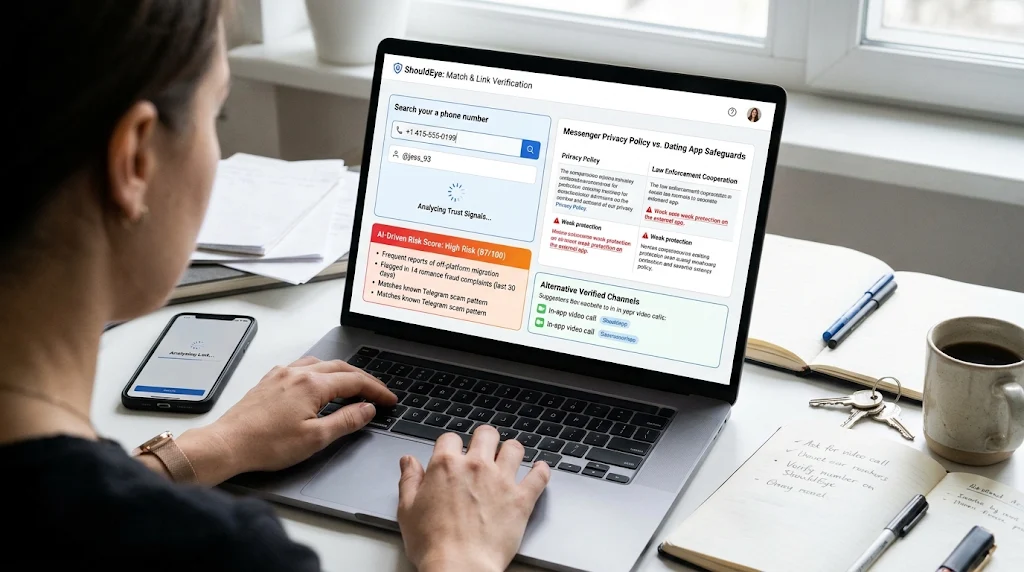
Using EyeQ to Stay One Step Ahead of Dating App Scammers
When you are unsure about an external chat link or an unfamiliar phone number, ask EyeQ to run a quick trust check before you respond. In a matter of seconds, EyeQ will analyze the data to surface any community red-flag reports, highlight suspicious manipulative wording linked to WhatsApp dating scams or Telegram romance fraud, and suggest safer next steps - all without you having to dig through scattered security forums or complex legal documents to verify online matches.
Safer Communication Options
If you truly need to move the conversation off the dating app after following standard online dating safety tips, consider these safer communication alternatives to protect your privacy:
In-app video calls - Most major dating platforms now support encrypted voice and video chats that stay entirely within the app's active moderation ecosystem, which helps deter dating app scammers.
Verified email addresses - Some privacy-focused services allow you to exchange masked or secondary email addresses that are linked to a verified profile, reducing the chance of identity impersonation or Telegram romance fraud.
Temporary, disposable numbers - If you must use an external messenger and want to avoid WhatsApp dating scams, use a burner app or a prepaid SIM card that you can easily discard after the conversation ends if romance scam red flags appear.
These practical options keep you in a controlled digital environment while still offering the everyday convenience of a private chat.
Scammers move conversations from dating apps to WhatsApp or Telegram because the shift removes automated moderation, adds end-to-end encryption, and lets them juggle many victims at once. The sudden request to move platforms itself is a strong warning sign of dating app scammers. By spotting the early romance scam red flags, taking the time to verify online matches, following proven online dating safety tips, and leveraging advanced trust tools like ShouldEye and EyeQ to stop WhatsApp dating scams and Telegram romance fraud, you can protect yourself before the scam escalates. Stay skeptical, stay verified, and remember: the safest place to talk is often where the platform can see you. Ready to run a trust check on that WhatsApp link? Let EyeQ and ShouldEye do the heavy lifting and give you a clear risk snapshot in seconds.
Frequently Asked Questions Live
Reader activity for this article, refreshed by EyeQ AI
6 active now 307 total asked 6 questions
1 Why do scammers ask to move chats to WhatsApp or Telegram? Trending Scams & Fraud 60 asked Updated 1m ago
2 Is end‑to‑end encryption on WhatsApp or Telegram a guarantee that scammers can’t be traced? Trending Scams & Fraud 57 asked Updated 2m ago
3 What should I do if a match asks to switch to WhatsApp within a day? Popular Scams & Fraud 53 asked Updated 3m ago
4 Can I report a scammer on WhatsApp or Telegram? Popular Scams & Fraud 48 asked Updated 4m ago
5 How can I quickly check if a WhatsApp link is safe? Rising Scams & Fraud 46 asked Updated 5m ago
6 Are there safer alternatives to WhatsApp or Telegram for private chats? Rising Scams & Fraud 43 asked Updated 8m ago
About ShouldEye
ShouldEye is an AI-powered trust intelligence platform that helps people evaluate companies, offers, and online experiences through scam checks, policy analysis, complaint signals, and safer alternatives.
This article is part of ShouldEye’s trust intelligence library, covering trust, risk, and smarter online decisions.