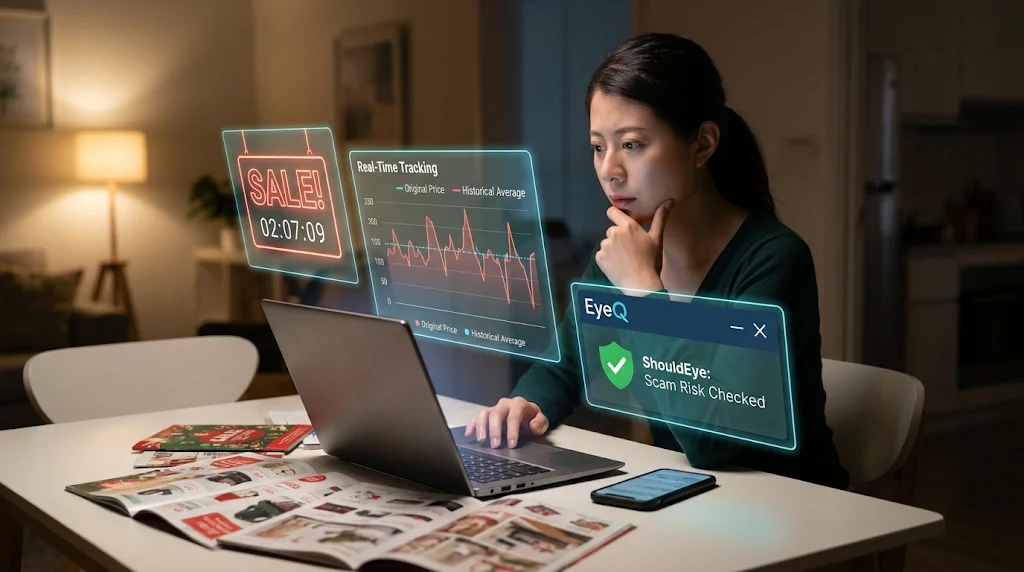
A woman at a laptop examining holographic displays showing a sale countdown, a price tracking chart, and an EyeQ scam check.
Photo · geminiBlack Friday feels like a race: flashing banners, countdown timers, and "up to 70% off" everywhere. The excitement is real, but so are the tricks. If you have ever bought a gadget only to see the same price a week later, you have probably fallen for a fake Black Friday discount. Savvy shoppers rely on ShouldEye and EyeQ to verify claims before submitting payment details at checkout. This guide shows you, step by step, how to separate the genuine bargains from marketing smoke and mirrors by analyzing fake Black Friday discounts across major e-commerce platforms.
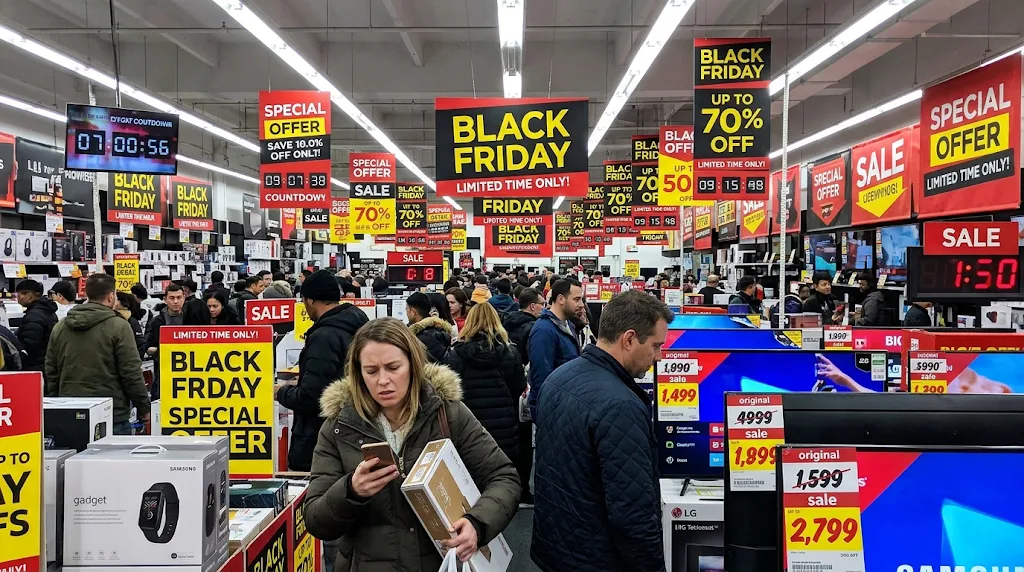
Why Fake Discounts Flood Black Friday
Retailers know that urgency drives clicks. By inflating an original price or timing a sudden price jump, stores create the illusion of a massive markdown. The result? Shoppers feel they have snagged a deal, even when the net price has not moved at all.
Deceptive pricing tactics rely on buyer fatigue and sensory overload. According to consumer protection guidance from the Federal Trade Commission, sellers are legally required to base markdown claims on genuine, established former prices. Despite regulatory standards, enforcement cannot keep pace with millions of dynamic product listings updated hourly. The good news is that the same market data marketers use to hype an event is also available to you if you know where to look.
Common Warning Signs and Red Flags to Watch
Understanding how deceptive pricing works allows consumers to identify questionable listings immediately. When browsing holiday catalog listings, watch out for the following warning signs:
1. Only One Store Claims a Special Offer
If a single website advertises a special Black Friday price while every other retailer lists the exact same amount, the discount is likely fabricated. A classic investigation by Which? Consumer Rights revealed that a lone claim is a classic warning sign of misleading markdowns across retail categories. Real Black Friday deals typically create price competition across multiple major storefronts.
2. Sudden Price Jumps Before the Sale
A 20 to 40 percent price increase in the last few weeks strongly indicates a fake Black Friday discount. This artificial spike establishes a higher benchmark that the retailer can then cut back to the pre-jump level while labeling it a limited holiday promotion.
3. Inflated Original Prices
Many eye-catching percentage-off tags are based on an artificially high reference price. Seeing 50% off a regular retail price means little if that base price was never actually charged in the real consumer market. These inflated original prices distort your perception of value and push you toward quick emotional purchases.
✨ Quick Insight
4. Missing Contact Details
Reputable retailers always provide a working phone number, customer support email, and physical registered business address. A site that hides or completely omits this essential information is an immediate red flag for legitimacy.
5. Urgency Tactics and Unusual Payment Methods
Phrases like "Only 5 left!" or "Deal ends in 2 minutes!" paired with non-standard payment requests for direct wire transfers, cryptocurrency, or prepaid debit cards should set off serious alarm bells. Legitimate merchants rarely force customers into high-risk, non-refundable payment routes.
How to Verify Real Black Friday Deals with Data
Navigating holiday promotions requires objective facts rather than merchant assertions. You can systematically authenticate sales claims by consulting factual records:
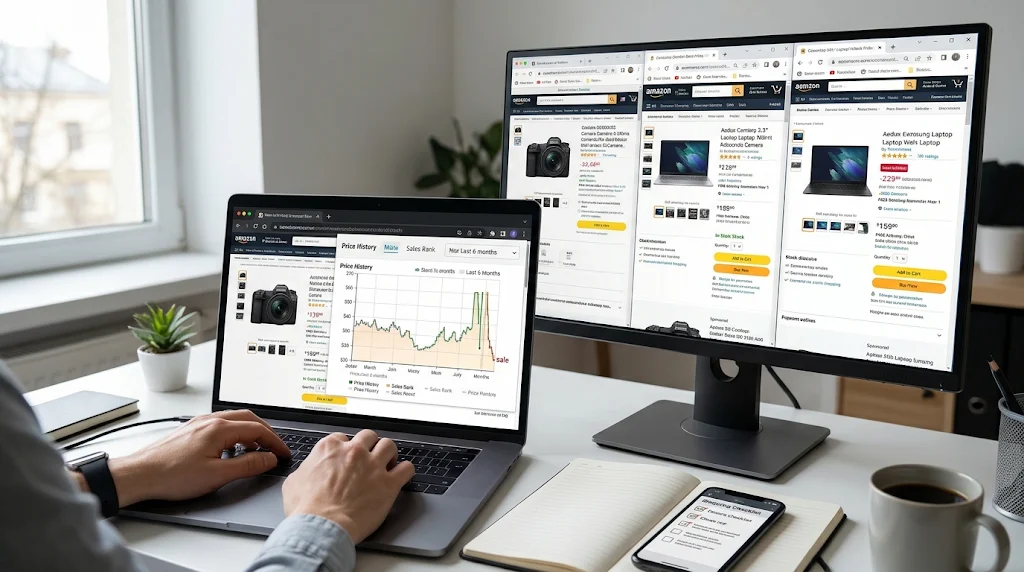
Check the price history: Look beyond the promotional tag. Evaluating product price history tells you whether the current offer is truly a discount or simply a rebranded standard price.
Compare across multiple retailers: If three different stores list the same price, the markdown is probably genuine. If only one unknown site claims a dramatic price drop, dig deeper before buying.
Use price tracking tools: Dedicated price tracking tools allow you to view historical pricing patterns over weeks, months, or years. Services like the Keepa Price Tracker provide real-time pricing data for millions of online catalog items, while CamelCamelCamel provides reliable threshold alerts when an Amazon item drops below your target cost.
Watch for recent spikes: A sudden rise followed immediately by a seasonal reduction is a classic retail trap. If you identify that pattern inside price tracking tools, treat the promotion as suspect.
Verify contact information: A quick scroll down to the website footer should reveal clear operational details. If verifiable business credentials are missing, walk away from the transaction.
How ShouldEye Helps You Check This
The automated verification engine built into ShouldEye examines storefront data to expose deceptive pricing before you spend your hard-earned money.
ShouldEye inspects technical trust signals by scanning retailer domains for active SSL certificates, verifiable privacy policies, and validated physical contact details. It reviews consumer complaint records by aggregating reports from independent consumer protection agencies, public forums, the Better Business Bureau, and community channels to surface deceptive pricing patterns.
ShouldEye conducts fine-print policy reviews by flagging restrictive return terms, hidden restocking charges, and clauses that void standard guarantees during promotional events. It provides instant alternatives comparison, displaying comparable products from alternative certified sellers alongside their documented price history.
ShouldEye identifies scam risks by alerting you to sudden price spikes, artificial reference prices, and missing corporate documentation. The platform provides automated decision support, evaluating complex vendor metrics into a concise assessment so you know whether a holiday offer is legitimate. Combining price history with automated brand verification provides multi-layered protection against misleading promotions.
⚡ Reality Check
- Price history matters more than the %‑off tag: Historical pricing shows whether the current price is truly a discount.
- 20‑40% recent price jumps often signal bait: Retailers create a fake “original” price by inflating it shortly before the sale.
- Transparent contact info is a trust baseline: If a site hides phone or email details, treat it with suspicion.
- Urgency language is a common lure: Countdowns and low‑stock warnings are frequently used to pressure shoppers.
Using EyeQ to Double-Check Before You Click
When you land on a product listing that looks unusually generous, open EyeQ and paste the product URL into the input field. In seconds, EyeQ will:
Pull the verified price history chart directly from reputable data sources.
Highlight any recent 20 to 40 percent price jumps that artificially create fake Black Friday discounts.
List verified alternative retailers currently selling the same item at comparable rates.
Flag missing business contact details or unsecure, non-standard payment checkout gateways.
This rapid evaluation prevents expensive impulse purchases on questionable storefronts.
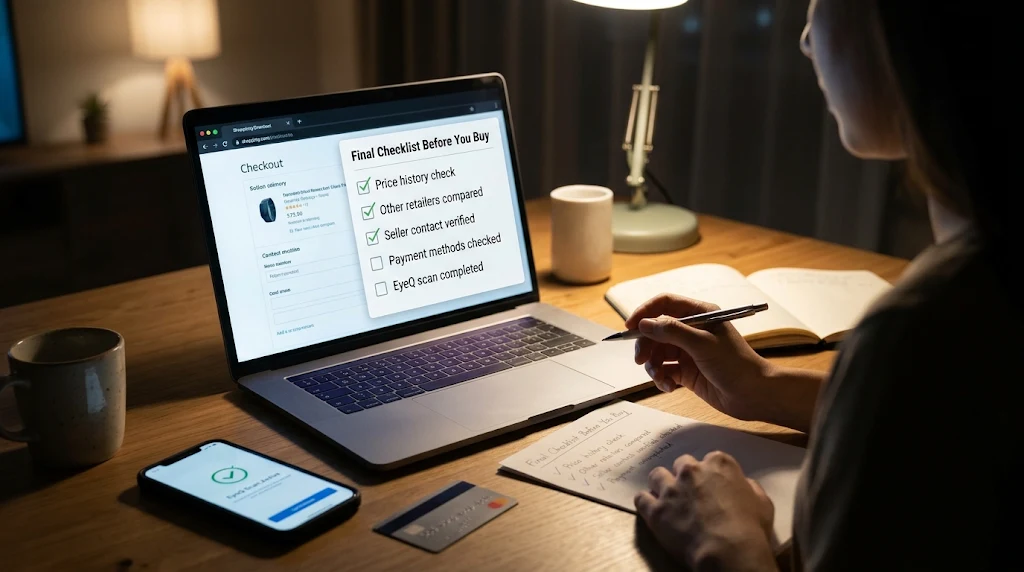
Final Checklist Before You Buy
Review these essential criteria before finalizing any online holiday order:
Does the current price match or beat the verified price history low for the past 30 to 90 days?
Are at least two other reputable retailers offering a similar price for the same item?
Is the reference list price realistic, or does it reflect inflated original prices designed to exaggerate savings?
Is clear, verifiable business contact information displayed openly on the website?
Are standard payment methods such as major credit cards and PayPal available, rather than wire transfers or gift cards?
Have you run an EyeQ scan to confirm storefront security and evaluate promotional legitimacy?
If any answer is no, pause your transaction and investigate further.
EyeQ for the Final Confirmation
After finishing your preliminary checks, run EyeQ one final time on the checkout screen. The platform re-verifies that the final price has not changed unexpectedly, checks that the vendor return policy is clearly stated, and confirms that hidden processing fees have not been added to your order summary.
A flashy discount banner is never proof of genuine savings. By grounding your purchasing decisions in verified price history, systematic multi-store comparisons, and transparent seller credentials, you can bypass promotional traps and secure real Black Friday deals with total confidence.
Frequently Asked Questions Live
Reader activity for this article, refreshed by EyeQ AI
6 active now 283 total asked 6 questions
1 How can I tell if a Black Friday discount is real? Trending Consumer Protection 56 asked Updated 1m ago
2 What free tools can I use to see price history? Trending Consumer Protection 53 asked Updated 2m ago
3 Why do some sites inflate the original price? Popular Consumer Protection 49 asked Updated 3m ago
4 What should I do if a retailer hides its contact information? Popular Consumer Protection 44 asked Updated 4m ago
5 Are urgency messages like “Only 5 left!” trustworthy? Rising Consumer Protection 42 asked Updated 5m ago
6 Can EyeQ replace manual price checks? Rising Consumer Protection 39 asked Updated 8m ago
About ShouldEye
ShouldEye is an AI-powered trust intelligence platform that helps people evaluate companies, offers, and online experiences through scam checks, policy analysis, complaint signals, and safer alternatives.
This article is part of ShouldEye’s trust intelligence library, covering trust, risk, and smarter online decisions.