
Shopper on a laptop viewing floating holographic icons for Temu buyer protection, ShouldEye, EyeQ, and 90-day refunds.
Photo · geminiTemu markets a Purchase Protection Program that promises free returns and refunds within 90 days. Shoppers often wonder: What exactly is covered under the Temu buyer protection rules? When will I get my money back through the standard Temu refund policy? Utilizing tools like ShouldEye and EyeQ makes understanding these complex digital marketplace rules much simpler for everyday consumers. This comprehensive guide breaks down the program’s core promises, the fine print that can unexpectedly shrink a refund, and the critical verification steps you should take before you click “Buy”. By the end of this detailed analysis, you’ll know when you’re truly protected by Temu buyer protection - and when you need to dig deeper into your online shopping safety.
What the Purchase Protection Program Actually Covers
Temu’s official policy states that you can request a full refund under their Purchase Protection Program for any order that meets one of the following specific conditions:
The item never arrives at your designated shipping address.
The item arrives damaged, broken, or mechanically defective.
The item is not as described in the original listing (size, color, material, or functionality).
The item is officially lost in transit by the shipping carrier.
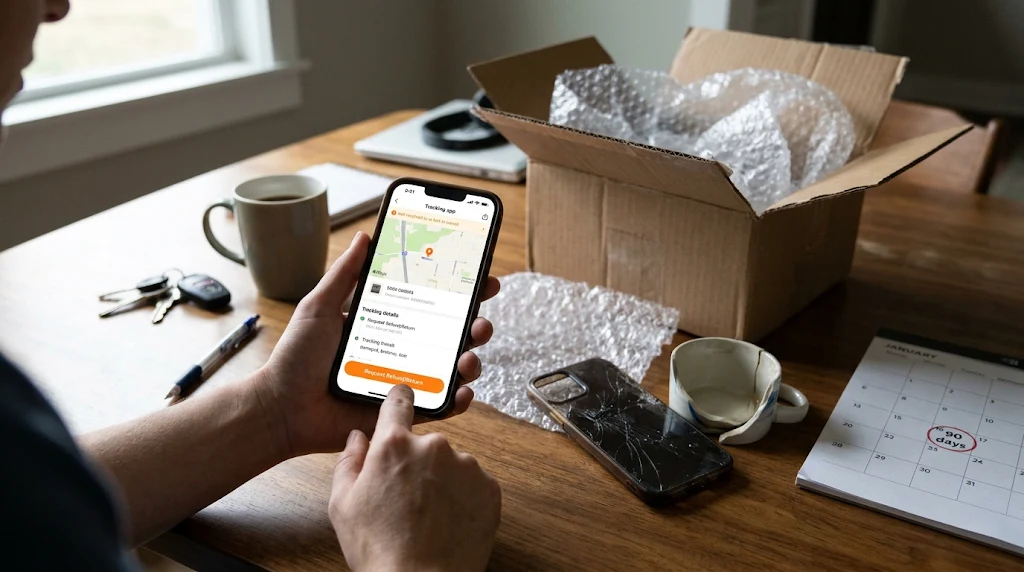
These four primary scenarios trigger a 90-day free-return window under the standard Temu return process. Within that specific three-month period, you can easily open a formal claim through the mobile app or desktop website, ship the physical product back to the warehouse (if you actually received it), and expect a financial refund once the return package is processed and inspected.
According to consumer rights resources from the Federal Trade Commission, understanding delivery guarantees is the foundation of online shopping safety. When evaluating the Purchase Protection Program, shoppers should note that the clock typically starts ticking from the original purchase date, making timely tracking essential for a smooth Temu return process. Using EyeQ to monitor these timelines ensures you never miss a crucial filing deadline.
How Refund Amounts Are Calculated Under the Temu Refund Policy
While the headline marketing promise is a “full refund,” the financial reality of the Temu refund policy is a bit more nuanced and requires careful attention. Industry sources and shopper reports confirm that the final refund amount credited to your account may be noticeably reduced by several distinct factors. Specifically, sales taxes collected at the initial checkout are often excluded depending on local regional laws. Furthermore, any expedited or standard shipping fees you paid for the original delivery are frequently subtracted from the total.
Additionally, promotional coupons or seasonal credits applied to the initial order will alter the math, alongside any store credit you previously earned from earlier purchases on the platform. The exact mathematical formula for these administrative deductions isn’t transparently disclosed to the public, so the final dollar amount returning to your bank can differ significantly from the headline price you originally saw on the product screen. If you’re strictly budgeting for a large household purchase, you must factor in the very real possibility of receiving a smaller refund. You can always consult ShouldEye to help calculate potential deductions before committing your hard-earned funds.
The No-Exchange Rule and Your Temu Return Process
Temu explicitly does not support direct product exchanges within its logistics network. If you accidentally ordered the wrong clothing size or an incorrect color variation, the only available recourse through the Temu return process is to formally return the unwanted item for a refund and subsequently place a brand-new order. This rigid operational policy can easily add extra shipping costs to your budget and significantly delay your physical receipt of the correct product.
The public policy documentation does not list any consumer exceptions to this rule, such as simple size-only swaps for apparel. Until you see a specific written exemption in the terms of service, you must treat every single adjustment as a full return-and-re-order process. Furthermore, if the item was bought during a temporary flash sale, the new order might cost more, impacting your overall online shopping safety and budget planning.
Who Is Eligible? Sellers, Products, and the Verified Seller Badge
Temu’s massive digital marketplace includes both direct-sale warehouse items and independent third-party sellers. The shopping platform prominently displays a verified seller badge on certain storefronts, but the actual depth of background vetting or the legal obligation of those specific sellers to honor the Purchase Protection Program isn’t fully explained to the public. Relying solely on a verified seller badge without reading recent store reviews can compromise your online shopping safety.
Additionally, the advertised 90-day protection window is described in very general, sweeping terms across the site. It remains unclear whether all distinct product categories - such as seasonal apparel, sensitive personal electronics, custom home goods, or downloadable digital goods - receive the exact same administrative treatment under the Temu refund policy. When you shop on the app, always check the individual product detail page for any category-specific notes or fine-print exclusions. Organizations like the Better Business Bureau frequently advise digital consumers to research individual marketplace vendors thoroughly. A quick background scan with ShouldEye can reveal whether a merchant carrying a verified seller badge actually honors the Temu buyer protection guidelines in practice.

Common Pitfalls and Red Flags for Online Shopping Safety
Navigating cross-border e-commerce requires vigilance. First, shoppers frequently encounter refunds smaller than expected. Because regional taxes, original shipping costs, and promotional coupons are routinely deducted under the Temu refund policy, the actual cash amount you receive back may be noticeably lower than the initial purchase price. Second, the strict no-exchange option creates logistical friction. If you simply need a different shoe size or fabric color, you’ll inevitably incur an extra round-trip of shipping wait times and potentially start another 90-day clock within the Temu return process.
Third, seller ambiguity remains a constant challenge. Seeing a verified seller badge on a profile doesn’t automatically guarantee the overseas merchant will process your returns promptly or fairly. You must actively look for comprehensive seller ratings and detailed, recent buyer reviews.
Fourth, consider payment security limitations. The marketplace uses standard TLS (HTTPS) encryption to protect raw transaction data in transit, which is a vital baseline technical security measure, but encryption alone does not protect your wallet from a non-cooperative seller refusing to honor Temu buyer protection. Being fully aware of these warning signals and consulting EyeQ before checkout helps you set realistic expectations before you spend your money.
⚡ Reality Check
- Refund deductions: Taxes, shipping, coupons, and credits may lower the amount you receive.
- Return‑only policy: Exchanges aren’t offered; you must return and reorder.
- Seller enforcement: The platform’s guarantee that all sellers honor the program isn’t detailed.
- Category variance: It’s unclear if the 90‑day window is uniform across all product types.
How to Verify Your Temu Buyer Protection Coverage Before You Buy
Read the Full Purchase Protection page: Look closely for any hidden footnotes or fine print about specific product categories that might alter your Temu buyer protection rights.
Check the seller badge: Verify that the merchant is officially marked with a verified seller badge and thoroughly scan recent buyer feedback regarding their adherence to the Temu return process.
Document the entire order: Keep clear, timestamped screenshots of the original product listing, the exact checkout price breakdown, and any promotional codes applied, ensuring you have hard evidence if you need to invoke the Purchase Protection Program.
Use a secure payment method: The checkout system accepts major third-party processors like PayPal, Apple Pay, and Google Pay, which add an extra institutional layer of independent dispute capability and bolster your online shopping safety.
Leverage smart consumer tools: Ask EyeQ to break down the confusing fine print, expose hidden restocking fees, and suggest safer retail alternatives in just a few seconds.
By consistently following these five verification steps, you drastically reduce the chance of encountering surprise financial deductions or dealing with a stalled return package.
How ShouldEye Helps You Check This
Understanding how ShouldEye helps you check this marketplace data is key to smarter e-commerce habits. ShouldEye actively aggregates real-time data on seller verification histories, historical refund success rates, and overall policy compliance regarding the Temu refund policy. Through deep complaint analysis, the analytical platform surfaces real-world buyer complaints about delayed refunds, unexpected monetary deductions, or outright exchange refusals during the Temu return process.
Furthermore, the policy and fine-print review feature means ShouldEye’s advanced AI thoroughly scans the marketplace’s lengthy legal terms to highlight ambiguous clauses, such as the unknown 90-day applicability across diverse product categories under the Purchase Protection Program. If you ultimately decide that Temu buyer protection isn’t robust enough for your needs, the alternatives comparison engine inside ShouldEye can instantly line up other established online marketplaces with much clearer refund formulas.
The automated scam and risk checks ensure the system flags questionable merchants that have a documented history of ignoring the Purchase Protection Program, even if they display a verified seller badge. Finally, for AI-assisted decision support, you can simply ask ShouldEye to generate a customized inspection checklist tailored to the specific item you’re eyeing. Using ShouldEye and EyeQ together gives you a reliable, data-driven confidence level before you ever commit your credit card details.

Final Thoughts: When to Trust Temu’s Protection
Temu’s Purchase Protection Program offers a reasonable, baseline safety net for most inexpensive physical goods, especially in straightforward cases when the ordered item never arrives at your door or arrives visibly damaged. However, the frustrating lack of corporate transparency around specific refund deductions under the Temu refund policy, the inflexible no-exchange rule complicating the Temu return process, and the unclear third-party seller obligations despite the presence of a verified seller badge mean you should carefully verify each purchase individually to maintain complete online shopping safety.
If the prospective product is relatively high-value, or if you’re buying from a brand-new third-party seller with minimal feedback, strongly consider documenting everything with screenshots and exclusively using an external payment method with strong independent dispute rights, as recommended by consumer advocates at Consumer Reports. When in doubt about Temu buyer protection, let ShouldEye run a quick, automated trust check on the storefront and let EyeQ walk you through the complex legal fine print before you add the item to your digital cart. Ready to double-check a pending order? Use EyeQ today to compare vital trust signals, historical buyer complaints, and hidden policy risks before you sign up and spend.
Frequently Asked Questions Live
Reader activity for this article, refreshed by EyeQ AI
6 active now 272 total asked 6 questions
1 What items are covered by Temu’s Purchase Protection Program? Trending Consumer Protection 54 asked Updated 1m ago
2 Will I get the exact amount I paid back? Trending Consumer Protection 50 asked Updated 2m ago
3 Can I exchange an item instead of returning it? Popular Consumer Protection 47 asked Updated 3m ago
4 Does the 90‑day return period apply to all product categories? Popular Consumer Protection 45 asked Updated 4m ago
5 How do I start a refund claim on Temu? Rising Consumer Protection 40 asked Updated 5m ago
6 What should I check before buying from a third‑party seller on Temu? Rising Consumer Protection 36 asked Updated 8m ago
About ShouldEye
ShouldEye is an AI-powered trust intelligence platform that helps people evaluate companies, offers, and online experiences through scam checks, policy analysis, complaint signals, and safer alternatives.
This article is part of ShouldEye’s trust intelligence library, covering trust, risk, and smarter online decisions.