
Man reviewing GivingTuesday charity safety with holographic trust badges and verification screens on his laptop.
Photo · geminiGivingTuesday has become the world’s biggest day of charitable giving, but the surge of goodwill also attracts fraudsters. Before you click Donate, a quick verification routine using platforms like ShouldEye, along with an automated trust check from EyeQ, can protect your money and your reputation. This guide walks you through the exact steps you need to take without jargon or guesswork so you can complete GivingTuesday donations with absolute peace of mind. Every year, millions of dollars move across digital payment gateways, creating opportunities for illegitimate actors to divert funds away from real social missions. Knowing how to check nonprofit status before you pay protects your accounts and maximizes your personal philanthropy.
Why Verification Matters on GivingTuesday
The excitement of a global giving day can blur the line between reputable nonprofits and clever scams. A single unchecked donation can end up in a shell organization that never delivers services. Moreover, many donors report difficulty getting refunds or updates when a charity’s legitimacy is unclear. By confirming legal status, registration, and financial transparency, you reduce the risk of wasted funds and protect your personal data.
Giving campaigns rely heavily on emotional urgency, visual storytelling, and quick online checkout forms. Deceptive groups take advantage of this high-energy window by setting up clone websites or launching misleading digital advertising campaigns that closely mimic established brands. When donors fail to verify charities, they risk handing sensitive banking information over to predatory actors while forfeiting legitimate tax benefits.
Checking official filings guarantees that your support reaches families, relief efforts, and research teams that depend on genuine public generosity. Taking a measured look at an organization's public history provides confidence that your gift works effectively toward the intended mission.
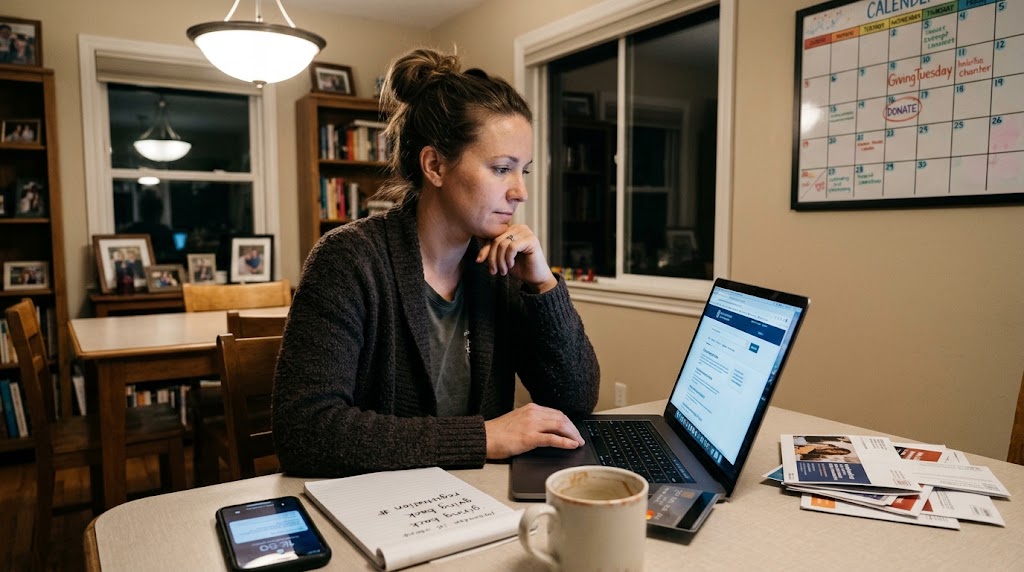
Step-by-Step Checklist to Verify Charities and Check Nonprofit Status
1. Confirm IRS 501(c)(3) Status for Tax Deductible Donations
The most important check is to confirm the organization’s IRS 501(c)(3) status using the official IRS Tax Exempt Organization Search. This free government tool tells you whether the charity is legally recognized as tax-exempt and eligible to receive tax-deductible donations. Look for the organization’s Employer Identification Number (EIN), legal name, and recent filing year. If the federal search returns no match, pause immediately because this is a major warning signal. An active federal exemption guarantees that an entity files mandatory annual disclosures outlining income sources, executive compensation, and operational programs. Donors who skip this baseline step may discover months later that their financial gifts do not qualify for expected deductions on their tax returns.
2. Verify State Registration to Avoid Charity Scams
Most states require charities to register with a state charity regulator before soliciting funds within their borders. Visit your state regulator website, which is often managed under the state attorney general's office, or consult the National Association of State Charity Officials to search for the organization’s corporate name. State registration confirms the charity holds formal authorization to solicit public support in that jurisdiction. Remember, filing deadlines and renewal dates differ significantly by state. Diligent state oversight stops unauthorized operators from siphoning money through local campaigns. Checking state records provides a clear picture of whether an organization faces ongoing investigations or administrative sanctions for deceptive practices.
✨ One‑Click Trust Snapshot
3. Use Third-Party Charity Rating Databases for Deep Insight
Reputable charity rating databases aggregate public disclosures, Form 990 filings, and financial metrics to paint a full picture of organizational health. Consulting established independent portals such as Charity Navigator and GuideStar by Candid offers clear insight into accountability, cost distribution, and long-term sustainability. An objective rating or an official verified seal adds substantial confidence to your decision. If an entity is absent from all major evaluators, treat the omission with caution and research deeper into their background. Third-party monitors examine how much money directly funds practical programs versus fundraising overhead, helping you direct contributions toward operations with proven accountability records.
4. Match Name, Mission, City, and Address
Cross-check the charity’s public website with the official documentation retrieved from regulatory directories. The organization's legal name, core mission statement, city, and physical street address must align across all official platforms. Discrepancies, especially regarding physical addresses, often point toward copycat organizations or hastily relocated operations that have avoided formal public filings. Fraudulent websites frequently copy legitimate logos while substituting slightly altered corporate names to intercept GivingTuesday donations. Confirming that the mission matches authentic public documentation prevents funds from drifting into entities running unvetted campaigns under misleading banners.
5. Check Incorporation via Secretary of State
Every nonprofit must incorporate within a home state before pursuing charitable business. Use the home state’s Secretary of State business search portal to verify the entity's legal standing, exact date of incorporation, and continuous filing status. This confirmation step guarantees the organization is not a temporary shell entity formed solely to harvest donations during peak giving seasons. Legitimate operations maintain clean administrative standing, submit required annual renewals, and provide identifiable executive officers on public registries.

Red Flags to Watch For to Avoid Charity Scams
Spotting deceptive practices requires vigilance across multiple regulatory indicators:
No IRS listing indicating that the organization holds verified 501(c)(3) status.
Missing state registration records within your local attorney general or regulator portal.
Complete absence from third-party charity rating databases and independent transparency networks.
Mismatched address, legal title, or stated operational goals between promotional sites and government databases.
Very recent incorporation with zero financial statements, missing Form 990 filings, or unverified board members.
Whenever these discrepancies surface during review, refrain from sending funds, request comprehensive documentation directly, or select an established alternative organization with proven credibility.
⚡ Reality Check
- Time Investment: A thorough verification takes 5‑10 minutes per charity.
- Data Gaps: Small or new nonprofits may lack third‑party ratings.
- State Variability: Each state’s regulator portal differs in usability and update frequency.
- No Absolute Guarantee: Even verified charities can have limited transparency; stay vigilant.
Keeping a Detailed Record of Your Verification
Document every stage of your research process. Capture clear screenshots of IRS database search results, record confirmation reference numbers from state regulator platforms, and save financial summaries provided by charity rating databases. This documentation trail provides essential evidence if you ever need to resolve disputed bank transactions or submit a consumer fraud complaint to the Federal Trade Commission. Maintaining organized personal philanthropic files keeps your records clear for tax season and ensures your support remains fully accountable.
How ShouldEye Helps You Verify Charities
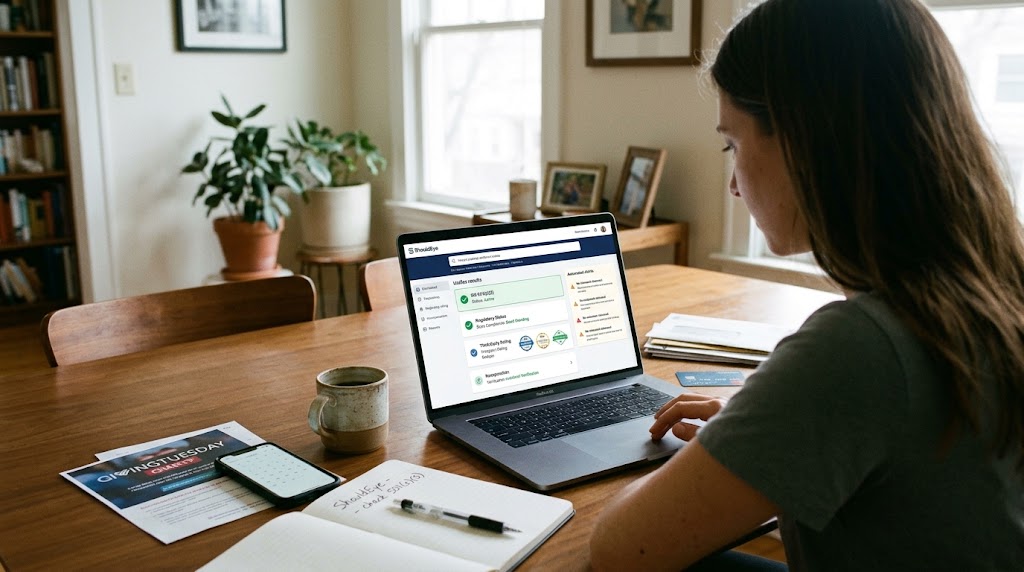
ShouldEye simplifies due diligence by combining data feeds from the IRS, state registry tools, and major independent monitoring portals into a unified dashboard. Instead of visiting multiple state portals, you can verify charities in seconds through one search bar. The ShouldEye engine delivers instant visibility into:
Federal tax-exempt standing and current IRS 501(c)(3) verification status.
State regulatory registration compliance and identifying unresolved filing gaps.
Comprehensive third-party ratings along with warnings about missing financial disclosures.
Verified incorporation histories pulled directly from relevant Secretary of State offices.
Automated mismatch alerts comparing website claims against official government filings.
The platform continuously highlights recent regulatory grievances and flags ambiguous terms of service that could affect donor refund protections. This centralized oversight accelerates your review process, helping you avoid charity scams while making informed GivingTuesday donations.
Using EyeQ for Fast Verification on GivingTuesday
When time is limited during rapid fundraising pushes, EyeQ gives donors an immediate intelligence scan. A simple inquiry directed to EyeQ rapidly compiles federal tax status, filing histories, and state regulatory clearances in seconds. Utilizing EyeQ allows you to check nonprofit status right from your smartphone before confirming any digital transaction, keeping your giving prompt, effortless, and secure.
Final Thoughts: Support Worthy Causes with Confidence
GivingTuesday presents an incredible opportunity to assist communities in need, but informed donors always run essential safety checks first. Following this verification blueprint, observing operational red flags, and tapping into advanced tools like ShouldEye and EyeQ ensures that your hard-earned funds reach legitimate initiatives. Take a moment to check nonprofit status, review charity rating databases, and confirm tax-deductible donations before finalizing your payment. Safe giving practices preserve the true spirit of global generosity and make every contribution count.
Frequently Asked Questions Live
Reader activity for this article, refreshed by EyeQ AI
6 active now 140 total asked 6 questions
1 How can I quickly confirm a charity’s IRS 501(c)(3) status? Trending Consumer Protection 32 asked Updated 1m ago
2 What if a charity isn’t listed on Charity Navigator or GuideStar? Trending Consumer Protection 28 asked Updated 2m ago
3 Do I need to verify a charity if I’m only giving a small amount? Popular Consumer Protection 25 asked Updated 3m ago
4 Can I rely on a charity’s website alone for legitimacy? Popular Consumer Protection 23 asked Updated 4m ago
5 What role does the state charity regulator play in verification? Rising Consumer Protection 18 asked Updated 5m ago
6 How often should I re‑verify a charity I donate to regularly? Rising Consumer Protection 14 asked Updated 8m ago
About ShouldEye
ShouldEye is an AI-powered trust intelligence platform that helps people evaluate companies, offers, and online experiences through scam checks, policy analysis, complaint signals, and safer alternatives.
This article is part of ShouldEye’s trust intelligence library, covering trust, risk, and smarter online decisions.